Endometriosis Treatment in Ahmedabad
Endometriosis Specialist in Ahmedabad — Uterus-Sparing, Fertility-Preserving Care
The pain has probably been with you for years. Heavy, agonising periods that keep you in bed. Pelvic pain that does not follow a calendar. And perhaps — the fear that this condition is quietly damaging your chances of becoming a mother.
If you have been told you have endometriosis, a chocolate cyst (endometrioma), or adenomyosis, and you are worried about your fertility, you have come to the right place. At Wellspring IVF & Women’s Hospital in Ahmedabad, we understand that the biggest fear our endometriosis patients carry is not just the disease itself — it is what the treatment might do to their ovarian reserve.
Poorly executed endometriosis surgery — particularly the removal of chocolate cysts from the ovaries — can destroy healthy egg-bearing tissue along with the cyst. We have seen patients who arrived at Wellspring after surgery elsewhere with dramatically reduced AMH levels and significantly fewer eggs than they had before their operation. This does not have to happen.
Dr. Pranay Shah’s approach to endometriosis is built around a single principle: treat the disease without sacrificing the fertility. His advanced laparoscopic surgery technique carefully excises endometriotic tissue while protecting the maximum possible healthy ovarian reserve. It is a philosophy that requires more surgical skill and more time — and it is exactly what every endometriosis patient deserves.
What Is Endometriosis? Understanding the Condition
Endometriosis is a condition where tissue similar to the lining of the uterus (the endometrium) grows in locations outside the uterus — most commonly on the ovaries, fallopian tubes, the outer surface of the uterus, and the pelvic lining. In some severe cases, it can also involve the bowel, bladder, or deeper pelvic structures.
Every month, during the menstrual cycle, this misplaced tissue behaves like normal endometrium: it thickens, breaks down, and bleeds. But unlike menstrual blood, which exits the body through the cervix, this blood has no exit route. It becomes trapped, causing inflammation, scarring, and — over time — the formation of adhesions (bands of fibrous tissue that can bind organs together) and cysts.
“Endometriosis is one of the most under-diagnosed conditions I encounter. Many of my patients have been suffering with severe pelvic pain for five, even ten years before receiving a correct diagnosis. The delay matters — because endometriosis is progressive. The longer it is left untreated, the more it can damage the ovaries and tubes. If you have painful periods that significantly disrupt your life, please do not dismiss it as ‘normal.’ Come and get evaluated.” — Dr. Pranay Shah, MS (ObGy), Director, Wellspring IVF & Women’s Hospital
Watch Our Endometriosis Treatment Video
Learn how endometriosis affects fertility and whether surgery or IVF may be the better treatment option.
What You Will Learn
Understand when surgery or IVF may be recommended for endometriosis-related infertility.
- Endometriosis and fertility basics
- Surgery vs IVF decision-making
- Factors affecting pregnancy chances
- Treatment planning for better outcomes
Chocolate Cysts (Endometriomas) — The Specific Threat to Your Egg Reserve
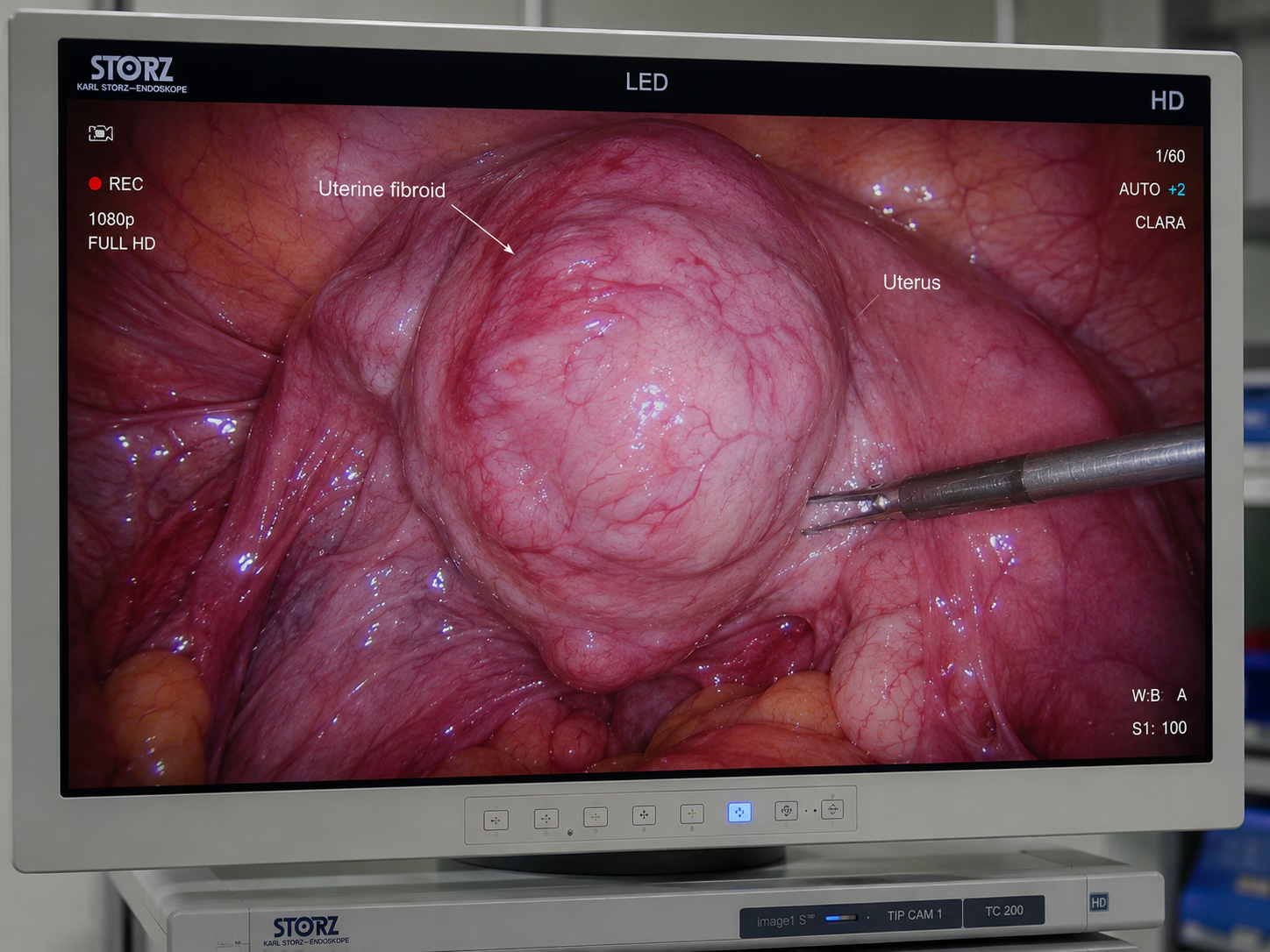
When endometriotic tissue develops on the ovaries, it can form a specific type of cyst called an endometrioma — commonly known as a ‘chocolate cyst’ because it fills with dark, old menstrual blood that resembles liquid chocolate.
Endometriomas are particularly concerning for fertility because the ovary is where your eggs are stored. The presence of an endometrioma creates a toxic microenvironment for the surrounding follicles, damaging egg quality even before any surgical intervention takes place.
The Surgical Risk Every Patient Must Understand
When a chocolate cyst is removed from the ovary, the cyst wall is intimately attached to the ovarian cortex — the layer where your primordial follicles (your egg reserve) reside. If a surgeon removes the cyst without precise technique, they inadvertently remove healthy ovarian tissue along with it. Research shows that a poorly performed endometrioma removal can reduce AMH levels by 30–50% in some patients — a permanent reduction in egg reserve. This is why surgical technique matters enormously, and why you should choose a surgeon who specialises in fertility-preserving endometriosis surgery.
Dr. Pranay Shah uses a precise, layer-by-layer excision technique to separate the cyst wall from the ovarian cortex with maximum care. The goal is always to remove the entire cyst while preserving as much healthy ovarian tissue as possible. In his hands, this is a deliberate, unhurried surgical process — not a quick removal.
The Four Stages of Endometriosis — What They Mean for Your Fertility
Endometriosis is classified into four stages (I to IV) by the American Society for Reproductive Medicine (ASRM), based on the location, depth, and extent of the disease:
Minimal
Small, isolated implants with no significant adhesions. Fertility impact is mild. Ovulation induction or IUI may be sufficient if fertility is the goal.
Mild
Deeper implants with a small volume of endometriotic tissue. Some scarring may be present. Ovulation induction with close monitoring is often the first approach.
Moderate
Multiple deep implants, small endometriomas on the ovaries, and some adhesions involving tubes and ovaries. Laparoscopic surgery is typically recommended before or alongside fertility treatment. IVF Treatment is often the most effective path to pregnancy.
Severe
Extensive deep implants, large endometriomas, and dense adhesions distorting pelvic anatomy. Tube damage is common. IVF is usually the primary fertility treatment, potentially preceded by laparoscopic surgery to improve the uterine environment and ovarian access.
Stage does not always correlate with pain severity or fertility impact. Some women with Stage I endometriosis have significant fertility challenges, while some Stage III patients conceive with minimal intervention. This is why an individualised assessment is essential.
What Our Patients Say


A special thank you to Dr. Pranay Shah for his confidence, guidance, and the way he explained everything so patiently. His positive approach gave me so much strength, and today I am blessed with my baby.
Thank you to each and every member of the hospital for taking such great care of me and supporting me throughout this journey. Forever grateful. 💕

He is, without a doubt, the most patient doctor I have ever met. Of course, treatment can be done by many. What truly sets him apart is his maturity, the way he pauses, explains, comforts, and most importantly, seeks your permission before moving forward. You never feel rushed. You never feel unheard. You feel respected.
And the staff deserves equal appreciation. They handle even the most anxious and impatient moments with such calm grace and dignity that you slowly find your own heartbeat settling down. It feels less like a clinic and more like a safe space.
I wholeheartedly recommend him to anyone who overthinks, seeks reassurance, or simply needs a doctor who believes comfort is the first step of healing. With him, care begins long before the treatment does.

Highly recommend for their expertise, kindness and dedication. "Turned out dream into reality"



Our gratitude also extends to everyone in your clinic who offered a smile, reassurance, technical support, or a listening ear along the way. We feel incredibly blessed to have chosen your practice for our journey, and we will always cherish the precious gift you helped us receive.
Thank you, from the bottom of our hearts, for making our dream a reality.
Join 750+ Satisfied Families
Symptoms of Endometriosis — When to Seek Specialist Help
Endometriosis is frequently misdiagnosed or dismissed because its symptoms overlap with common conditions like irritable bowel syndrome or primary dysmenorrhoea. The average delay from symptom onset to diagnosis is 7–10 years globally. These are the signs that should prompt a specialist evaluation:
- Dysmenorrhoea: severe, debilitating menstrual cramps that are significantly worse than typical period pain — often requiring you to miss work, school, or daily activities.
- Chronic pelvic pain: persistent pain in the pelvis, lower abdomen, or lower back that occurs outside the menstrual cycle.
- Deep dyspareunia: pain during or after sexual intercourse, particularly with deep penetration — caused by endometriotic implants on the uterosacral ligaments or rectovaginal pouch.
- Heavy menstrual bleeding: prolonged periods, heavy flow, or inter-menstrual spotting.
- Bowel and bladder symptoms during periods: painful bowel movements, rectal bleeding, or painful urination — symptoms of bowel or bladder endometriosis.
- Fatigue: disproportionate tiredness, particularly in the days leading up to and during menstruation.
- Difficulty conceiving: often the presenting symptom in women who have minimal pain but have endometriosis discovered during a fertility investigation.
If you recognise two or more of these symptoms — particularly the combination of painful periods and difficulty conceiving — a diagnostic laparoscopy is the gold standard evaluation tool. No blood test or ultrasound scan alone can definitively diagnose endometriosis; it requires direct visualisation.
Adenomyosis — Endometriosis of the Uterine Wall
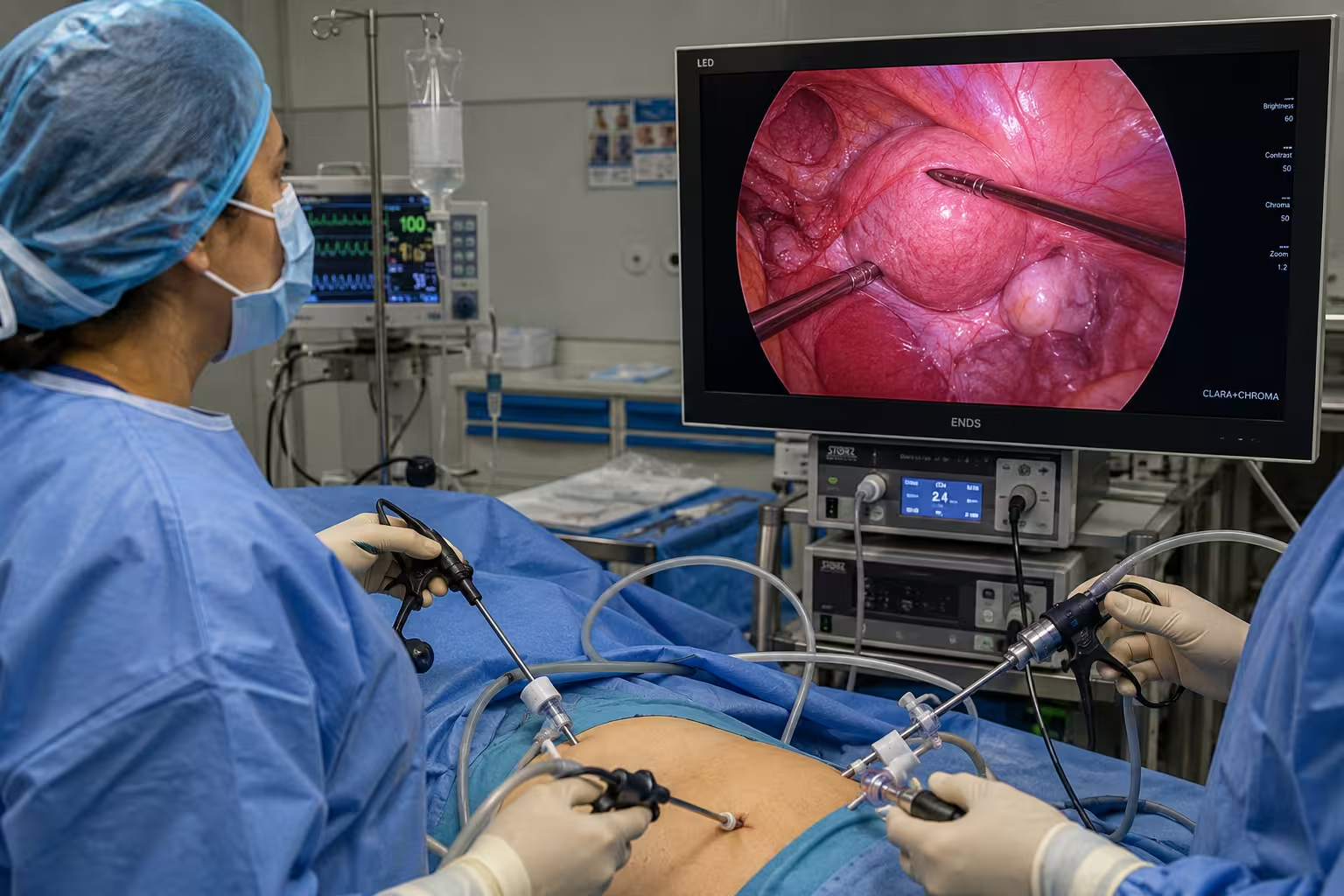
Adenomyosis is a related but distinct condition where endometrial-like tissue grows within the muscular wall of the uterus itself (the myometrium), rather than outside the uterus. It can co-exist with endometriosis and is estimated to affect up to 20–30% of women with fertility problems.
Adenomyosis causes the uterine wall to thicken and enlarge, disrupting normal uterine contractions during embryo implantation and creating an unfavourable environment for early pregnancy. It is a significant — and often overlooked — cause of recurrent implantation failure and repeated IVF failures.
At Wellspring IVF, Dr. Shah evaluates every patient with unexplained infertility, recurrent pregnancy loss, or failed IVF cycles for adenomyosis using high-resolution transvaginal ultrasound and — when indicated — MRI. Management of adenomyosis before IVF can significantly improve embryo implantation and pregnancy outcomes.
Ready To Begin Your IVF Journey?
Dr. Pranay Shah's Surgical Approach — Uterus-Sparing, Reserve-Protecting Laparoscopy
Excision, Not Ablation
We use laparoscopic excision to remove endometriotic implants completely, rather than laser ablation or electrocautery which merely destroys the surface. Excision has a significantly lower recurrence rate and provides a tissue sample for histological confirmation.
Reserve-Preserving Cystectomy
For endometriomas, we use a careful stripping technique that separates the cyst wall from the ovarian cortex at the correct surgical plane. We do not use electrocautery near the ovarian cortex — thermal damage is a major cause of inadvertent egg reserve loss.
Adhesiolysis — Restoring Normal Anatomy
In cases with pelvic adhesions, careful, layer-by-layer adhesiolysis restores the normal relationship between the ovary, tube, and uterus — improving natural conception potential and access to eggs during IVF egg retrieval.
Uterus-Sparing Philosophy
We never recommend hysterectomy for endometriosis in a patient who wishes to conceive, or in any patient where uterus-sparing options remain viable. The uterus is always the last structure we would consider removing.
Pre-operative AMH Assessment
Before any surgery involving the ovaries, we measure your baseline AMH (Anti-Müllerian Hormone). This gives us a precise picture of your starting ovarian reserve, so we can make the most informed surgical decision — and measure any change accurately after surgery.
Your Fertility Consultant
Our fertility specialists are committed to providing personalized, compassionate care with
the latest reproductive medicine techniques.
Dr. Pranay Shah
Divyesh Bhalodia
Dr. Yashpreet
The Wellspring Treatment Pathway for Endometriosis and Fertility
Not every endometriosis patient requires surgery. Not every patient requires IVF. The right treatment depends on your stage, your age, your AMH level, your partner’s semen parameters, and how long you have been trying to conceive. Here is how Dr. Shah approaches these decisions:
- Stage I–II Endometriosis + Trying to Conceive: Ovulation induction with Letrozole and timed intercourse, or IUI, is often the first-line approach. Laparoscopic surgery is reserved for cases where there is structural impact on the tubes or ovaries, or where symptoms are significantly affecting quality of life.
- Stage III–IV Endometriosis + Trying to Conceive: Laparoscopic surgery to improve pelvic anatomy, followed by IVF, typically gives the best fertility outcomes. The timing of surgery vs. proceeding directly to IVF depends on your age and residual ovarian reserve.
- Large Endometrioma (>4 cm) + Planning IVF: A large chocolate cyst can impair egg collection during IVF by blocking ultrasound access to the ovarian follicles. Surgical removal before IVF stimulation is generally recommended, using reserve-protecting technique.
- Recurrent IVF Failure + Suspected Adenomyosis: A thorough evaluation for adenomyosis followed by a GnRH agonist downregulation protocol before the frozen embryo transfer cycle can significantly improve implantation rates.
- Endometriosis + Very Low AMH: Surgery is approached with extreme caution. If your AMH is already critically low, the risk of surgery further reducing your reserve must be weighed very carefully against the potential benefit. In some cases, proceeding directly to IVF without surgery is the more fertility-preserving choice. See our Low AMH treatment page.
Talk to Dr. Shah About Endometriosis Care
Frequently Asked Questions
Can I get pregnant naturally with endometriosis?
Yes — many women with Stage I and Stage II endometriosis conceive naturally or with minimal intervention. The key factors are your age, the stage and location of the disease, your AMH level, and your partner’s semen parameters. A thorough consultation with Dr. Shah will give you a clear, honest picture of your specific situation.
Will removing a chocolate cyst improve my fertility?
It depends on the size of the cyst and your current AMH level. For cysts larger than 4 cm that are blocking follicular access, surgical removal before IVF is generally beneficial. However, surgery must be performed with reserve-preserving technique. Cysts smaller than 3 cm in patients with already-reduced AMH may be better managed conservatively, proceeding directly to IVF without surgery.
Does endometriosis always come back after surgery?
Endometriosis has a recurrence rate of approximately 20–40% within 5 years of surgery, which is why surgery alone is not a permanent solution for young women who are not ready to conceive immediately. For women actively trying to conceive, the goal of surgery is to improve pelvic anatomy and reduce the toxic effect of endometriosis on egg quality — with pregnancy as the natural ‘treatment’ that follows.
What is the difference between endometriosis excision and ablation?
Ablation (using laser or electrocautery to burn endometriotic tissue) only destroys the surface of the implant, leaving the deeper root behind. Excision removes the entire implant, including its deeper components. Excision has a significantly lower recurrence rate and is considered the gold standard surgical technique. Dr. Shah uses excision-based surgery at Wellspring.
What is a GnRH agonist and when is it used for endometriosis?
GnRH agonists (such as Leuprolide or Goserelin) are injections that temporarily suppress ovarian function and oestrogen production, effectively ‘starving’ endometriotic tissue. They are used before IVF in patients with adenomyosis or severe endometriosis to improve the uterine environment before embryo transfer. They are not a surgical treatment, but they can significantly improve IVF outcomes in selected cases.
Can IVF work with Stage 4 endometriosis?
Yes. Stage 4 endometriosis patients can and do achieve successful pregnancies through IVF at Wellspring. Success depends on your AMH level and egg reserve, the quality of eggs retrieved, and the condition of the uterine cavity. IVF bypasses the fallopian tube problem entirely by placing the embryo directly into the uterus. Many of our most gratifying outcomes are in patients who were told their Stage 4 endometriosis made pregnancy ‘nearly impossible’.
Related Insights & Articles
 Most men receive their semen analysis report as a printout of numbers — without anyone explaining what those numbers mean.…June 5, 2026
 If you have been diagnosed with PCOS or PCOD and told you need IVF, your first instinct may be fear.…June 5, 2026
 Most patients starting their first IVF cycle describe the same feeling: overwhelmed by a process they do not fully understand,…June 5, 2026
Begin Your Endometriosis Evaluation at Wellspring IVF, Ahmedabad
If you have been diagnosed with endometriosis — or if you suspect it — the most important step you can take right now is a proper specialist evaluation. Not a repeat prescription for pain medication. Not ‘wait and see’. A real, evidence-based assessment of what the disease is doing to your pelvic anatomy and your fertility, and a clear plan for what comes next.
Dr. Pranay Shah has helped women with Stage 1 to Stage 4 endometriosis have children. Many came to us after being told elsewhere that their situation was too complex. We would like to evaluate your case and give you an honest picture of your options.