Semen Freezing & Sperm Cryopreservation in Ahmedabad
There are moments in a man’s life when preserving his fertility is not just a good idea — it is medically urgent. And there are moments when it is simply the smartest, most affordable insurance policy he will ever take out. Semen freezing — medically known as sperm cryopreservation — takes approximately 60–90 minutes from arrival to completion and costs less than most health check-ups.
At Wellspring IVF & Women’s Hospital, Ahmedabad, Dr. Pranay Shah routinely recommends sperm banking across three distinct clinical scenarios — each with its own level of urgency. The reassuring constant across all three is this: IVF and ICSI success rates using frozen-thawed sperm are virtually identical to those using fresh sperm. Your future fertility is not compromised by the freezing process itself.
Request a Free Callback
Frozen-Thawed Sperm vs. Fresh Sperm - Does Freezing Reduce Success?
This is the first question every man asks – and the answer is consistently reassuring. Multiple large-scale studies and real-world IVF outcome data confirm that when sperm are properly processed and cryopreserved using Vitrification or controlled-rate freezing, the resulting ICSI and IVF success rates are clinically equivalent to fresh sperm cycles.
| Outcome Metric | Fresh Sperm (IVF/ICSI) | Frozen-Thawed Sperm (IVF/ICSI) | Verdict |
|---|---|---|---|
| Fertilisation Rate | 70-80% | 68-78% | Equivalent |
| Blastocyst Development Rate | 45-55% | 42-53% | Equivalent |
| Clinical Pregnancy Rate per Transfer | 40-55% | 38-54% | Equivalent |
| Live Birth Rate per Transfer | 35-50% | 34-49% | Equivalent |
| Sperm DNA Damage from Freezing | Baseline | Minimal increase with Vitrification protocol | Clinically acceptable |
Dr. Pranay Shah on Frozen Sperm: “In fifteen years of practice, I have seen frozen sperm perform identically to fresh sperm in the majority of ICSI cycles. The fear that freezing ruins the sperm is a myth that prevents men from protecting their fertility at the moment they most need to. The biology simply does not support that fear.”
Three Clinical Reasons Dr. Pranay Shah Recommends Semen Freezing
Sperm banking at Wellspring is always a medically reasoned decision – never a routine add-on. Here are the three distinct scenarios where Dr. Shah specifically recommends cryopreservation:
Reason 1 | Oncofertility – Before Cancer Treatment Begins
Chemotherapy and pelvic radiation are highly effective at treating cancer – and highly effective at damaging sperm production. Depending on the drugs used and radiation field, the damage can be temporary (recovery in 1-4 years) or permanent. There is no reliable way to predict which outcome will occur for any individual patient. Freezing sperm before cancer treatment begins is the only way to guarantee that a man retains the option of biological fatherhood regardless of how his fertility recovers after treatment. This is medically urgent – it can typically be arranged within 24-48 hours of a cancer diagnosis. Wellspring works directly with oncologists to expedite this process.
- Testicular cancer – most common cancer in men aged 15-35
- Lymphoma (Hodgkin’s and Non-Hodgkin’s)
- Leukaemia
- Pelvic and abdominal cancers receiving radiation
- Any systemic chemotherapy regimen
- Time is the only constraint. Do not delay this conversation after a cancer diagnosis. Call us directly at 9099946050.
Reason 2 | Declining Sperm Parameters – Banking Before the Window Closes
Men with severe oligozoospermia (very low sperm count) face a real clinical risk: sperm counts that are low today can continue to decline. Sperm production is sensitive to hormonal fluctuations, varicocele progression, ongoing oxidative stress, and aging. A count of 2 million/ml today does not guarantee that count will remain stable next year. For these men, Dr. Shah recommends banking sperm during a period of better parameters – creating a biological reserve that can be used for ICSI if counts deteriorate further. This is particularly important for men whose counts are trending toward azoospermia (nil sperm), where ejaculate sperm may eventually become unavailable.
- Men with progressive varicocele awaiting surgery
- Men with hormonal conditions affecting spermatogenesis
- Men in high-radiation occupations (radiologists, nuclear workers)
- Men undergoing long-term medications known to affect fertility (anabolic steroids, testosterone therapy, certain anti-epileptics)
- Men with known genetic conditions associated with declining fertility (Klinefelter syndrome, Y-chromosome microdeletions)
Reason 3 | IVF Backup – Eliminating Anxiety on the Critical Day
Egg retrieval day in an IVF cycle is the most time-sensitive moment in the entire process. The wife has completed 10-12 days of injections, undergone a sedation procedure, and produced multiple mature eggs – all of which must be fertilised the same day. At that precise moment, the husband is asked to produce a semen sample on demand. Performance anxiety on this day is a well-documented clinical reality. It is not a character failing – it is a physiological response to acute psychological pressure. In a small but significant number of cycles, collection fails on the day of retrieval. If no backup is available, the eggs cannot be fertilised.
Dr. Shah routinely recommends that husbands bank a semen sample 1-2 weeks before the wife’s egg retrieval cycle begins. This backup sample remains in cryostorage and is used only if fresh collection is unsuccessful on the day. In the vast majority of cycles, the fresh sample is collected normally and the frozen backup is never needed – but its existence removes all performance pressure from the equation. The cost of this peace of mind: ₹5,000 for freezing + ₹10,000 for the first year of storage.
Watch Our Semen Freezing Treatment Video
Learn how semen freezing helps preserve male fertility and when it may be recommended before medical treatment or delayed family planning.
What You Will Learn
Understand the role of sperm freezing in fertility preservation and future reproductive planning.
- Semen freezing process basics
- Fertility preservation options
- Cancer treatment and sperm banking
- Future family planning benefits
The Semen Freezing Process at Wellspring IVF - 4 Simple Steps
From arrival to secure storage, the entire semen freezing process takes approximately 60-90 minutes. Here is exactly what happens at each step:
Mandatory Viral Screening
HIV, Hepatitis B, Hepatitis C & Syphilis tests. Mandatory before any sample is accepted for storage. Results in 24-48 hours.
Sample Collection
Private, comfortable collection room at Wellspring. 2-3 days of abstinence recommended before collection for optimal parameters.
Computerised Semen Analysis
CASA (Computer-Assisted Semen Analysis) assesses count, motility, morphology & DNA fragmentation before freezing.
Cryopreservation at -196°C
Sperm processed with cryoprotectant, loaded into individually labelled straws, plunged into liquid nitrogen. Stored in monitored tanks.
Step 1 - Mandatory Viral Screening (Before Any Sample Is Accepted)
Under the ART (Regulation) Act 2021 and ICMR guidelines, all sperm donors and storage patients must undergo mandatory infectious disease testing before their sample is accepted into cryostorage. This is a legal and ethical requirement – not optional. Tests include:
- HIV 1 & 2 (ELISA / Rapid test)
- Hepatitis B Surface Antigen (HBsAg)
- Hepatitis C Antibody (Anti-HCV)
- Syphilis (VDRL / TPHA)
Results are available in 24-48 hours. A report confirming negative status is documented before the sample is placed into long-term storage. This protects both the patient and the integrity of the storage facility.
Step 2 - Sample Collectio
Sample collection occurs at Wellspring’s dedicated private collection room – clean, comfortable, and completely confidential. 2-3 days of sexual abstinence prior to collection is the standard recommendation for optimal sperm concentration. If collection at the clinic is not possible due to medical or personal circumstances, home collection with immediate transport (within 30-45 minutes at body temperature) is an option – discuss with the andrology team in advance.
Step 3 - Computerised Semen Analysis (CASA)
Before freezing, the sample undergoes a full Computer-Assisted Semen Analysis (CASA). This assesses sperm count (concentration), total motility (%), progressive motility (%), morphology (Kruger strict criteria), and volume. If sperm DNA fragmentation testing is clinically indicated, it can be added at this stage. The pre-freeze analysis is documented and forms part of the patient’s permanent fertility record. This baseline is critical – it tells you what you have banked.
Step 4 - Cryopreservation at -196°C
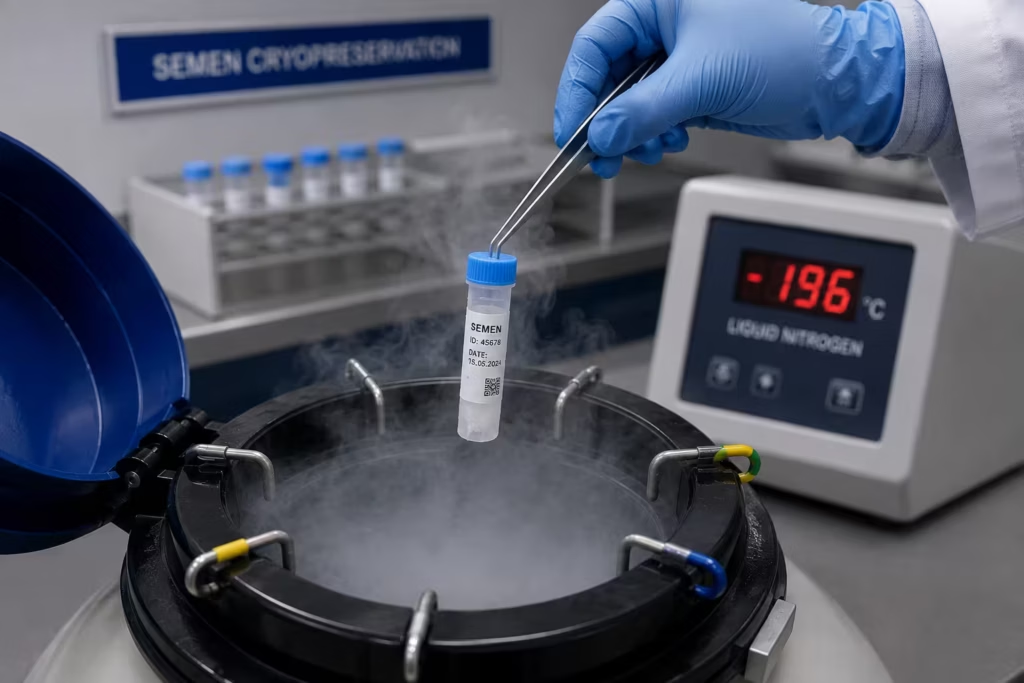
The processed sperm sample is mixed with a medical-grade cryoprotectant solution that prevents ice crystal formation during freezing. It is loaded into individually labelled cryovials or straws, each bearing the patient’s unique identifier. The samples are then cooled using a controlled-rate method or Vitrification protocol, then plunged into liquid nitrogen at -196°C – where all biological activity ceases. Samples are stored in dedicated, continuously monitored tanks.
How Your Sample Is Secured Against Mix-Up
Each cryovial is labelled with a unique patient identifier at the point of loading – before it enters the tank. A double-witness protocol requires two andrology team members to independently verify the label at each critical step: loading, sealing, and storage entry. The storage location within the tank is logged in our andrology records system. Chain of custody is absolute.
What Our Patients Say


A special thank you to Dr. Pranay Shah for his confidence, guidance, and the way he explained everything so patiently. His positive approach gave me so much strength, and today I am blessed with my baby.
Thank you to each and every member of the hospital for taking such great care of me and supporting me throughout this journey. Forever grateful. 💕

He is, without a doubt, the most patient doctor I have ever met. Of course, treatment can be done by many. What truly sets him apart is his maturity, the way he pauses, explains, comforts, and most importantly, seeks your permission before moving forward. You never feel rushed. You never feel unheard. You feel respected.
And the staff deserves equal appreciation. They handle even the most anxious and impatient moments with such calm grace and dignity that you slowly find your own heartbeat settling down. It feels less like a clinic and more like a safe space.
I wholeheartedly recommend him to anyone who overthinks, seeks reassurance, or simply needs a doctor who believes comfort is the first step of healing. With him, care begins long before the treatment does.

Highly recommend for their expertise, kindness and dedication. "Turned out dream into reality"



Our gratitude also extends to everyone in your clinic who offered a smile, reassurance, technical support, or a listening ear along the way. We feel incredibly blessed to have chosen your practice for our journey, and we will always cherish the precious gift you helped us receive.
Thank you, from the bottom of our hearts, for making our dream a reality.
Join 750+ Satisfied Families
ART (Regulation) Act 2021 - Sperm Storage Rules in India
Wellspring IVF operates as a registered ART clinic under the ART (Regulation) Act 2021. All sperm storage at our facility is governed by the legal framework below. Patients must understand these rules before committing to long-term storage:
| Legal Provision | What It Means for You |
|---|---|
| Maximum Storage Duration | Sperm can be stored for up to 10 years from the date of cryopreservation. Written renewal is required to continue storage beyond 10 years if applicable regulations permit extension. |
| Mandatory Viral Screening | HIV, Hepatitis B, Hepatitis C, and Syphilis testing is legally mandatory before any sample is accepted into storage. No exceptions. This is not a clinic policy – it is a statutory requirement. |
| Written Consent Required | The patient must provide written informed consent before freezing, specifying: intended use of the sperm (personal IVF/ICSI use), storage duration preference, and instructions for disposal if he becomes unable to decide (medical directive). |
| Annual Consent Renewal & Storage Fee | Storage is renewed annually. Wellspring contacts all patients with stored samples for annual consent reconfirmation and storage fee payment (₹10,000 per year). |
| Disposal Provisions | If a patient chooses to discontinue storage or does not renew annual consent, the sample is disposed of according to ART Act protocol. No sample is discarded without explicit patient consent or confirmed non-renewal of annual storage. |
| Use of Stored Sperm | Frozen sperm may only be used by the consenting patient for his own fertility treatment (IVF, ICSI, IUI). Use of stored sperm by a third party requires compliance with the separate sperm donor provisions of the ART Act – which mandate voluntary donation through a registered ART Bank. |
| Clinic Registration | Wellspring IVF & Women’s Hospital is registered under the National Registry of Banks and Clinics of India (NRBCI) as required by the ART Act 2021. |
Your Fertility Consultant
Our fertility specialists are committed to providing personalized, compassionate care with
the latest reproductive medicine techniques.

Dr. Pranay Shah

Divyesh Bhalodia

Urmi Chauhan
Semen Freezing Cost in Ahmedabad - Simple & Transparent Pricing
Semen freezing at Wellspring IVF is one of the most affordable fertility preservation procedures available. There are no hidden charges and no surprise additions. Here is the complete cost structure:
| Component | What It Covers | Cost (INR) |
|---|---|---|
| Pre-Freeze Viral Screening Panel | HIV, Hepatitis B, Hepatitis C, Syphilis (mandatory before storage) | ₹1,500 – ₹2,500 (approx.) |
| Semen Freezing / Cryopreservation | CASA analysis, cryoprotectant processing, loading into cryovials, plunge into liquid nitrogen, first-day documentation | ₹5,000 |
| First Year Cryo-Storage | Storage of all frozen semen straws in monitored liquid nitrogen tank – annual storage fee | ₹10,000 per year |
| Annual Storage (subsequent years) | Continued monitored storage, annual consent reconfirmation, temperature logging | ₹10,000 per year |
| TOTAL – First Year (All-In) | Screening + Freezing + 1 Year Storage | ₹16,500 – ₹17,500 approx. |
| Thawing & Use in IVF/ICSI Cycle | When you are ready to use the sample – thawing, preparation, and use in treatment (billed as part of the IVF/ICSI cycle) | Included in IVF/ICSI cycle cost |
Cost in Perspective: ₹10,000 per Year for Biological Insurance At ₹10,000 per year for storage, semen freezing is one of the lowest-cost fertility preservation options available. For a man facing cancer treatment, declining sperm parameters, or an IVF cycle – the alternative to freezing is potentially losing the option of biological fatherhood entirely. The cost-to-benefit ratio of sperm banking is among the highest of any preventive medical decision.
Talk to Dr. Shah About Semen Freezing in Ahmedabad
How Frozen Sperm Is Used - IUI, IVF & ICSI
Once frozen, your sperm can be used across a range of fertility treatments depending on your clinical situation and the quality of the thawed sample. Here is how each treatment pathway uses frozen sperm:
IUI Treatment
Intrauterine Insemination using frozen-thawed sperm. Requires a minimum post-thaw motile sperm count. Best suited where initial parameters were good and freezing was for backup or short-term absence purposes.
IVF Treatment
Conventional IVF treatment using frozen-thawed sperm – eggs placed with prepared sperm sample in culture dish. Used when sperm parameters are moderate and natural fertilisation in the dish is feasible.
ICSI Treatment
Intracytoplasmic Sperm Injection – a single sperm individually injected into each egg. The preferred method for low count, poor motility, or poor morphology. Frozen sperm performs identically to fresh in ICSI cycles.
Couples Doing Joint Fertility Preservation – Read This
Some couples facing cancer treatment or long-term geographic separation choose to preserve both eggs and sperm simultaneously – giving them the option of fertilising embryos at a later date. If your partner is a woman also considering fertility preservation, read our dedicated page on Egg Freezing & Fertility Preservation at Wellspring. In situations where both partners are ready to proceed with fertilisation immediately, the frozen sperm can be thawed and used to fertilise the eggs – creating embryos that are then frozen using Vitrification. This is often the highest-success preservation strategy for couples. Discuss with Dr. Pranay Shah at your first consultation.
Frequently Asked Questions
How long can frozen sperm survive in storage?
Published data confirms that sperm can be stored for many years – even decades – without significant quality degradation when properly cryopreserved at -196°C. Successful pregnancies from sperm stored for 20+ years have been documented in international clinical literature. Under India’s ART Act 2021, storage is permitted for up to 10 years per consent period, with written renewal required to continue beyond that.
Does semen freezing hurt? How long does it take?
No. The semen freezing process involves a semen sample – collected by masturbation in a private collection room. There is no injection, no sedation, no procedure, and no recovery time. From arrival to departure, the entire process takes approximately 60-90 minutes including the mandatory viral screening blood draw (which requires a small arm blood sample). Most men return to normal activity immediately after.
What is the minimum sperm count needed for freezing to be useful?
There is no absolute minimum – even severely oligozoospermic samples (below 1 million/ml) can be frozen and used for ICSI, where only a single sperm per egg is needed. The question is not whether freezing is possible, but how many straws can be produced from the sample and how the thawed sample will perform for the intended treatment. Dr. Pranay Shah reviews each CASA result and advises on the realistic number of usable straws and their likely post-thaw performance.
Will I be informed if there is a problem with my stored sample?
Yes. If any storage disruption occurs – which is extremely rare – Wellspring’s cryostorage tanks are equipped with continuous temperature monitoring and alarm systems that trigger immediate staff alerts. Annual storage renewals are also an opportunity to confirm sample integrity. Patients are proactively contacted annually for consent renewal and are notified of any storage-related development.
Can I use my frozen sperm with any clinic in the future - not just Wellspring?
Technically, sperm stored at Wellspring can be transported to another registered ART clinic if you relocate or choose a different clinic for treatment. This requires a formal written request, compliance with transport protocols, and chain-of-custody documentation. Sample transport in approved cryogenic containers can be arranged. Discuss this possibility with our andrology team before committing to storage if inter-clinic transfer is a likely consideration for you.
Is viral screening really mandatory, or can I skip it?
It is legally mandatory under the ART (Regulation) Act 2021 and ICMR guidelines. No registered ART clinic in India can accept a sperm sample into long-term cryostorage without completed HIV, Hepatitis B, Hepatitis C, and Syphilis screening. This is not a Wellspring policy – it is a statutory requirement designed to protect all patients and the integrity of the storage facility. There are no exceptions.
What happens to my frozen sperm if I pass away?
This is a sensitive but important question. The ART Act 2021 requires patients to provide written instructions at the time of consent regarding the disposition of stored sperm in the event of death or incapacitation. This is documented in the consent form before storage begins. We recommend patients think through this carefully and document their wishes clearly – whether that is disposal or specific instructions for use by a partner under the Act’s provisions.
Related Conditions & Treatments
Related Insights & Articles
 Blocked fallopian tubes can make it hard for a woman to get pregnant. But there are ways to treat this…June 11, 2026
- Are you feeling worried about low AMH and IVF? You are not alone. Many women have to face the same…June 11, 2026
- Can You Increase AMH Levels Naturally? What Science Says About Low AMH and Fertility Quick Answer In most cases, AMH…June 11, 2026