
Advanced maternal age (38+ years) — higher aneuploidy rate per egg
IVF center near Vastrapur, Ahmedabad — Advanced Blastocyst Culture, PGT-A Genetic Testing & Research-Grade Embryology, 6 Minutes from Vastrapur Lake
Vastrapur is not a neighbourhood that accepts average. Home to IIM Ahmedabad, one of the world's premier management institutions, and to some of Ahmedabad's most intellectually engaged residents — academics, researchers, senior executives, doctors, and entrepreneurs — Vastrapur is a community that asks hard questions and expects evidence-based answers.
When a Vastrapur couple faces a fertility challenge, they do not simply walk into the nearest clinic. They research. They read. They compare embryology protocols, ask about Day 5 versus Day 3 transfers, want to understand what PGT-A actually measures and whether it applies to their case. They ask about IMSI magnification levels and why one clinic's lab air quality standard is higher than another's.
Wellspring IVF & Women's Hospital was built for exactly that kind of patient.
Under Dr. Pranay Shah — Director & Chief Fertility Consultant with 15+ years of clinical experience and 6,000+ IVF cycles — our Satellite clinic at Titanium City Center, 100 Feet Road is 6–10 minutes from Vastrapur via the 132 Feet Ring Road or Drive-in Road. The technology inside — Day 5 Blastocyst Culture, PGT-A Preimplantation Genetic Testing, IMSI high-magnification sperm selection, and a Class 10,000 cleanroom embryology laboratory — matches the standard your research has told you to demand.
When a Vastrapur couple faces a fertility challenge, they do not simply walk into the nearest clinic. They research. They read. They compare embryology protocols, ask about Day 5 versus Day 3 transfers, want to understand what PGT-A actually measures and whether it applies to their case. They ask about IMSI magnification levels and why one clinic's lab air quality standard is higher than another's.
Wellspring IVF & Women's Hospital was built for exactly that kind of patient.
Under Dr. Pranay Shah — Director & Chief Fertility Consultant with 15+ years of clinical experience and 6,000+ IVF cycles — our Satellite clinic at Titanium City Center, 100 Feet Road is 6–10 minutes from Vastrapur via the 132 Feet Ring Road or Drive-in Road. The technology inside — Day 5 Blastocyst Culture, PGT-A Preimplantation Genetic Testing, IMSI high-magnification sperm selection, and a Class 10,000 cleanroom embryology laboratory — matches the standard your research has told you to demand.

📍 At a Glance — Vastrapur Patients
Reaching Wellspring IVF from Vastrapur — Every Route Mapped
Vastrapur’s position in western Ahmedabad makes it exceptionally well-connected to the Satellite corridor. Whether you drive via the 132 Feet Ring Road or the Drive-in Road, you are on a clear, well-maintained route with no complex navigation required.
Route 1: Via 132 Feet Ring Road — Fastest Option (Recommended)
From Vastrapur (near the lake or IIM Gate area), take the road heading towards 132 Feet Ring Road (officially Sardar Patel Ring Road at this segment). At the Iscon Crossroads junction, turn towards 100 Feet Road (Anand Nagar Road) heading south-west into Satellite. Drive approximately 400–500 metres — Titanium City Center Mall will be clearly visible on your left, identified by the Sachin Tower landmark. Suite 440 is on the 4th floor.
🟢 Route 1 Summary: Vastrapur → 132 Feet Ring Road → Iscon Crossroads → 100 Feet Road → Titanium City Center
Total distance: ~2.5 km | Typical travel time: 6–8 minutes | Best time: Any — Iscon Crossroads runs smoothly most of the day outside peak rush
Route 2: Via Drive-in Road — Good for Bodakdev & North Vastrapur
From Bodakdev or the Drive-in Road area (near Rajpath Club or Iscon Temple), take Drive-in Road heading towards Satellite Road junction. At the junction, connect to 100 Feet Road via Shyamal Cross Roads or the internal lane linking Drive-in to 100 Feet Road. Titanium City Center is approximately 3 km from the Drive-in Road starting point.
🟡 Route 2 Summary: Drive-in Road / Bodakdev → Satellite Road junction → 100 Feet Road → Titanium City Center
Total distance: ~3–3.5 km | Typical travel time: 8–11 minutes | Traffic note: Drive-in Road can slow near Rajpath Club during evening peak (5–7 PM)
From Vastrapur Lake Area & IIM Ahmedabad Gate
The Vastrapur Lake area is within 2.5 km of the clinic. From the lake road or the IIM Ahmedabad gate, take the connecting lane towards 132 Feet Ring Road and then the Iscon Crossroads route above. This is the shortest Vastrapur-to-clinic route available — under 6–7 minutes at non-peak times.
From Ahmedabad One Mall Area
Ahmedabad One Mall on 132 Feet Ring Road sits approximately 3.5 km from Titanium City Center. From the mall, take 132 Feet Ring Road towards Iscon Crossroads, then turn onto 100 Feet Road. This is an identical route to Route 1, just with a slightly longer starting point. Total travel time: 8–12 minutes.
Vastrapur Landmark Quick-Reference
- Vastrapur Lake to clinic: ~2.5 km | 6–8 min via 132 Feet Ring Road
- IIM Ahmedabad to clinic: ~3 km | 7–10 min via Vastrapur Lake Road + 132 Feet Road
- Ahmedabad One Mall to clinic: ~3.5 km | 8–12 min via 132 Feet Road → Iscon Crossroads
- Key junction: Iscon Crossroads — the gateway between 132 Feet Ring Road and 100 Feet Road
- Clinic landmark: Sachin Tower on 100 Feet Road — Titanium City Center is adjacent
- Parking: Free basement parking at Titanium City Center for all clinic visitors
Live Google Directions: Open in Google Maps →
What Our Patients Say
Real stories from real families who trusted us with their fertility journey

Ketan B.
2 months ago
I visited many doctors before, but this doctor was the one who correctly identified my issue and provided the right treatment. I finally started seeing real results after consulting them. Very knowledgeable, attentive, and professional. Highly recommended.

vibha R.
2 months ago
Heartfelt thanks to the entire team of Wellspring Hospital. After feeling disappointed and losing hope at many places, coming here was the best decision.
A special thank you to Dr. Pranay Shah for his confidence, guidance, and the way he explained everything so patiently. His positive approach gave me so much strength, and today I am blessed with my baby.
Thank you to each and every member of the hospital for taking such great care of me and supporting me throughout this journey. Forever grateful. 💕
A special thank you to Dr. Pranay Shah for his confidence, guidance, and the way he explained everything so patiently. His positive approach gave me so much strength, and today I am blessed with my baby.
Thank you to each and every member of the hospital for taking such great care of me and supporting me throughout this journey. Forever grateful. 💕

Kanal G.
4 months ago
Some doctors treat symptoms. Rare ones treat the human being sitting in front of them.
He is, without a doubt, the most patient doctor I have ever met. Of course, treatment can be done by many. What truly sets him apart is his maturity, the way he pauses, explains, comforts, and most importantly, seeks your permission before moving forward. You never feel rushed. You never feel unheard. You feel respected.
And the staff deserves equal appreciation. They handle even the most anxious and impatient moments with such calm grace and dignity that you slowly find your own heartbeat settling down. It feels less like a clinic and more like a safe space.
I wholeheartedly recommend him to anyone who overthinks, seeks reassurance, or simply needs a doctor who believes comfort is the first step of healing. With him, care begins long before the treatment does.
He is, without a doubt, the most patient doctor I have ever met. Of course, treatment can be done by many. What truly sets him apart is his maturity, the way he pauses, explains, comforts, and most importantly, seeks your permission before moving forward. You never feel rushed. You never feel unheard. You feel respected.
And the staff deserves equal appreciation. They handle even the most anxious and impatient moments with such calm grace and dignity that you slowly find your own heartbeat settling down. It feels less like a clinic and more like a safe space.
I wholeheartedly recommend him to anyone who overthinks, seeks reassurance, or simply needs a doctor who believes comfort is the first step of healing. With him, care begins long before the treatment does.

Kul C.
6 months ago
Dr Shah is highly knowledgeable, through and dedicated. He explained every step of the process in simple terms, ensuring we were informed and comfortable. The entire team and staff are very kind and caring.
Highly recommend for their expertise, kindness and dedication. "Turned out dream into reality"
Highly recommend for their expertise, kindness and dedication. "Turned out dream into reality"

chandresh T.
6 months ago
We had a great experience with Wellspring. Dr Pranay Shah is a very good person and possess the good knowledge. His guidance and treatment helped us fulfill our wishes. The hospital staff is also very kind and supportive. I strongly recommend Wellspring.

Ruchita S.
8 months ago
I want to express my heartfelt gratitude to Dr. Pranay Shah and the team at Wellspring IVF & Women’s Hospital. This journey is never easy, but Dr. Shah made me feel comfortable, cared for, and fully supported throughout the IVF process. Thank you

Mohamed I.
8 months ago
Our hearts are overflowing with gratitude and joy as we reflect on our incredible journey to parenthood, made possible by the extraordinary care and expertise of your team. The IVF process was, at times, daunting and exhausting, but your unwavering support, compassion, and professionalism helped us remain hopeful through every step. From the very first consultation to the celebratory moment when we learned our treatment was successful, we felt respected, understood, and truly cared for.Thank you for believing in us, never giving up, and guiding us through every challenge with warmth, patience, and encouragement. Your personalized guidance, gentle approach, and positive outlook gave us strength, and your medical skill brought our dream to life. We are forever grateful for your remarkable ability to merge empathy and science, giving hope to couples like us.
Our gratitude also extends to everyone in your clinic who offered a smile, reassurance, technical support, or a listening ear along the way. We feel incredibly blessed to have chosen your practice for our journey, and we will always cherish the precious gift you helped us receive.
Thank you, from the bottom of our hearts, for making our dream a reality.
Our gratitude also extends to everyone in your clinic who offered a smile, reassurance, technical support, or a listening ear along the way. We feel incredibly blessed to have chosen your practice for our journey, and we will always cherish the precious gift you helped us receive.
Thank you, from the bottom of our hearts, for making our dream a reality.
Join 750+ Satisfied Families
Read all our verified Google reviews or share your own experience
The Vastrapur Approach to Fertility Care — Why Technology Selection Matters
Vastrapur patients bring their research to the consultation. They arrive having read about blastocyst vs cleavage-stage transfers, having asked questions on fertility forums, having compared laboratory accreditation standards. This is not a problem. It is, frankly, the right way to approach a decision this consequential.
Dr. Pranay Shah welcomes evidence-literate patients because his clinical practice is built on exactly the same foundation: protocol decisions backed by peer-reviewed evidence, technology choices validated by outcome data, and a willingness to say ‘the evidence for that in your specific case does not support it’ rather than offering unnecessary procedures.
The following sections explain the two technologies most frequently researched by Vastrapur patients — Day 5 Blastocyst Culture and PGT-A Genetic Testing — at the clinical depth you came here to find.
Day 5 Blastocyst Culture — Why It Changes IVF Outcomes and What It Demands of a Laboratory
A blastocyst is an embryo that has developed for 5–6 days in culture and has reached approximately 100–200 cells, with a differentiated inner cell mass (which becomes the foetus) and a trophectoderm (which becomes the placenta). Transferring a blastocyst rather than a Day 3 cleavage-stage embryo (6–8 cells) is the current global gold standard in IVF embryology for one fundamental reason: natural embryo selection.
Why Blastocyst Culture Improves IVF Success Rates — The Science
The core mechanism
Not every embryo that fertilises successfully on Day 1 has the developmental competence to become a viable pregnancy. Statistical data indicates that only approximately 30–50% of Day 3 embryos successfully develop to the blastocyst stage by Day 5. This means the laboratory incubator performs a biological selection process that no embryologist can replicate by visual grading alone at Day 3.
The clinical outcome
Blastocyst-stage transfers consistently demonstrate higher implantation rates per embryo transferred compared to Day 3 transfers — published data generally shows 50–60% implantation rates for good-quality blastocysts versus 25–35% for Day 3 embryos. This allows single embryo transfer (SET) with high confidence, reducing multiple pregnancy risk.
The laboratory requirement
Culturing embryos to Day 5 requires a laboratory environment that can sustain human embryo development for an extended period without compromise. This demands: precise CO₂ and O₂ concentration control (typically 5–6% CO₂, 5% O₂ in a trigas incubator), strict pH maintenance (7.2–7.4), temperature stability (37.0°C ±0.1°C), controlled air quality (Class 10,000 cleanroom with VOC monitoring), and high-quality sequential culture media. Suboptimal laboratory conditions cause blastocyst development to fail — meaning the embryos that would have survived in an optimal environment are lost.
When Day 3 transfer remains appropriate
Blastocyst culture is not universally superior for every patient. When only 1–2 embryos are available after fertilisation, extended culture carries the risk of embryo arrest — resulting in no embryos available for transfer. In such cases, Dr. Shah may recommend a Day 3 transfer to avoid this risk. This decision is made individually based on your fertilisation outcomes, not as a blanket protocol.
Understanding Blastocyst Grading — What the Numbers and Letters Mean
Blastocysts are graded using a standardised system that evaluates expansion stage, inner cell mass (ICM) quality, and trophectoderm (TE) quality. Here is how to interpret the grading your embryologist will report:
| Parameter | What Is Assessed | Grade A (Best) | Grade C (Lower Quality) |
|---|---|---|---|
| Expansion Stage (1–6) | Degree of blastocoel cavity expansion | Grade 4–6: Expanded or hatching blastocyst | Grade 1–2: Early / cavitating (still developing) |
| Inner Cell Mass (ICM) | Cell density of the future foetus cluster | Grade A: Tightly packed, prominent cell mass | Grade C: Very few, loose, indistinct cells |
| Trophectoderm (TE) | Outer cell layer — becomes the placenta | Grade A: Many cohesive cells forming a tight epithelium | Grade C: Very few large loose cells |
| Best Transfer Grade | A 4AA or 5AA blastocyst = expanded blastocyst + Grade A ICM + Grade A TE. | Highest implantation potential. |
For the complete clinical guide to blastocyst culture at Wellspring IVF, visit our Blastocyst Culture treatment page →
PGT-A Genetic Testing of Embryos — The Technology That Selects Chromosomally Normal Embryos Before Transfer
PGT-A (Preimplantation Genetic Testing for Aneuploidies) — formerly known as PGS (Preimplantation Genetic Screening) — is the process of chromosomally screening blastocyst-stage embryos before transfer to identify which embryos have the correct number of chromosomes (euploid) and which carry chromosomal abnormalities (aneuploid).
A normal human embryo has 46 chromosomes (23 pairs). Chromosomal abnormalities — having one extra chromosome (trisomy), one missing chromosome (monosomy), or larger structural errors — are the leading cause of IVF implantation failure and early miscarriage. PGT-A allows your embryologist and Dr. Shah to identify which of your available blastocysts are chromosomally normal before any are transferred.
How PGT-A Works — Step by Step
| Step | Stage | What Happens |
|---|---|---|
| 1 | Blastocyst Development | Embryos are cultured to Day 5–6 blastocyst stage in our Class 10,000 cleanroom lab. Only blastocysts of sufficient quality undergo biopsy. |
| 2 | Trophectoderm Biopsy | A trained embryologist removes 5–8 cells from the trophectoderm (outer cell layer) of each blastocyst using a laser-assisted micromanipulation technique. These cells are from the future placenta — NOT from the inner cell mass that becomes the baby. The embryo itself is unharmed. |
| 3 | Embryo Vitrification | Biopsied blastocysts are immediately vitrified (flash-frozen) while genetic results are awaited. This freezing does not compromise embryo viability. |
| 4 | Genetic Analysis (NGS) | Biopsied cells are sent to an accredited genetics laboratory. Next Generation Sequencing (NGS) analyses all 23 pairs of chromosomes for numerical and structural abnormalities. Results are typically available in 7–14 days. |
| 5 | Euploid Embryo Transfer (FET) | Only chromosomally normal (euploid) blastocysts are transferred in a subsequent Frozen Embryo Transfer cycle. Aneuploid embryos are not transferred — they are stored or discarded per the patient’s decision and applicable regulations. |
Who Should Consider PGT-A? — Evidence-Based Indications
Strong Clinical Indication for PGT-A
PGT-A May Be Less Beneficial / Not Indicated
An Important Clarification on PGT-A
PGT-A screens for chromosomal abnormalities — it does not test for all genetic disorders, single-gene conditions, or sex-linked diseases. For couples where a specific genetic condition runs in the family (e.g., cystic fibrosis, spinal muscular atrophy, haemophilia), PGT-M (Preimplantation Genetic Testing for Monogenic Disorders) is the appropriate test. Dr. Shah will advise on the correct genetic testing strategy for your specific situation at your consultation. The information on this page applies specifically to PGT-A (aneuploidy screening).
For the complete clinical guide to genetic testing of embryos at Wellspring IVF, visit our PGS / PGD treatment page →
Your Fertility Consultant
Our fertility specialists are committed to providing personalized, compassionate care with
the latest reproductive medicine techniques.

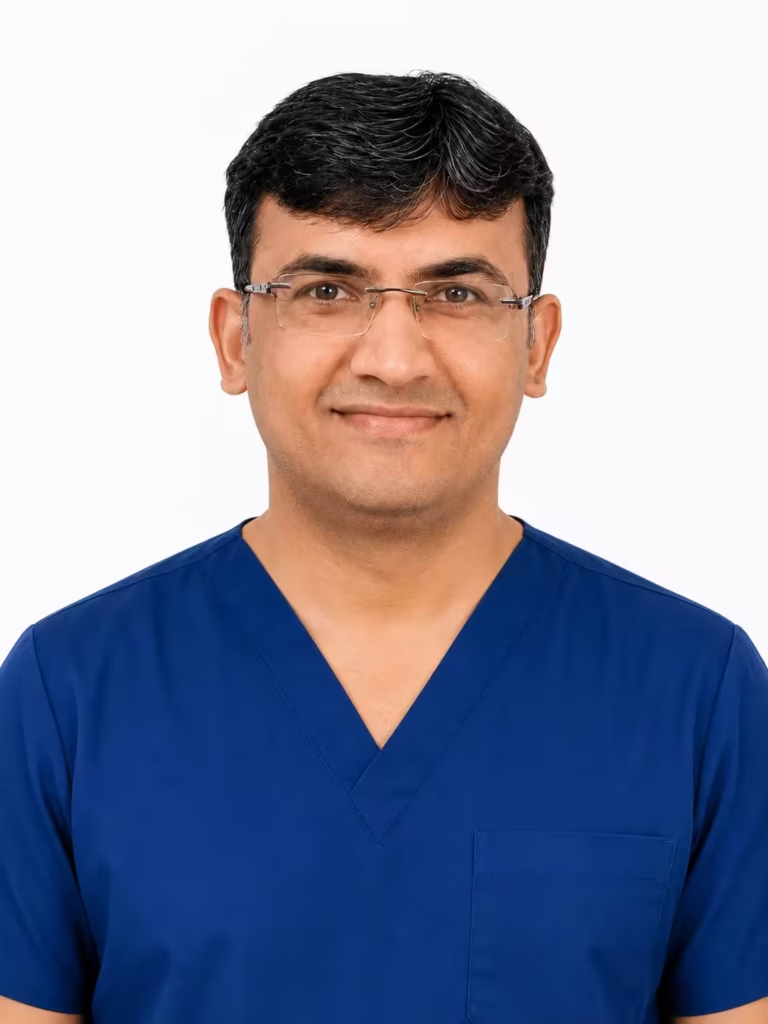
Dr. Pranay Shah
Director & Chief Fertility Consultant
Divyesh Bhalodia
Senior Embryologist

Urmi Chauhan
Clinical Embryologist
Additional Advanced Technologies Available at Wellspring IVF
The Vastrapur patient’s research typically extends beyond blastocyst culture and PGT-A. Here is a concise reference to the other advanced laboratory technologies available at our Satellite clinic:
Technology | What It Does | Who Benefits |
|---|---|---|
IMSI (Intracytoplasmic Morphologically Selected Sperm Injection) | Sperm selection at 6,000–8,000× magnification (vs standard ICSI at 400×) to identify and exclude sperm with nuclear vacuoles or structural defects invisible at lower magnification | Recurrent IVF failure, high sperm DNA fragmentation, previous poor fertilisation or embryo quality despite normal semen analysis |
A precise infrared laser creates a small opening in the zona pellucida (outer shell) of an embryo to facilitate hatching and implantation | Thickened zona pellucida, frozen-thawed embryos, recurrent implantation failure, advanced maternal age | |
A single sperm is directly injected into the cytoplasm of a mature egg using micromanipulation equipment | All male factor infertility, low sperm count / motility / morphology, surgical sperm retrieval (TESE/PESA) | |
Vitrified (flash-frozen) embryos from a prior IVF cycle are thawed and transferred in a prepared endometrial cycle | Freeze-all strategy, PGT-A cycles (mandatory), OHSS prevention, segmented IVF protocol, embryo banking for low AMH patients | |
Extended embryo culture to blastocyst stage (100–200 cells) enabling natural embryo selection before transfer | All patients with 3+ fertilised embryos — standard of care at Wellspring IVF for eligible cycles |
The Laboratory That Makes Advanced Technology Possible
For a research-driven Vastrapur patient, knowing which technologies a clinic offers is only half the question. The more important question is whether the laboratory environment is capable of reliably delivering those technologies at the quality standard that published outcomes data assumes.
Wellspring IVF Embryology Lab — Technical Specifications
- Class 10,000 Cleanroom IVF Laboratory: Controlled air quality with HEPA filtration and VOC (Volatile Organic Compound) monitoring. Contaminated air is the single most underappreciated cause of poor blastocyst development rates in IVF laboratories globally.
- Trigas Incubators: CO₂ / O₂ / N₂ controlled incubators maintaining 5% O₂ (physiological oxygen concentration) — critical for blastocyst development. Standard CO₂-only incubators at ambient O₂ (~21%) create oxidative stress that damages embryo mitochondria.
- Temperature Monitoring: Continuous digital logging of incubator temperature (±0.1°C tolerance). Temperature fluctuation beyond 0.5°C during critical embryo development stages causes irreversible cellular damage.
- ICSI and IMSI Workstations: Inverted microscopes with micromanipulation equipment for ICSI (standard 400× magnification) and IMSI (Nomarski DIC optics at 6,000–8,000× magnification for nuclear vacuole identification).
- Vitrification System: Rapid-cooling cryopreservation at cooling rates exceeding 15,000°C/min — eliminating ice crystal formation that destroys embryo cell structure. Survival rates for vitrified blastocysts exceed 95% in our laboratory.
- Dedicated Senior Embryologist: In-house embryology team with no outsourcing of fertilisation, embryo culture, biopsy, or vitrification to external laboratories. Your embryos are handled by the same trained team from retrieval to transfer.
A Message from Dr. Pranay Shah
“
I genuinely enjoy consultations with well-informed patients. When someone arrives having read about blastocyst grading, or having downloaded a published paper on PGT-A success rates, it tells me they take this seriously — and it means we can have a real scientific conversation about what the evidence says for their specific case, not a generic overview.
My commitment to every Vastrapur patient is this: I will tell you exactly what the current evidence supports for your situation. If blastocyst culture and PGT-A are indicated for you, I will explain precisely why. If they are not indicated, I will explain why — and I will not recommend them simply because they are available or because you expect them. The protocol that gives you the best chance of a healthy pregnancy is not always the most technologically complex one.
Your research has brought you to the right clinic. Now let us use that research together.
— Dr. Pranay Shah, Director & Chief Fertility Consultant, Wellspring IVF & Women’s Hospital
Serving the Entire Ahmedabad Community
Vastrapur patients choose Wellspring IVF for the quality of clinical technology — not because it is the closest option. That same principle guides patients from every part of Ahmedabad who prioritise care above convenience. Our Ahmedabad Clinic Hub has complete directions from every approach. If you know someone from another part of the city who is looking for advanced fertility care, the neighbourhood guides below will help:
Frequently Asked Questions
Common questions from Vastrapur couples regarding Day 5 blastocyst culture, PGT-A genetic testing, embryo grading transparency, and evidence-based IVF success rates.
Ask a QuestionIs Day 5 Blastocyst Culture always better than Day 3 transfer, or does the evidence depend on patient profile?
The evidence strongly favours blastocyst culture for patients with 3 or more fertilised embryos — published systematic reviews and meta-analyses consistently show higher live birth rates per transfer for blastocyst-stage embryos in this group. However, for patients with only 1–2 fertilised embryos, extended culture carries a real risk of embryo arrest — meaning no embryo reaches blastocyst stage and there is nothing to transfer. In this scenario, a Day 3 transfer may preserve your chance of a transfer. Dr. Shah makes this decision based on your actual fertilisation outcome on Day 1, not as a blanket protocol decision. The published NICE guidelines (UK) and ESHRE consensus both reflect this nuanced position.
What exactly does PGT-A screen for, and what does it miss?
PGT-A uses Next Generation Sequencing (NGS) to screen all 23 chromosome pairs for numerical abnormalities — trisomies (extra chromosome), monosomies (missing chromosome), and some structural rearrangements. It reliably detects Down syndrome (trisomy 21), Turner syndrome (monosomy X), and other aneuploidies that are the primary cause of IVF failure and miscarriage. What PGT-A does NOT detect: single-gene disorders (e.g., cystic fibrosis, BRCA mutations — these require PGT-M), very small chromosomal deletions below detection threshold, and epigenetic factors. PGT-A also produces a small rate of false positives and false negatives — Dr. Shah will discuss the diagnostic accuracy and limitations with you at consultation.
We are both IIM Ahmedabad graduates and want to understand the actual success rate data — what do your numbers look like?
At Wellspring IVF, our reported IVF success rate is 70%+ per blastocyst transfer cycle. This figure is based on clinical pregnancy rates (confirmed heartbeat at 6–7 weeks) from our blastocyst-stage single embryo transfers. We are happy to provide a more granular breakdown at your consultation — stratified by age group and diagnosis if you wish. Dr. Shah will also give you a personalised success rate estimate for your specific case based on your ovarian reserve, partner sperm parameters, and any prior cycle history.
Is IMSI actually superior to standard ICSI, or is the published evidence mixed?
This is an excellent question and the honest answer is: the evidence is mixed. Several RCTs (Randomised Controlled Trials) show improved embryo quality and reduced miscarriage rates with IMSI, particularly in patients with recurrent IVF failure or high sperm DNA fragmentation. Other studies show no statistically significant improvement in live birth rates compared to standard ICSI in unselected populations. Current ESHRE guidance does not recommend IMSI as a universal replacement for ICSI. At Wellspring IVF, Dr. Shah recommends IMSI selectively — specifically for cases of recurrent IVF failure, high DNA fragmentation index, or significantly poor embryo quality in prior cycles — not as a premium add-on for all patients. We believe in evidence-proportionate technology use.
Can I review my embryo development data and grading scores during my cycle?
Yes. Dr. Pranay Shah believes strongly in transparent embryology communication. After your egg retrieval and fertilisation, our embryology team provides daily updates on embryo development — fertilisation outcome on Day 1, cleavage quality and cell count on Day 3, and blastocyst grading on Day 5. You will know the full morphological grade of each blastocyst and Dr. Shah will discuss what the grading means for your transfer decision. Nothing is withheld. If you wish to understand the scientific basis for any embryology recommendation, ask — and you will get a complete, evidence-based explanation.
What is the risk of biopsy for PGT-A damaging my embryo?
Trophectoderm biopsy for PGT-A carries a small but real procedural risk. Published data from experienced centres indicates that competently performed trophectoderm biopsy reduces blastocyst survival rate by approximately 1–3% versus unbiopsied blastocysts. This risk is significantly lower than the older approach of Day 3 cleavage biopsy (which removed 1 of 8 cells — 12.5% of the embryo’s mass), as trophectoderm biopsy removes only 5–8 cells from the hundreds in the outer cell layer. At Wellspring IVF, PGT-A biopsy is performed only by our experienced embryologist. Dr. Shah will discuss the risk-benefit ratio specific to your case before recommending the procedure.
How much do PGT-A and blastocyst culture add to the cost of an IVF cycle?
Blastocyst culture is included within Wellspring IVF’s standard IVF package for all patients where it is clinically appropriate — it is not an add-on charge. PGT-A involves an additional cost, primarily because the genetic analysis (NGS at an accredited genetics laboratory) is a separate external service with per-embryo biopsy and testing fees. Dr. Shah’s team will provide a complete, itemised cost estimate at your consultation — there are no hidden charges. The exact cost depends on the number of embryos biopsied.
Your Research Has Found the Right Clinic
6 minutes from Vastrapur Lake. The science you have been looking for, practised the way the evidence demands.