Donor Egg IVF in Ahmedabad
For many couples and individuals, the fertility journey takes an unexpected turn. After months — sometimes years — of treatment, tests, and hope, a specialist may gently explain that using donor eggs offers the highest chance of achieving a successful pregnancy. In that moment, this can feel overwhelming.
At Wellspring IVF & Women’s Hospital, we want you to know this: choosing donor egg IVF is not giving up. It is choosing a new, highly effective path toward the family you have dreamed of. Under the care of Dr. Pranay Shah, Director & Chief Fertility Consultant, our team guides each couple through this emotionally sensitive and medically complex process with complete transparency, warmth, and strict adherence to India’s ART (Regulation) Act 2021 and Rules 2022.
Request a Free Callback
What Is Donor Egg IVF?
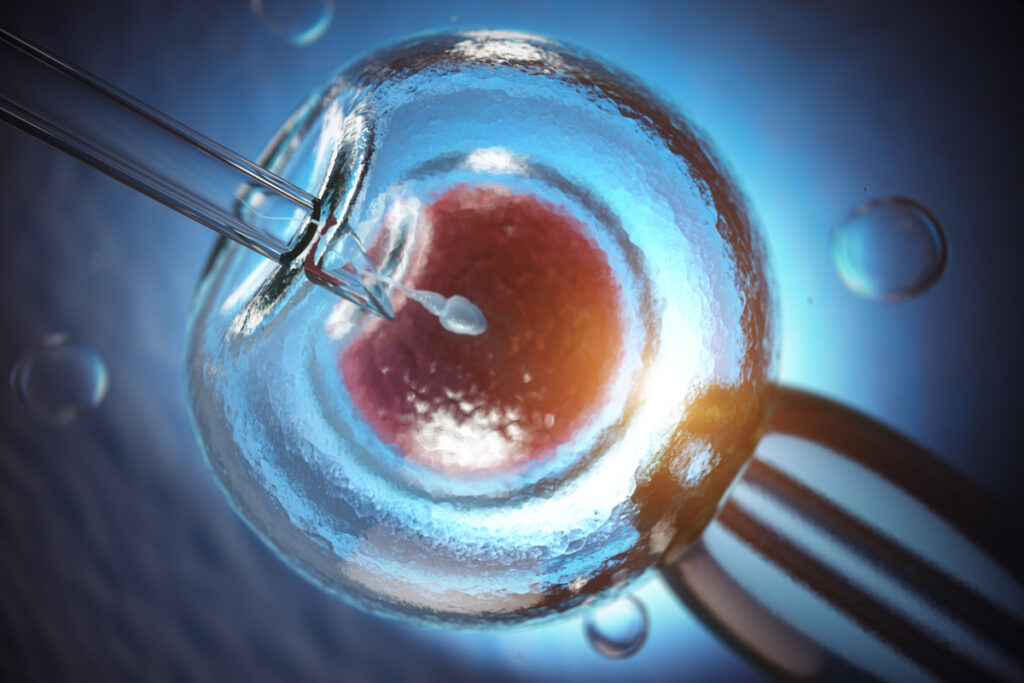
Donor egg IVF — also called Oocyte Donation IVF or Third-Party Reproduction — is a form of In Vitro Fertilisation in which eggs (oocytes) from a carefully screened, anonymous volunteer donor are fertilised in our IVF laboratory with the male partner’s sperm (or donor sperm, when clinically indicated). The resulting embryo(s) are then transferred into the intended mother’s uterus.
Donor Egg IVF in Ahmedabad at Wellspring — Key Facts at a Glance
- Success Rate: 70–75% per transfer cycle — among the highest outcomes in ART
- Regulatory Compliance: Full compliance with ART (Regulation) Act 2021 & ART Rules 2022
- Donor Anonymity: Complete confidentiality guaranteed by law — no contact between donor and recipient except in case of known Donor.
- Donor Eligibility: Volunteer donors only — married women, age 23–35, with at least one child (minimum 3 years old)
- Contact: +91 9099946050 | www.wellspringivfsurrogacy.com
What Donor Egg IVF Means for You — The Legal and Emotional Reality
The intended mother carries the pregnancy. She nurtures the baby throughout gestation. She gives birth. While the resulting child will not share her genetic material, she is the child’s legal, biological, and emotional mother in every meaningful sense — a fact recognised fully under Indian law.
Recent epigenetic research also suggests that the uterine environment during pregnancy influences foetal gene expression in meaningful ways — the mother’s body actively shapes the developing child from the earliest weeks of pregnancy.
Child born through donor egg IVF holds no legal claim over the donor, and the donor holds no claim over the child, cementing that the intended couple are the sole legal parents from the split second of birth under Indian law.
Why Is the Success Rate So High with Donor Eggs?
Egg quality is the single most important determinant of IVF success. As women age, egg quality naturally declines — and this cannot be reversed through medication, lifestyle changes, or supplements. Donor eggs come from young, healthy, thoroughly screened women in their prime reproductive years, which dramatically improves fertilisation rates, embryo quality, and implantation rates — regardless of the recipient’s age.
| Procedure Type | Approximate Success Rate per Transfer |
|---|---|
| Standard IVF (own eggs, age 35-37) | 25-35% |
| Standard IVF (own eggs, age 38-40) | 15-22% |
| Standard IVF (own eggs, age 40+) | 5-10% |
| Donor Egg IVF – all recipient ages | 70-75% |
70–75% success rate applies to all recipient ages — the donor’s egg quality, not the recipient’s age, is the primary determinant of outcome.
Note: Success rates vary by individual clinical factors. These figures represent average outcomes based on published ART data. Dr. Pranay Shah will discuss individualised expectations during your consultation.
Watch Our Video on "Low AMH do not require Donor Egg IVF always"
Learn how donor egg IVF works, who may benefit from it, and when it may be recommended to achieve pregnancy.
What You Will Learn
Understand when donor egg IVF may be considered and how the treatment process works.
- Donor egg IVF basics
- Who may benefit from treatment
- Success factors and expectations
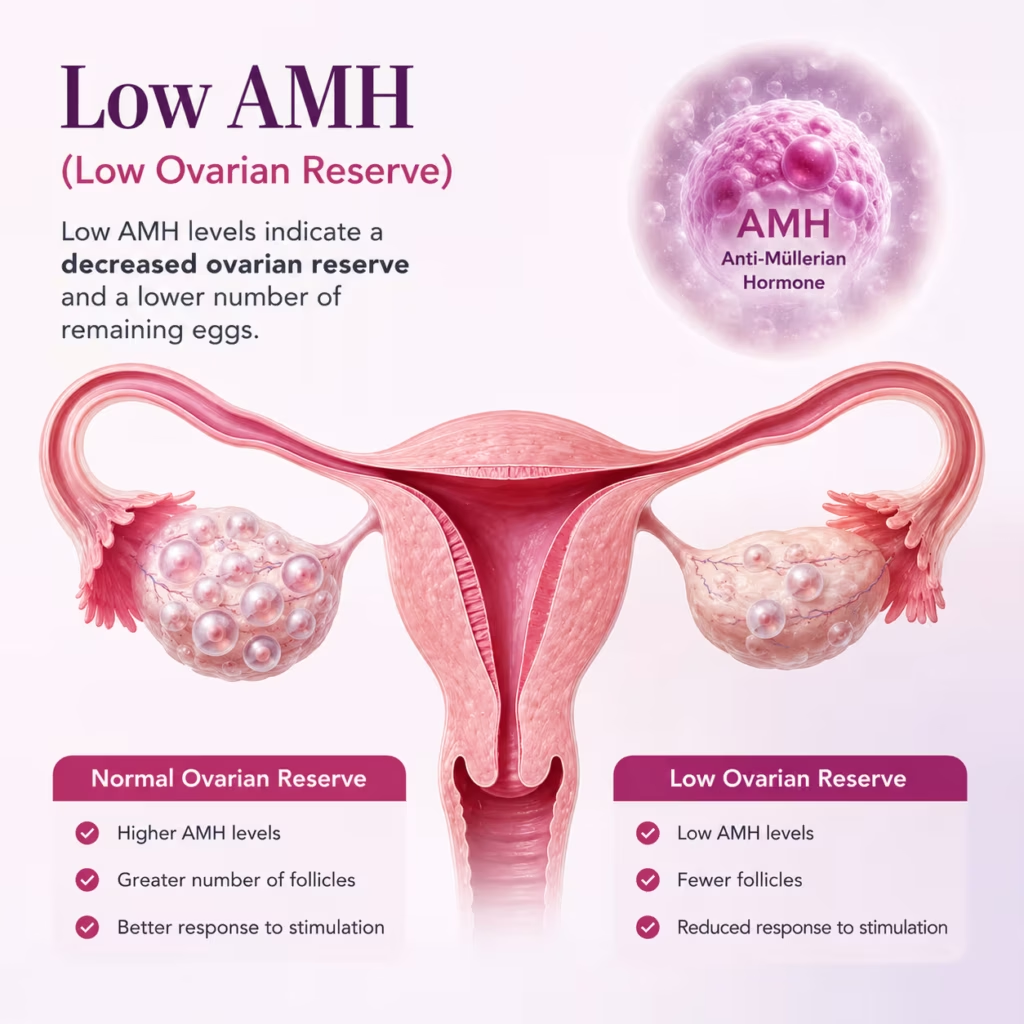
- Low AMH is not equal to Donor Egg IVF always
Who Is Donor Egg IVF Recommended For?
Dr. Pranay Shah recommends considering donor egg IVF when the following conditions are confirmed through thorough diagnostic evaluation. The decision to move to donor egg IVF is never taken lightly or prematurely. All appropriate treatment options with your own eggs are fully explored first.
Premature Ovarian Failure / POI
When the ovaries stop functioning normally before age 40, resulting in very low or absent ovarian reserve. POF/POI means the ovaries cannot respond to stimulation — donor eggs bypass this barrier entirely.
Severely Poor Ovarian Reserve & Very Low AMH
When Anti-Müllerian Hormone (AMH) levels are critically low (typically below 0.5–1.0 ng/mL) and previous stimulation cycles — including Mini-IVF and DuoStim — have produced very few or consistently poor-quality eggs. When own-egg attempts have been genuinely exhausted, donor eggs offer a dramatically higher probability of success.
Repeated IVF Failure with Own Eggs
When multiple well-managed IVF cycles using the patient’s own eggs have consistently resulted in poor fertilisation, poor embryo development, or failed implantation despite optimal treatment protocols. Persistent failure despite good clinical management is a clear indication that egg quality — not the treatment approach — is the limiting factor.
Advanced Reproductive Age (40+)
When age-related egg quality decline significantly reduces the chances of success with own eggs, and the couple has been counselled about realistic expectations from own-egg IVF. Age is the most powerful predictor of egg quality, and this cannot be reversed by any available intervention.
Genetic Disease Carrier
When both partners carry a serious inheritable genetic condition that cannot be screened out through PGT-A/PGT-M, and using donor eggs avoids the transmission risk to the child. This is a specific medical indication discussed in detail with Dr. Shah and a genetic counsellor.
Surgically Absent or Non-Functional Ovaries
Following oophorectomy (surgical removal of ovaries) or in cases of gonadal dysgenesis where functional ovaries are absent from birth. Donor eggs make IVF possible for women who have no ovarian tissue available for stimulation.
Menopause — Natural or Surgical
Women who have entered natural or surgical menopause but retain a healthy, functional uterus and wish to experience pregnancy. With donor eggs and appropriate hormonal preparation of the uterine lining, pregnancy is achievable for post-menopausal women in selected cases.
Compassionate Escalation, Not a Shortcut
Wellspring ensures every investigation is complete and all reasonable own-egg treatment options have been explored before recommending donor eggs.
Need a Second Opinion?
Speak with Dr. Shah for a diagnosis review and a realistic conversation about whether donor egg IVF is truly the right next step.
Important Note from Dr. Pranay Shah
The decision to move to donor egg IVF is never taken lightly or prematurely. At Wellspring, we ensure that all diagnostic investigations are complete and all appropriate treatment options with your own eggs have been thoroughly explored before donor egg IVF is recommended.
This conversation is always held with compassion, clarity, and respect for your emotional journey. Call us at 9099946050 to speak with our counselling team.
Donor Egg Programme at Wellspring - 100% ART Act 2021 Compliant
This is perhaps the most important section for couples considering this path. India’s Assisted Reproductive Technology (Regulation) Act 2021 and the ART Regulation Rules 2022 place strict, non-negotiable requirements on all aspects of oocyte donation. Wellspring IVF operates in complete compliance with these regulations. Understanding these rules will help you feel confident and legally protected.
Who Can Be an Egg Donor? — Legal Eligibility Criteria (ART Act 2021)
Under the ART (Regulation) Act 2021, oocyte donation in India is strictly voluntary and regulated. Commercial egg donation is explicitly prohibited by law. A donor cannot be compensated monetarily beyond reasonable medical expense reimbursement. At Wellspring, all donors are registered through a licensed ART Bank and must meet all of the following mandatory eligibility criteria:
ART (Regulation) Act 2021 — Mandatory Donor Eligibility Criteria
- Voluntary Donation: The donor must voluntarily consent to donate her oocytes. No financial inducement or coercive pressure is permitted under any circumstance.
- Age: The donor must be between 23 and 35 years of age at the time of donation.
- Marital Status: The donor must be a married woman.
- Proven Fertility: The donor must already have at least one living child of her own. That child must be a minimum of 3 years of age at the time of donation.
- Health Screening: The donor must be free from HIV (Types 1 & 2), Hepatitis B, Hepatitis C, and Syphilis (VDRL), as mandated by Rule 10 and Rule 14 of the ART Rules 2022. She must also be free of known genetic disorders.
- Identification: The donor’s Aadhaar card number is recorded by the ART Bank for regulatory and national registry purposes.
- Donation Limit: An oocyte donor can donate to a maximum of one couple only in her lifetime, as per ART Act 2021 provisions.
- Independent Counselling: Every donor must receive counselling from an independent counsellor — separate from the treating physician — before providing consent, as required under Form 13 of the ART Rules 2022.
IMPORTANT: Payments & Financial Arrangements — ART Act 2021
Under the ART Act 2021, commercial donation is strictly prohibited. Couples do NOT pay the donor directly.
Instead, the intended couple pays stipulated processing and service charges to the registered ART Bank only. This amount covers donor screening, medical evaluation, counselling, and administrative costs — not a ‘fee’ to the donor.
This structure protects both the donor and the recipient couple legally. Wellspring IVF works only with properly registered ART Banks in full compliance with this framework.
Complete Donor Anonymity — Your Legal Right and Hers
The identity of the egg donor is completely confidential. By law, there is no direct or indirect contact between the donor and the recipient couple.
The donor’s personal identity is never disclosed to the recipient couple, and the recipient couple’s identity is not disclosed to the donor.
However, in the event of a medical necessity — such as a hereditary disease appearing in a child born from donated eggs — the identity of the donor may be disclosed by the ART Bank to the appropriate medical authority only, as required by law. This provision is for medical protection of the child.
The donor’s Aadhaar details are held securely by the ART Bank registry and are accessible only to regulatory authorities. Wellspring does not hold or disclose donor identity information.
What Our Patients Say


A special thank you to Dr. Pranay Shah for his confidence, guidance, and the way he explained everything so patiently. His positive approach gave me so much strength, and today I am blessed with my baby.
Thank you to each and every member of the hospital for taking such great care of me and supporting me throughout this journey. Forever grateful. 💕

He is, without a doubt, the most patient doctor I have ever met. Of course, treatment can be done by many. What truly sets him apart is his maturity, the way he pauses, explains, comforts, and most importantly, seeks your permission before moving forward. You never feel rushed. You never feel unheard. You feel respected.
And the staff deserves equal appreciation. They handle even the most anxious and impatient moments with such calm grace and dignity that you slowly find your own heartbeat settling down. It feels less like a clinic and more like a safe space.
I wholeheartedly recommend him to anyone who overthinks, seeks reassurance, or simply needs a doctor who believes comfort is the first step of healing. With him, care begins long before the treatment does.

Highly recommend for their expertise, kindness and dedication. "Turned out dream into reality"



Our gratitude also extends to everyone in your clinic who offered a smile, reassurance, technical support, or a listening ear along the way. We feel incredibly blessed to have chosen your practice for our journey, and we will always cherish the precious gift you helped us receive.
Thank you, from the bottom of our hearts, for making our dream a reality.
Join 750+ Satisfied Families
The Donor Egg IVF Process at Wellspring
The donor egg IVF cycle involves two parallel processes — the donor’s ovarian stimulation and egg retrieval, and the intended mother’s uterine preparation — that are carefully synchronised by Dr. Shah’s team. Here is the complete process from your first consultation to the pregnancy test.
Initial Consultation, Investigation & Counselling
Your journey begins with a detailed consultation with Dr. Pranay Shah. This covers a full review of your medical history and previous fertility investigations, assessment of uterine health via transvaginal ultrasound, baseline blood tests (hormonal profile, infectious disease screening, uterine cavity evaluation by saline infusion sonography if indicated), and an honest, compassionate discussion of your diagnosis, realistic success expectations, and the complete donor egg process. Independent counselling with our fertility counsellor is arranged before any consent is signed.
Donor Selection via Licensed ART Bank after Legal Consent & Documentation
Wellspring IVF coordinates with a licensed ART Bank to identify a suitable donor who matches the general physical characteristics of the intended mother (height, weight, skin tone, blood group, eye colour) after completing standard IVF/ART consent (Form 6), oocyte retrieval consent (Form 12), anonymous gamete terms, and parentage acknowledgments. You are not provided with identifying information about the donor. The ART Bank provides a general phenotypic profile only. The ART Bank ensures the donor has passed all mandatory health screening and meets all legal eligibility criteria under the ART Act 2021 before any cycle proceeds. Intending couple must purchase a standard health insurance policy in favor of the oocyte donor for 12 months (covering retrieval complications under Rule 12 of the ART Rules 2022).
Recipient Uterine Preparation — Endometrial Protocol
While the donor undergoes ovarian stimulation, the intended mother begins an endometrial preparation protocol. This involves oestrogen supplementation (oral, patches, or vaginal) to build up the uterine lining to the optimal thickness (target: ≥ 8mm, trilaminar pattern). The uterine lining is monitored via serial transvaginal ultrasound scans. Once optimal endometrial readiness is confirmed, progesterone supplementation is started — and the embryo transfer is scheduled precisely around the endometrial window of implantation.
Donor Stimulation, Egg Retrieval & Fertilisation
The donor undergoes controlled ovarian stimulation under the ART Bank’s medical supervision. The donor’s egg retrieval (OPU) is timed to coincide with the intended mother’s endometrial readiness. Retrieved oocytes are transported to Wellspring’s IVF laboratory, where they are fertilised using the male partner’s sperm (or donor sperm) via ICSI. Resulting embryos are cultured to Day 3 or Day 5 (blastocyst stage). Surplus good-quality embryos are vitrified (frozen) for potential future FET cycles.
Embryo Transfer — The Critical Moment
The best-quality embryo is selected for transfer into the prepared uterine cavity. The embryo transfer is a brief, gentle procedure — similar to a Pap smear. No anaesthesia is required. The number of embryos transferred is decided by Dr. Shah based on embryo quality, the intended mother’s uterine assessment, and ART guidelines — typically 1–2 embryos to achieve a good pregnancy rate while minimising multiple pregnancy risk. Post-transfer progesterone support is continued for 14 days.
Pregnancy Test & Follow-Up
A blood Beta-hCG test is performed 14 days after embryo transfer. A positive result is confirmed by a rising hCG level (repeated 48 hours later) and a confirmatory ultrasound at 6–7 weeks to visualise the fetal heartbeat. A negative result triggers a consultation with Dr. Shah to review the cycle and discuss the next step — typically FET using vitrified embryos from the same cycle, if available, without repeating donor stimulation.
Cycle Synchronisation — The Twin-Track Process
The most technically important aspect of donor egg IVF is the precise synchronisation between the donor’s stimulation cycle and the recipient’s uterine preparation. Both tracks run in parallel:
Donor Track
- Ovarian stimulation begins on Day 2-3.
- Follicular monitoring scans are performed, usually 3-5 scans.
- Trigger injection is given when follicles mature.
- Egg retrieval is performed, usually around Day 12-16.
- Eggs are fertilised via ICSI and embryos are cultured.
- Surplus embryos may be vitrified for future FET.
Recipient Track
- Oestrogen supplementation begins.
- Endometrial monitoring scans confirm lining progress.
- Progesterone starts once the lining reaches readiness.
- The implantation window is confirmed.
- Embryo transfer is scheduled on Day 3 or Day 5.
- Beta-hCG testing follows after 14 days of luteal support.
Talk to Dr. Shah About Cavity Optimisation
Donor Egg IVF Cost in Ahmedabad — Transparent, No Hidden Charges
Wellspring IVF operates a strict no-hidden-costs philosophy. The complete cost structure of a donor egg IVF cycle at Wellspring is transparent and communicated in full before you begin. Below is the standard cost component breakdown:
| Cost Component | Notes |
|---|---|
| Recipient Work-up & Consultation | Initial assessment, baseline scans, blood tests, and counselling. |
| Endometrial Preparation Medications | Oestrogen and progesterone itemised according to protocol. |
| Monitoring Scans | Standard recipient ultrasound monitoring during preparation. |
| ART Bank Charges | Donor screening, registration, and bank administrative fees regulated under the ART Act 2021. |
| Donor Stimulation & OPU | Covered through the ART Bank structure in compliance with the legal framework. |
| IVF Laboratory – Fertilisation & Culture | ICSI procedure, embryo culture, and embryology charges. |
| Embryo Transfer | Fresh or frozen transfer procedure and related clinical charges. |
| Embryo Vitrification & Storage | Per embryo or per cycle charge plus annual storage, when applicable. |
| Beta-hCG Pregnancy Test | Standard pathology at 14 days post-transfer. |
| FET Cycle | If surplus embryos exist, Frozen Embryo Transfer is usually far more affordable than repeating a fresh donor cycle. |
Get a Personalised Cost Estimate
The total cost of a donor egg IVF cycle at Wellspring depends on your specific clinical needs, ART Bank requirements, and number of embryos produced. Dr. Shah’s team will provide a complete, itemised cost estimate at your initial consultation — with no hidden costs.
Call / WhatsApp: +91 9099946050 | dev.wellspringivfsurrogacy.com
Your Fertility Consultant
Our fertility specialists are committed to providing personalized, compassionate care with
the latest reproductive medicine techniques.

Dr. Pranay Shah
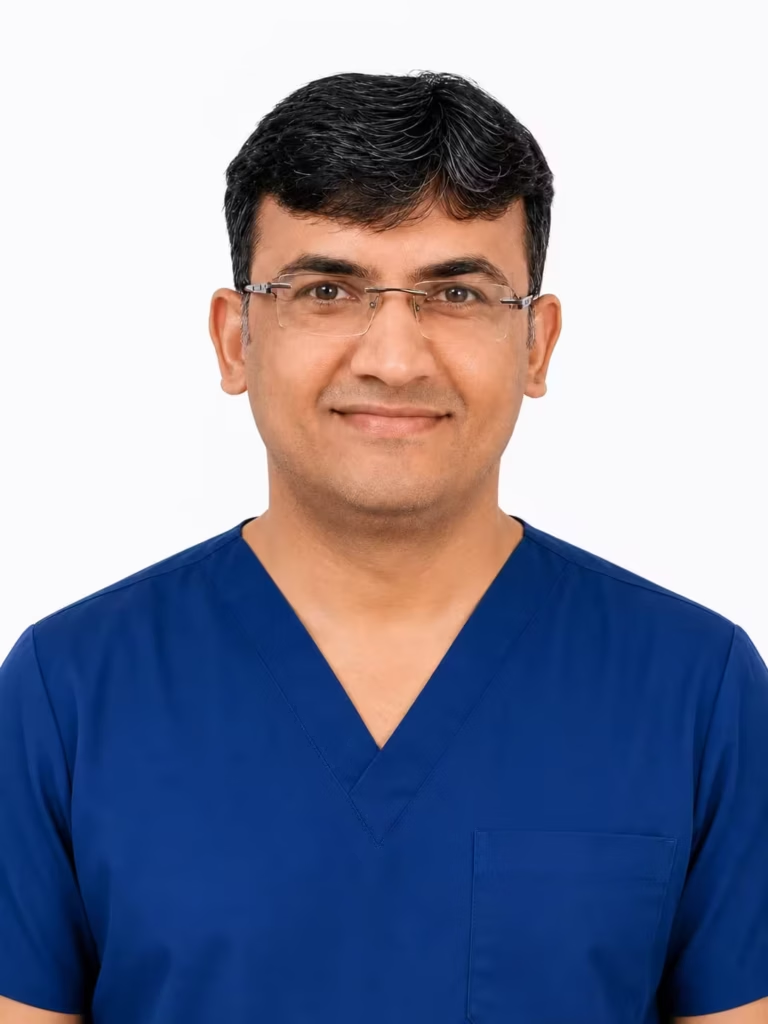
Divyesh Bhalodia
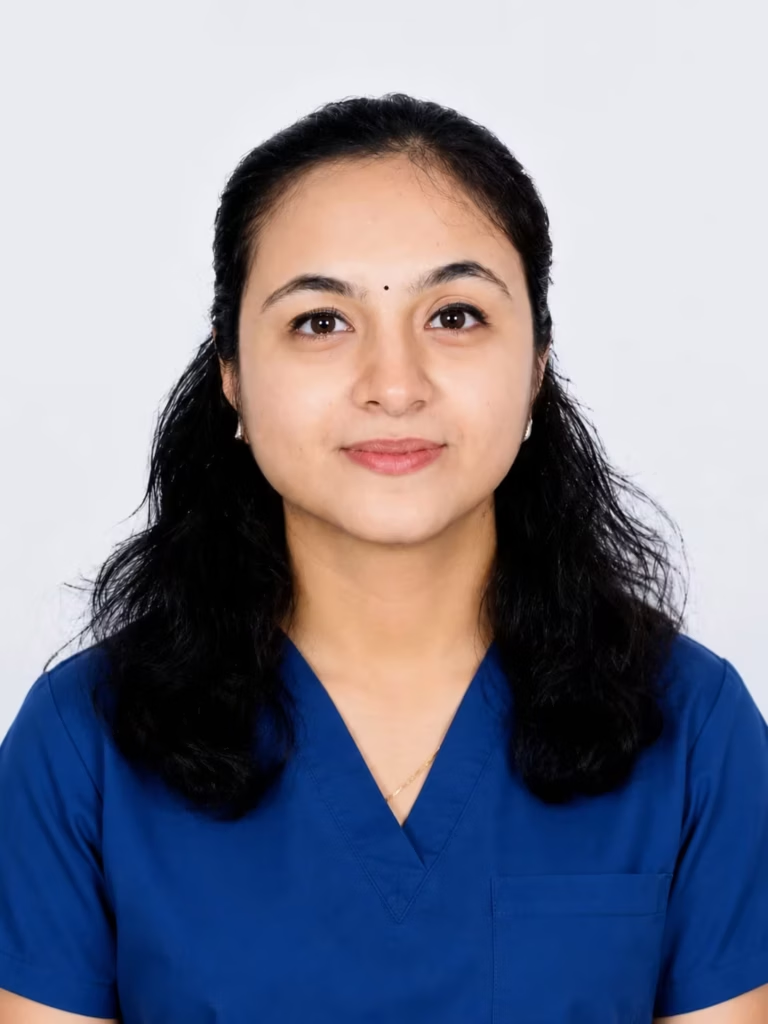
Urmi Chauhan
The Emotional Journey - You Are Not Alone
For many intended mothers, the decision to use donor eggs comes after a long and emotionally exhausting journey. There may be grief for the genetic connection that will not be part of this child’s story. This grief is real, valid, and deserves space.
At the same time, research in reproductive psychology consistently shows that the mother-child bond formed through pregnancy, birth, and parenting is powerful, deep, and complete regardless of genetic connection. Many mothers who have completed donor egg IVF describe feeling a profound biological and emotional connection with their child from the earliest weeks of pregnancy.
Wellspring’s counselling team supports couples through this transition without pressure or judgment. The goal is to help you process the decision, ask every difficult question, and move forward only when you feel genuinely ready.
“When Dr. Pranay Shah explained why donor eggs gave us the best chance, I cried. But he sat with us for over an hour, explained everything patiently, and made us feel truly cared for. Our daughter is 2 years old now. Every day I know she is completely, entirely mine.”
– Patient from Ahmedabad (name withheld for privacy)
Frequently Asked Questions
Will I have any genetic connection to my child born through donor egg IVF?
The child will not carry your genetic material from the egg. However, recent epigenetic research suggests that the uterine environment during pregnancy does influence foetal gene expression in meaningful ways, and from a legal, social, and parental perspective you are fully and entirely this child’s mother, recognised as such under Indian law.Is commercial egg donation or paid egg donation legal in India?
No. Under the ART (Regulation) Act 2021, commercial egg donation is strictly prohibited. Donors cannot be paid money. Only reasonable medical expense reimbursements are permitted, and these are processed through the licensed ART Bank, not directly between the donor and the recipient couple.Can I know who my egg donor is?
No. Donor identity is completely confidential and legally protected under the ART Act 2021. There is no direct or indirect contact between the donor and the recipient couple. This anonymity protects all parties, including the child, and is a non-negotiable provision of the law.What are the age and eligibility requirements for egg donors in India?
Egg donors must be between 23 and 35 years of age, must be married, and must already have at least one living child who is a minimum of 3 years old at the time of donation. The donor must also pass all mandatory infectious disease and genetic screening tests.Can I use a known donor like a relative or friend?
The ART Act 2021 does not permit directed known donation from a close relative or friend in the same way as anonymous bank donation. The law requires donors to be registered through a licensed ART Bank. If you are considering this option, please discuss it directly with Dr. Pranay Shah for advice on what is legally permissible in your situation.What happens if the first transfer does not result in pregnancy?
If surplus good-quality embryos were vitrified in your cycle, these can be used in a subsequent Frozen Embryo Transfer cycle without repeating the full donor stimulation process. This is one of the major advantages of a donor egg cycle.How many embryos will be transferred?
This depends on embryo quality, the intended mother’s uterine assessment, age, and ART guidelines. Typically 1-2 embryos are transferred to achieve a good pregnancy rate while minimising the risk of higher-order multiple pregnancies.Is the 70-75% success rate for donor egg IVF accurate?
Yes. This is consistent with published international and Indian ART data for donor egg transfers. However, individual outcomes depend on uterine health, endometrial receptivity, embryo quality, and sperm quality. No IVF centre can guarantee a specific outcome.
Related Insights & Articles
 Blocked fallopian tubes can make it hard for a woman to get pregnant. But there are ways to treat this…June 11, 2026
- Are you feeling worried about low AMH and IVF? You are not alone. Many women have to face the same…June 11, 2026
- Can You Increase AMH Levels Naturally? What Science Says About Low AMH and Fertility Quick Answer In most cases, AMH…June 11, 2026