IVF Treatment in Ahmedabad - Transparent Costs. Proven Protocols. Unwavering Ethics.
Starting IVF is one of the most significant decisions a couple will make. It deserves complete honesty — about what the process involves, what it costs, what success rate is realistic for your specific situation, and what happens if the first cycle does not succeed.
At Wellspring IVF & Women’s Hospital, Dr. Pranay Shah has built a practice on exactly this foundation. In 15 years and 6,000+ IVF successes, no couple has ever been surprised by a cost they were not told about. No couple has been pushed toward a procedure they did not need. And every couple has received the same evidence-based, individualised protocol — not a generic one-size cycle applied to everyone who walks through the door.
This page answers everything. The complete IVF process — step by step. What IVF costs in Ahmedabad — with full transparency. What factors actually determine your success rate. And when IVF is — and is not — the right next step. If you have a question not answered here, the answer is one call away.
Request a Free Callback
Your information is completely safe and confidential. By submitting, you agree to be contacted about your enquiry.
What Is IVF? — In Vitro Fertilisation Explained Simply
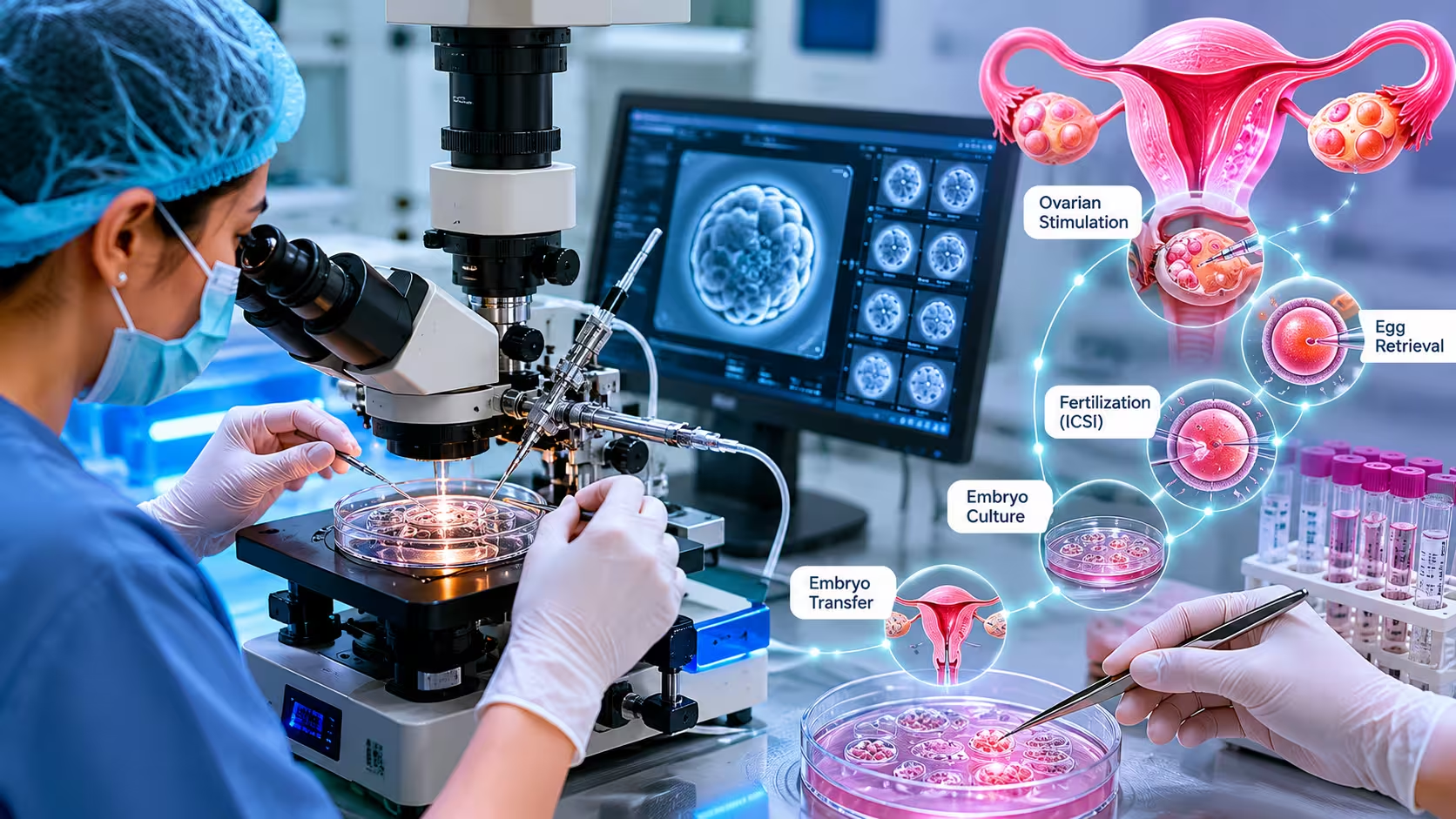
IVF stands for In Vitro Fertilisation — ‘in vitro’ means ‘in glass’ in Latin, referring to the process happening outside the body in the embryology laboratory. In natural conception, fertilisation occurs inside the fallopian tube. In IVF, Dr. Shah’s team recreates this process with precision in our advanced lab — controlling conditions that nature cannot.
The process has five core phases: hormonal stimulation of the ovaries to produce multiple mature eggs, retrieval of those eggs under sedation, fertilisation with prepared sperm in the embryology lab, culture of the resulting embryo for 3–5 days, and transfer of the best-quality embryo to the uterus. The entire process, from stimulation to pregnancy test, takes approximately 4–6 weeks.
IVF is not a single ‘procedure’ — it is a precisely sequenced medical protocol where every decision — stimulation dose, trigger timing, sperm selection technique, transfer day, progesterone support — is individualised. The quality of these micro-decisions, made by the embryologist and the fertility consultant working in sync, is the true determinant of IVF success. This is where Wellspring IVF’s in-house team model delivers its advantage.
70%+
IVF Success Rate
6,000+
IVF Success Stories
750+
5-Star Reviews
15+ Yrs
Dr. Shah's Fertility Experience
IVF at Wellspring — At a Glance
| Feature / Metric | Details |
|---|---|
| What Is IVF | In Vitro Fertilisation — eggs retrieved from the ovaries, fertilised with sperm in our embryology lab, and the resulting embryo transferred to the uterus. |
| IVF Success Rate | 70%+ per cycle for women under 35 with good ovarian reserve. Rates vary by age, diagnosis, and protocol — discussed transparently at consultation. |
| IVF Cost Range | ₹99,999 to ₹2,50,000 per cycle (see full breakdown in Section 5). Cost depends on protocol complexity, medications, and add-ons required. |
| Duration — One Cycle | Approximately 4–6 weeks from stimulation start to pregnancy test result. |
| Success Stories | 6,000+ IVF success stories | 750+ 5-star Google reviews. |
| Technology | Advanced IVF lab with HEPA-filtered, VOC-controlled air systems. In-house embryology team. Blastocyst culture, vitrification, ICSI, IMSI, PGT-A. |
| Fresh vs Frozen | Both protocols available. Dr. Shah determines the optimal strategy at consultation — not a one-size-fits-all policy. |
| IVF with ICSI | ICSI (single-sperm injection) is included in most protocols — especially where male factor is involved. |
| Ethical Commitment | No unnecessary procedures. No pressure. Full cost transparency before treatment begins. |
| ART Act 2021 | All treatments comply with ART (Regulation) Act 2021. Licensed ART facility. Registered with National ART Registry. |
| Consultation |  9099946050 | Second Opinion available. WhatsApp enquiries welcome. 9099946050 | Second Opinion available. WhatsApp enquiries welcome. |
Step-by-Step Timeline
The IVF Process
DAY 1–2
Baseline
Initial Assessment & Baseline Scan
- Transvaginal ultrasound — antral follicle count (AFC), uterine cavity assessment
- Baseline blood tests — Day 2/3 FSH, LH, Estradiol, AMH confirmation
- Protocol finalised — stimulation dose, medication schedule, calendar dates confirmed
- Medication teaching — nurse explains injection technique (self-administration at home)
DAY 2–12
Stimulation
Controlled Ovarian Stimulation (COS)
- Daily FSH/HMG injections (Gonal-F, Puregon, or Menopur) — stimulate multiple follicle growth
- GnRH antagonist (Cetrotide/Orgalutran) added Day 5–6 to prevent premature ovulation
- Monitoring scans every 2–3 days — follicle size, count, endometrial thickness
- Blood tests — Estradiol (E2) levels guide dose adjustments in real time
- Typical response: 8–15 mature follicles at Day 10–12 for good responders
- Dr. Shah reviews every monitoring result personally before dose adjustment
DAY 12–14
Trigger
Trigger Injection — Final Egg Maturation
- When lead follicles reach 17–20mm: trigger shot administered (hCG or GnRH agonist)
- Trigger type chosen based on OHSS risk — agonist trigger for high responders
- Egg retrieval scheduled precisely 34–36 hours after trigger
- Partner’s semen sample collection date and time confirmed
DAY 14
Retrieval
Egg Retrieval (Ovum Pick-Up)
- Transvaginal ultrasound-guided follicle aspiration under IV sedation — 20–30 minutes
- Performed by Dr. Shah personally — not delegated
- Embryologist receives eggs immediately in adjacent lab for preparation
- Recovery 2–4 hours. Discharge same day. Mild cramping is normal
- Average eggs retrieved: 8–15 in good responders. Fewer in DOR patients — discussed beforehand
DAY 14–15
Fertilisation
Sperm Preparation & Fertilisation
- Semen sample processed: density gradient + swim-up to select best sperm
- ICSI (recommended in most protocols): single best-quality sperm injected into each mature egg
- PICSI or MACS used when sperm DNA fragmentation is elevated
- Fertilisation confirmed Day 1 (16–18 hours after ICSI): 2-pronucleate embryos counted
- Fertilisation rate at Wellspring IVF: typically 70–80% of mature eggs
DAY 15–19
Culture
Embryo Culture — Day 1 to Day 5
- Embryos cultured in time-lapse or standard incubators — controlled temperature, pH, gas, humidity
- Daily assessment: cleavage rate, fragmentation, symmetry
- Day 3 cleavage embryo: 6–8 cells — option for Day 3 transfer in selected cases
- Day 5 blastocyst: inner cell mass + trophectoderm expansion — preferred transfer stage
- Blastocyst rate at Wellspring: 50–65% of fertilised eggs reach Day 5
- PGT-A biopsy at Day 5 if chromosomal testing is part of the plan
DAY 19–20
Transfer
Embryo Transfer
- Best-quality embryo selected — Gardner grading for blastocysts (aim: 4AA–5AA)
- Soft catheter transfer under ultrasound guidance — no sedation needed, no pain
- Single embryo transfer (eSET) is preferred to avoids twin risk
- Luteal support begins: progesterone pessaries/gel (Crinone/Utrogestan) + oestrogen
- Remaining good-quality embryos vitrified (frozen) for future FET cycles
- Rest for 30 minutes post-transfer. Return to light activity same evening
DAY 31–33
Result
Pregnancy Test — Beta-hCG
- Blood beta-hCG tested 14 days after transfer — the only reliable pregnancy confirmation
- Positive result: progesterone support continued, first ultrasound at 6–7 weeks
- Negative result: Dr. Shah consultation — review cycle, adjust protocol, plan next steps
- Frozen embryos available for FET cycle — no repeat stimulation needed
- Dr. Shah available by WhatsApp for questions during the 2-week wait
Fresh IVF Cycle vs Frozen Embryo Transfer (FET) — What Is the Difference?
One of the most common questions at consultation. The honest answer: it depends on your situation. Dr. Shah does not have a blanket policy — he has a clinical framework:
Factor | Fresh IVF Cycle | Frozen Embryo Transfer (FET) |
|---|---|---|
Embryo used | Created and transferred in same stimulation cycle | Embryo created earlier, frozen, thawed and transferred in a separate cycle |
Endometrium | Stimulated (may not be optimal — raised progesterone can reduce receptivity) | Natural or medicated — endometrium fully prepared without stimulation interference |
OHSS risk | Higher — especially in high responders | None — stimulation already completed |
Best for | Good responders with normal progesterone on trigger day, 2–3 embryos only | High responders, OHSS risk, PGT-A cases, elevated progesterone at trigger, low-AMH freeze-all strategies |
Success rates | Slightly lower in high-responders vs FET | Equivalent or better in most patient groups — particularly for PGT-A cycles |
Dr. Shah’s default | Case by case — not a blanket policy | Preferred for high responders and whenever progesterone rise >1.5 ng/mL on trigger day |
Read full guide |
|
Watch Our IVF Treatment Video
Learn how IVF treatment works, when it may be recommended, and what couples can expect during the process.
What You Will Learn
- IVF process step-by-step
- Embryo transfer and IVF treatment basics
- IVF success factors and common myths
- When IVF may be recommended
IVF Cost in Ahmedabad — Complete Transparent Breakdown of IVF Packages
The two most common experiences couples report before reaching Wellspring IVF: (1) being told 'the IVF package is ₹X' — and then receiving a bill significantly higher, or (2) comparing costs between clinics without understanding what is and is not included. Neither experience serves you. So here is our complete, honest cost structure:
This range reflects genuine clinical variation — not hidden charges. A basic IVF cycle with standard medications and single transfer costs less. A complex cycle with ICSI, PGT-A genetic testing, and FET costs more. Every cost item is explained before treatment begins. Nothing is added after.
Cost Component | Basic Cycle | Standard Cycle | Advanced Cycle |
|---|---|---|---|
Consultation | Included | Included | Included |
Stimulation monitoring (scans + blood) | Included | Included | Included |
Egg retrieval (OPU) procedure | Included | Included | Included |
Embryology lab charges (IVF only) | Included | — | — |
ICSI (sperm injection) | — | Included | Included |
Embryo culture to Day 3 | Included | Included | Included |
Blastocyst culture to Day 5 | Additional | Included | Included |
Embryo transfer (fresh) | Included | Included | Included |
Luteal phase support medications | Separate | Separate | Separate |
Stimulation injections (FSH/HMG) | Separate | Separate | Included |
Embryo vitrification (freezing) | Additional | Additional | Included |
PGT-A genetic testing | — | — | Additional |
PICSI / MACS sperm selection | — | Additional | Included |
Frozen Embryo Transfer (FET) if needed | Additional | Additional | Included |
Total estimated range | ₹99,999–₹1,20,000 | ₹1,20,000–₹1,80,000 | ₹1,80,000–₹2,50,000 |
What Is NOT Included in IVF Package — Legally Mandated Disclosures:
- Progesterone + oestrogen support medications — Luteal phase medications billed separately: approximately ₹10,000–₹12,000.
- Anaesthesia charges — IV sedation for egg retrieval: separate billing.
- Donor gametes via ART Bank — If donor oocytes are required, gametes are sourced through a licensed ART Bank under the ART (Regulation) Act 2021. ART Bank service/processing charges apply — these are the bank’s regulatory costs, not payments to donors. Egg donation under Indian law is voluntary; no compensation is paid to donors. ART Bank charges are disclosed at consultation before any decision is made.
- TESE/PESA surgical sperm retrieval — If required for azoospermia: separate procedure cost. Full guide: TESE/PESA at Wellspring IVF
- External genetic testing — PGT-A/PGT-SR testing is performed by accredited genetics labs. Laboratory costs are charged at cost price — no markup at Wellspring IVF.
What Our Patients Say
Real stories from real families who trusted us with their fertility journey

Ketan B.
2 months ago
I visited many doctors before, but this doctor was the one who correctly identified my issue and provided the right treatment. I finally started seeing real results after consulting them. Very knowledgeable, attentive, and professional. Highly recommended.

vibha R.
2 months ago
Heartfelt thanks to the entire team of Wellspring Hospital. After feeling disappointed and losing hope at many places, coming here was the best decision.
A special thank you to Dr. Pranay Shah for his confidence, guidance, and the way he explained everything so patiently. His positive approach gave me so much strength, and today I am blessed with my baby.
Thank you to each and every member of the hospital for taking such great care of me and supporting me throughout this journey. Forever grateful. 💕
A special thank you to Dr. Pranay Shah for his confidence, guidance, and the way he explained everything so patiently. His positive approach gave me so much strength, and today I am blessed with my baby.
Thank you to each and every member of the hospital for taking such great care of me and supporting me throughout this journey. Forever grateful. 💕

Kanal G.
4 months ago
Some doctors treat symptoms. Rare ones treat the human being sitting in front of them.
He is, without a doubt, the most patient doctor I have ever met. Of course, treatment can be done by many. What truly sets him apart is his maturity, the way he pauses, explains, comforts, and most importantly, seeks your permission before moving forward. You never feel rushed. You never feel unheard. You feel respected.
And the staff deserves equal appreciation. They handle even the most anxious and impatient moments with such calm grace and dignity that you slowly find your own heartbeat settling down. It feels less like a clinic and more like a safe space.
I wholeheartedly recommend him to anyone who overthinks, seeks reassurance, or simply needs a doctor who believes comfort is the first step of healing. With him, care begins long before the treatment does.
He is, without a doubt, the most patient doctor I have ever met. Of course, treatment can be done by many. What truly sets him apart is his maturity, the way he pauses, explains, comforts, and most importantly, seeks your permission before moving forward. You never feel rushed. You never feel unheard. You feel respected.
And the staff deserves equal appreciation. They handle even the most anxious and impatient moments with such calm grace and dignity that you slowly find your own heartbeat settling down. It feels less like a clinic and more like a safe space.
I wholeheartedly recommend him to anyone who overthinks, seeks reassurance, or simply needs a doctor who believes comfort is the first step of healing. With him, care begins long before the treatment does.

Kul C.
6 months ago
Dr Shah is highly knowledgeable, through and dedicated. He explained every step of the process in simple terms, ensuring we were informed and comfortable. The entire team and staff are very kind and caring.
Highly recommend for their expertise, kindness and dedication. "Turned out dream into reality"
Highly recommend for their expertise, kindness and dedication. "Turned out dream into reality"

chandresh T.
6 months ago
We had a great experience with Wellspring. Dr Pranay Shah is a very good person and possess the good knowledge. His guidance and treatment helped us fulfill our wishes. The hospital staff is also very kind and supportive. I strongly recommend Wellspring.

Ruchita S.
8 months ago
I want to express my heartfelt gratitude to Dr. Pranay Shah and the team at Wellspring IVF & Women’s Hospital. This journey is never easy, but Dr. Shah made me feel comfortable, cared for, and fully supported throughout the IVF process. Thank you

Mohamed I.
8 months ago
Our hearts are overflowing with gratitude and joy as we reflect on our incredible journey to parenthood, made possible by the extraordinary care and expertise of your team. The IVF process was, at times, daunting and exhausting, but your unwavering support, compassion, and professionalism helped us remain hopeful through every step. From the very first consultation to the celebratory moment when we learned our treatment was successful, we felt respected, understood, and truly cared for.Thank you for believing in us, never giving up, and guiding us through every challenge with warmth, patience, and encouragement. Your personalized guidance, gentle approach, and positive outlook gave us strength, and your medical skill brought our dream to life. We are forever grateful for your remarkable ability to merge empathy and science, giving hope to couples like us.
Our gratitude also extends to everyone in your clinic who offered a smile, reassurance, technical support, or a listening ear along the way. We feel incredibly blessed to have chosen your practice for our journey, and we will always cherish the precious gift you helped us receive.
Thank you, from the bottom of our hearts, for making our dream a reality.
Our gratitude also extends to everyone in your clinic who offered a smile, reassurance, technical support, or a listening ear along the way. We feel incredibly blessed to have chosen your practice for our journey, and we will always cherish the precious gift you helped us receive.
Thank you, from the bottom of our hearts, for making our dream a reality.
Join 750+ Satisfied Families
Read all our verified Google reviews or share your own experience
Why IVF Costs Vary — The Honest Explanation
- Age and ovarian reserve: Younger women with good AMH need lower medication doses and typically respond with more eggs — shorter stimulation = lower drug cost. Women with low AMH may need higher doses over more days — higher drug cost. This is biology, not pricing policy.
- ICSI vs standard IVF: ICSI (the gold-standard technique where one sperm is injected into each egg) costs more than conventional IVF insemination because it requires additional embryologist time and specialist equipment. Dr. Shah includes ICSI in most protocols because the fertilisation rates are more predictable — especially when any male factor is present.
- Fresh vs frozen transfer strategy: A freeze-all strategy (vitrify all embryos, transfer in a subsequent FET cycle) adds embryo freezing and FET costs but improves outcomes in specific patient groups. This is always explained before stimulation begins.
- Add-on technologies: PGT-A genetic testing, PICSI/MACS sperm selection, time-lapse embryo monitoring, and assisted hatching are evidence-based add-ons with specific indications. Dr. Shah recommends them only when clinical evidence supports them for your case — never as revenue-generating defaults.
- Number of cycles: Most IVF programmes internationally plan for 2–3 cycles as the standard course. Having frozen embryos from the first stimulation reduces costs of subsequent transfers significantly — FET cycles cost substantially less than full fresh stimulation cycles.
Speak With Our IVF Team
If you are evaluating IVF, donor egg IVF, fresh versus frozen transfer, or a low AMH protocol, a fertility consultation can help determine the most appropriate next step.
Book Your Consultation
Call Us Now!
09099946050IVF Success Rates at Wellspring IVF — What Actually Determines Your Chances?
The most honest statement about IVF success rates: the number you should care about is yours — not the clinic average. The Wellspring IVF overall success rate of 70%+ per cycle is genuine — but it is an average across all age groups and diagnoses. A 28-year-old with unexplained infertility and good ovarian reserve has different odds from a 42-year-old with low AMH. Both deserve to know their specific picture.
Factor | Impact on Success Rate | Wellspring IVF Approach |
|---|---|---|
Female Age | Most powerful predictor. Under 35: 65–75%. 35–37: 55–65%. 38–40: 35–50%. Over 40: 20–35% (own eggs) | Age-matched protocol. PGT-A offered for 38+ to select chromosomally normal embryos |
Ovarian Reserve (AMH) | Low AMH reduces egg yield but does not preclude IVF. Quality matters more than quantity | Dr. Shah has a specific Low AMH protocol. See: /conditions/female-infertility/low-amh-ovarian-reserve/ |
Uterine Cavity | Submucosal fibroids, polyps, septum, adhesions — all reduce implantation. Correctable | Hysteroscopy performed before IVF if cavity assessment shows any abnormality |
Sperm Quality (DFI) | High DNA fragmentation reduces embryo quality and increases miscarriage risk despite good SA | DFI tested routinely in unexplained infertility + RPL. PICSI/TESE when elevated |
Embryo Quality | Blastocyst quality (Gardner grade) is the strongest single predictor of implantation | Blastocyst culture standard. Day 5 transfer unless clinical indication for Day 3 |
Endometrial Receptivity | Thin endometrium (<7mm) or poor trilaminar pattern reduces implantation | ERA (Endometrial Receptivity Analysis) offered for recurrent implantation failure |
Number of Embryos | More embryos = more transfer attempts. First cycle matters, but frozen embryos enable 2nd/3rd FET | Vitrification standard for all surplus good-quality embryos |
Lifestyle Factors | Smoking reduces IVF success by 15–20%. BMI >30: reduced response | Pre-IVF lifestyle counselling. 90-day optimisation period recommended where timeline permits |
A Note on Success Rate Claims:
Any clinic that quotes a single success rate number without qualification is presenting incomplete information. Key questions to ask: Is this per egg retrieval, per embryo transfer, or per couple? Does it include cancelled cycles? What age group does it reflect? What denominator is used? At Wellspring IVF, Dr. Shah provides your individualised probability at consultation — based on your specific age, AMH, diagnosis, and sperm parameters. That number is more useful than any clinic average.
IVF Protocol Deep Dives — Choose Your Specific Treatment Guide
The IVF Hub gives you the complete overview. For the detailed, protocol-specific guide — what happens day by day in each type of cycle — choose the relevant child page below
Fresh IVF Cycle — Complete Guide
- Full stimulation calendar — Day 1 to transfer
- How Dr. Shah individualises stimulation dose and protocol type (long, short, antagonist)
- What to expect during egg retrieval and the 2-week wait
- Fresh transfer vs freeze-all decision — when Dr. Shah chooses each
- Medications list — what you will be injecting and why
Frozen Embryo Transfer (FET) — Complete Guide
- Natural cycle FET vs medicated cycle — which is right for you
- Endometrial preparation protocol — oestrogen and progesterone timing
- Embryo thawing and quality assessment — the vitrification survival rate
- The transfer procedure — softer, simpler, with no anaesthesia
- FET success rates vs fresh cycle — the evidence clearly explained
Your Fertility Consultant
Our fertility specialists are committed to providing personalized, compassionate care with
the latest reproductive medicine techniques.
Dr. Pranay Shah
Director & Chief Fertility Consultant
Divyesh Bhalodia
Senior Embryologist
Urmi Chauhan
Clinical Embryologist
When Is IVF the Right Treatment? — Dr. Shah's Decision Framework
IVF is not always the first step — and at Wellspring IVF, it is never recommended unless the clinical picture supports it. Dr. Shah's honest framework:
Clear Indications for IVF
- Blocked or damaged fallopian tubes: Both tubes blocked: IVF is the primary treatment — sperm cannot reach the egg naturally. One tube blocked with additional factors: IVF strongly preferred over IUI. Guide: Blocked Fallopian Tubes
- Severe male factor infertility: Severe oligospermia, severe asthenospermia, azoospermia (with surgical sperm retrieval), high DFI — all direct IVF/ICSI indications where IUI is not adequate. Guide: Male Infertility Hub
- Failed IUI (3+ cycles): After 3 failed IUI cycles with no explanatory cause found: escalate to IVF. Each additional IUI cycle beyond 3 has diminishing returns and unnecessarily delays the more effective treatment.
- Severe endometriosis or adenomyosis: Advanced endometriosis affecting tubal function or ovarian reserve. Adenomyosis with recurrent implantation failure. IVF with possible FET + endometrial preparation.
- Recurrent pregnancy loss with chromosomal cause: IVF with PGT-A to transfer only chromosomally normal embryos — the most effective treatment for chromosomally-driven RPL. Guide: Recurrent Miscarriage
- Age-related fertility decline (35+): Women over 35 with 6+ months of unsuccessful attempts, or over 40 with any fertility concern: IVF gives the highest probability of pregnancy within the available time. IUI delays are not appropriate.
- Unexplained infertility after thorough workup: If all investigations are normal and IUI has not succeeded: IVF allows observation of fertilisation and embryo development — which often reveals the cause (poor blastulation, high DFI) that was invisible to any pre-IVF test.
When Dr. Shah May Recommend IUI or Other Treatment First
Mild male factor (progressive motility >15%, total count >5M post-wash): IUI with ovarian stimulation is a reasonable first-line option if female tubes are patent and partner is under 35.
Unexplained infertility, under 35, short duration: 1–3 IUI cycles with monitoring is a reasonable initial strategy before escalating to IVF — as long as the female workup is fully complete.
PCOS with anovulation (no ovulation): Ovulation induction (Clomiphene or letrozole) + IUI is first-line for anovulatory PCOS before IVF. IVF is indicated after 4–6 failed OI cycles.
Why Wellspring IVF — The 8-Point Difference
The Wellspring IVF Advantage
In-house embryology team
At many IVF centres, the embryology lab is outsourced or shared. At Wellspring IVF, our embryology team is in-house, dedicated, and present for every retrieval, every fertilisation, and every transfer. The embryologist and Dr. Shah communicate in real time — not through a report.
Advanced IVF lab
HEPA-filtered, VOC-controlled air system maintaining embryo culture environment. Uninterrupted power with backup systems. Time-lapse incubators with precision temperature and gas control. The environment where your embryo develops for 5 days is not a detail — it is a clinical variable that directly affects blastocyst development rate.
Dr. Shah performs every procedure
Egg retrieval, embryo transfer, and all surgical procedures are performed by Dr. Pranay Shah personally — not by a rotating junior team. His 15 years of procedure-specific experience translates into consistently high egg yield and atraumatic transfers.
No unnecessary procedures policy
Wellspring IVF does not recommend add-on technologies without clear clinical indication. PGT-A, PICSI, ERA, assisted hatching — recommended when the evidence supports them for your case. Not as revenue defaults. This is verifiable: ask Dr. Shah why each recommendation is made. He will always have a clinical answer.
Transparent, no-hidden-cost billing
The cost breakdown provided at consultation matches the final bill. Medication costs are estimated before treatment, not discovered after. If your protocol changes mid-cycle due to clinical necessity, you are informed before any cost change is incurred.
ART Act 2021 compliant licensed facility
Wellspring IVF operates under the ART (Regulation) Act 2021 and is registered with the National ART Registry. All donor gamete procurement follows ART Bank protocols — voluntary donation, no compensation to donors, full legal compliance. Your treatment is protected by India’s regulatory framework for ART.
Personalised protocols — no standard recipes
Long protocol, short protocol, antagonist protocol, mini-IVF, natural cycle IVF — Dr. Shah selects the protocol based on your age, AMH, AFC, and diagnosis. A 40-year-old with low AMH receives a different protocol than a 28-year-old with PCOS. The protocol is always explained and always justified.
Post-cycle support and frozen embryo programme
The relationship does not end at the pregnancy test. Surplus embryos are vitrified and available for FET cycles. Failed cycles receive a full review consultation — what was observed, what will be changed, and what the realistic probability is for the next cycle. No couple leaves without a clear next step.
“Every couple that comes to Wellspring IVF gets three things from me at the first meeting: a complete, honest assessment of their situation — no softening of difficult truths; a personalised treatment plan with a genuine rationale for every recommendation; and a full cost breakdown before they commit to anything. IVF is expensive. It is also emotionally demanding. The least I can do is make sure no couple is surprised — by a bill, by a protocol change, or by a result they were never prepared for. Transparency is not a feature of our practice. It is the foundation of it.”
— Dr. Pranay Shah, MS (ObGy), Director & Chief Fertility Consultant, Wellspring IVF & Women’s Hospital, Ahmedabad
Frequently Asked Questions
Common questions on IVF timing, success, fresh versus frozen transfer, and cycle planning.
Ask a QuestionWhat is the total IVF cost at Wellspring IVF, Ahmedabad?
The cost of one complete IVF cycle at Wellspring IVF ranges from ₹99,999 to ₹2,50,000 depending on the protocol complexity, medications required, and add-on technologies indicated for your case. Basic IVF (without ICSI or add-ons): ₹99,999–₹1,20,000. Standard IVF with ICSI and blastocyst culture: ₹1,20,000–₹1,80,000. Advanced cycle with PGT-A, PICSI, and FET: ₹1,80,000–₹2,50,000. Stimulation medications are billed separately (approximately ₹25,000–₹70,000 depending on dose and duration). A full cost breakdown is provided at the first consultation before treatment begins.
What is the IVF success rate at Wellspring IVF?
The overall IVF success rate at Wellspring IVF is 70%+ per cycle for women under 35 with good ovarian reserve. Success rates vary significantly by age: 60–75% under 35, 50–60% for ages 35–37, 35–50% for 38–40, and 20–35% for women over 40 using their own eggs. Dr. Shah provides your individual probability at the first consultation — based on your specific age, AMH, diagnosis, and sperm parameters. The clinic average is a starting point; your personalised assessment is what matters.
How many IVF cycles will I need?
Most international IVF programmes plan for up to 3 cycles as the standard treatment course — because cumulative success rates over 3 cycles are significantly higher than any single cycle. However, many couples succeed in the first cycle — particularly under 35 with good ovarian reserve. Having frozen embryos from the first stimulation cycle reduces the cost and physical burden of additional attempts. Dr. Shah reviews every cycle individually and adjusts the protocol for the next attempt based on what was observed.
Is ICSI included in the IVF package?
At Wellspring IVF, ICSI is included in the Standard and Advanced cycle packages and is recommended in most IVF protocols because it gives more predictable fertilisation rates — especially where any male factor is present. ICSI is an additional cost in the Basic cycle package. Dr. Shah will confirm whether ICSI is indicated for your specific case at consultation.
What is the difference between IVF and ICSI?
IVF (In Vitro Fertilisation) is the overall process — egg retrieval, fertilisation in the lab, embryo culture, and transfer. ICSI (Intracytoplasmic Sperm Injection) is the fertilisation technique — instead of placing many sperm near the egg (conventional IVF insemination), the embryologist selects a single best-quality sperm and injects it directly into the egg. ICSI is a component of IVF, not an alternative to it. It is recommended when any male factor is present, and increasingly as a default in most modern IVF protocols.
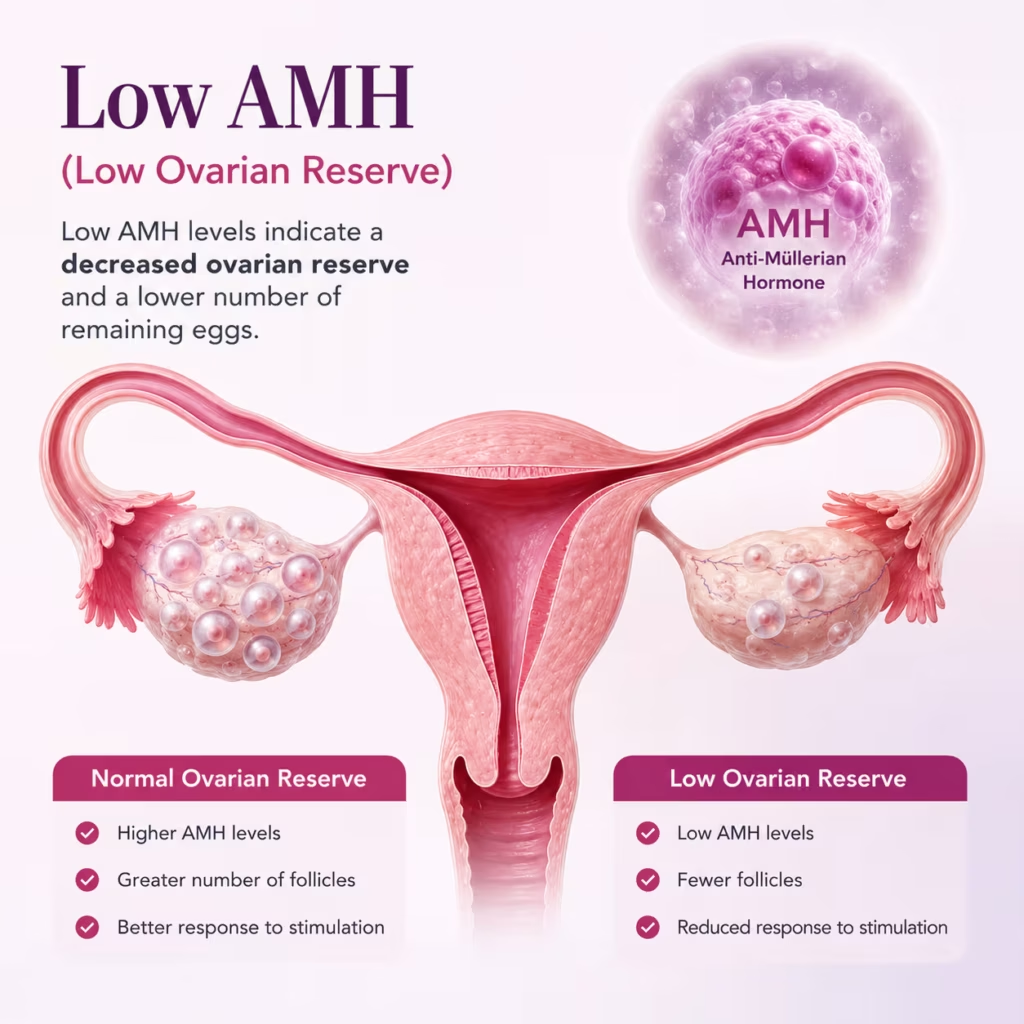
Can I do IVF if I have low AMH or poor ovarian reserve?
Yes — low AMH means fewer eggs are available, but success is possible. Dr. Shah has a dedicated protocol for low AMH patients: modified stimulation dosing, precise trigger timing, and blastocyst culture to select the best from a smaller cohort. IVF success with low AMH depends primarily on egg quality — which is related to age more than AMH. A 33-year-old with low AMH who produces 3 eggs has a much better chance than a 42-year-old who produces 8. Full guide: Low AMH Treatment
What is the process for IVF with donor eggs at Wellspring IVF?
Donor egg IVF (using oocytes from another woman) is available at Wellspring IVF for women with very poor ovarian reserve, premature ovarian failure, or advanced age where own-egg IVF is unlikely to succeed. Under the ART (Regulation) Act 2021, egg donation in India is strictly voluntary — no payment or reward is made to donors. Donor oocytes are provided through a licensed ART Bank. ART Bank service/processing charges apply — these are the bank’s regulatory and facilitation costs, not donor payments. All charges are disclosed in full before treatment begins. Dr. Shah discusses donor egg IVF candidacy at consultation — it is never assumed or recommended without a full own-egg assessment first.
How long does one IVF cycle take from start to pregnancy test?
Approximately 4 to 6 weeks for a complete fresh IVF cycle. The stimulation phase takes 10–14 days. Egg retrieval occurs on approximately Day 14. Embryo culture to blastocyst: Days 14–19. Embryo transfer: approximately Day 19–20. Beta-hCG pregnancy blood test: 14 days after transfer (Day 31–34 overall). If a frozen embryo transfer (FET) is planned instead of fresh transfer, an additional 3–4 weeks for endometrial preparation is needed.
Related Insights & Articles
 Blocked fallopian tubes can make it hard for a woman to get pregnant. But there are ways to treat this…June 11, 2026
- Are you feeling worried about low AMH and IVF? You are not alone. Many women have to face the same…June 11, 2026
- Can You Increase AMH Levels Naturally? What Science Says About Low AMH and Fertility Quick Answer In most cases, AMH…June 11, 2026
Begin Your IVF Treatment in Ahmedabad at Wellspring IVF
Transparent costs. Proven protocols. The same consultant from first consultation to first heartbeat.
Dr. Pranay Shah's team is available 6 days a week. WhatsApp enquiries answered within the working day. First consultation is a conversation — not a commitment.
Dr. Pranay Shah's team is available 6 days a week. WhatsApp enquiries answered within the working day. First consultation is a conversation — not a commitment.