15+ Years Experience 6,000+ IVF Successes 70%+ Success Rate Book Free Consultation Today 15+ Years Experience 6,000+ IVF Successes 70%+ Success Rate Book Free Consultation Today
Advanced Male Fertility Treatment

TESE & PESA in Ahmedabad

Surgical Sperm Retrieval for Azoospermia, Bypassing the Blockage. Finding the Source.
The day a man receives the words 'no sperm found in the ejaculate' is one of the most devastating moments in a couple's fertility journey. Azoospermia — the complete absence of sperm in the semen — affects approximately 1% of all men and represents the most severe form of male factor infertility. Until relatively recently, it was considered an absolute barrier to biological fatherhood.
✓ Medically reviewed by Dr. Pranay Shah, MS (ObGy)

Book an Appointment


    Your information is completely safe and confidential
    Treatment Overview

    Azoospermia — When No Sperm Is Found in the Ejaculate

    The day a man receives the words “no sperm found in the ejaculate” is one of the most devastating moments in a couple’s fertility journey. Azoospermia — the complete absence of sperm in the semen — affects approximately 1% of all men and represents the most severe form of male factor infertility. Until relatively recently, it was considered an absolute barrier to biological fatherhood.

    That is no longer true. TESE (Testicular Sperm Extraction) and PESA (Percutaneous Epididymal Sperm Aspiration) are surgical sperm retrieval techniques that bypass the ejaculate entirely — going directly to the source of sperm production in the testicles or epididymis. For men with obstructive azoospermia, sperm is retrieved in over 90% of cases. For many men with non-obstructive azoospermia, where the testes produce sperm in very small numbers, micro-TESE finds viable sperm in 40–60% of cases.

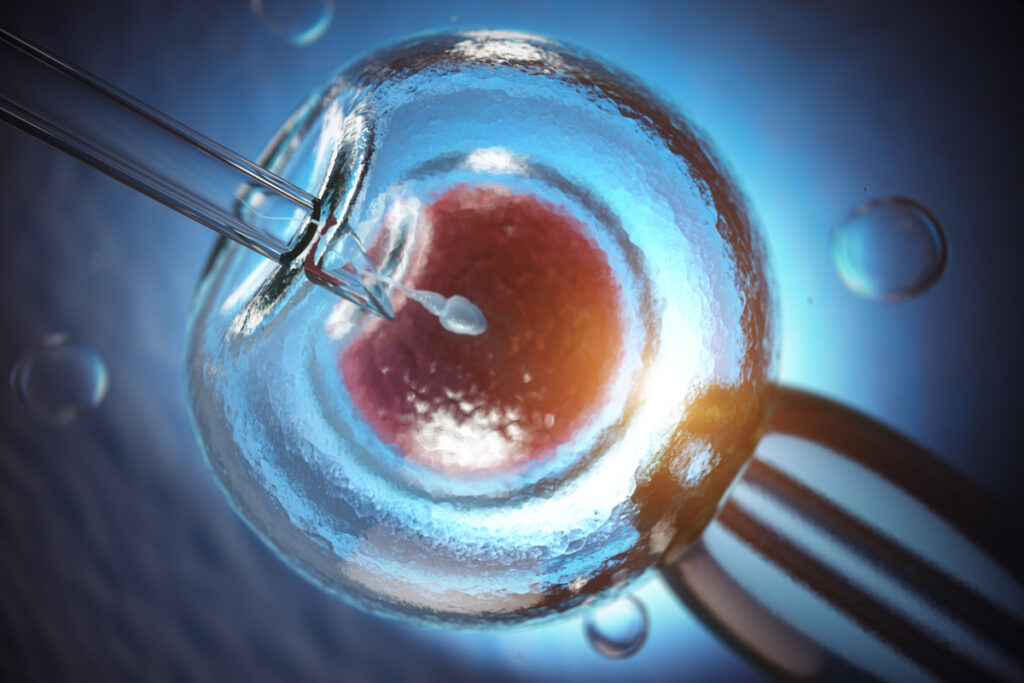
    At Wellspring IVF & Women’s Hospital, Ahmedabad, surgical sperm retrieval is coordinated as a combined protocol with ICSI (Intracytoplasmic Sperm Injection) — the only fertilisation technique that can use the tiny quantities of surgically retrieved sperm. Under the direction of Dr. Pranay Shah, our team coordinates the complete male-surgical and IVF-laboratory pipeline — from sperm retrieval to embryo transfer — ensuring no step is lost.

    If you or your partner has been told there is no sperm — this page is written for you. The diagnosis is not the end. In many cases, it is the beginning of a very specific treatment journey that ends with biological parenthood.

    The Two Types of Azoospermia — The Distinction That Changes Everything

    The treatment pathway, prognosis, and surgical technique for azoospermia are entirely determined by one fundamental question: is the azoospermia caused by a blockage, or by a failure of sperm production? Understanding this difference is the first and most important step in your evaluation.

    Obstructive Azoospermia (OA)

    The factory is working. The delivery route is blocked.

    The testes are producing sperm normally. The sperm simply cannot reach the ejaculate because of a physical blockage somewhere in the reproductive tract — in the vas deferens, epididymis, or ejaculatory ducts.
    • Prior vasectomy
    • Congenital Bilateral Absence of the Vas Deferens (CBAVD — associated with CFTR mutations in cystic fibrosis carriers)
    • Post-infection epididymal scarring (chlamydia, gonorrhoea, TB)
    • Surgical injury to the vas during hernia repair or orchidopexy

    Non-Obstructive Azoospermia (NOA)

    The tract is open, but production is severely reduced.

    The reproductive tract is open, but the testes are not producing sperm in adequate numbers — or not producing it at all in the ejaculate. In some cases, tiny foci of active sperm production exist within the testis, but the quantities are so low that no sperm reaches the ejaculate.
    • Klinefelter syndrome (47,XXY)
    • Y-chromosome microdeletions (AZFa, AZFb, AZFc regions)
    • Cryptorchidism (undescended testes)
    • Prior chemotherapy or radiation
    • Hormonal disorders (elevated FSH)
    • Idiopathic (no identifiable cause)

    The Diagnostic Steps to Classify Your Azoospermia

    • Confirmation of azoospermia: two separate semen analyses with centrifuged pellet examination. This is mandatory because severe oligospermia may be misreported as azoospermia.
    • Hormonal profile: FSH, LH, testosterone, prolactin. Elevated FSH strongly suggests testicular failure (NOA). Normal FSH with low volume semen suggests ejaculatory duct obstruction.
    • Genetic testing: karyotype and Y-chromosome microdeletion screening. AZFa and AZFb deletions carry a near-zero prognosis for sperm retrieval.
    • Testicular volume assessment: transscrotal ultrasound. Small testicular volume (<12mL) suggests reduced production capacity.
    • CBAVD evaluation: if the vas deferens is absent bilaterally, CFTR mutation testing is performed in both partners.

    PESA vs TESE - Understanding Each Technique

    The choice between PESA and TESE depends on your diagnosis, the likely location of sperm, and the surgical findings. Both techniques are performed under anaesthesia as day-care procedures — no overnight stay is required. Here is a clear explanation of each.

    PESA - Percutaneous Epididymal Sperm Aspiration

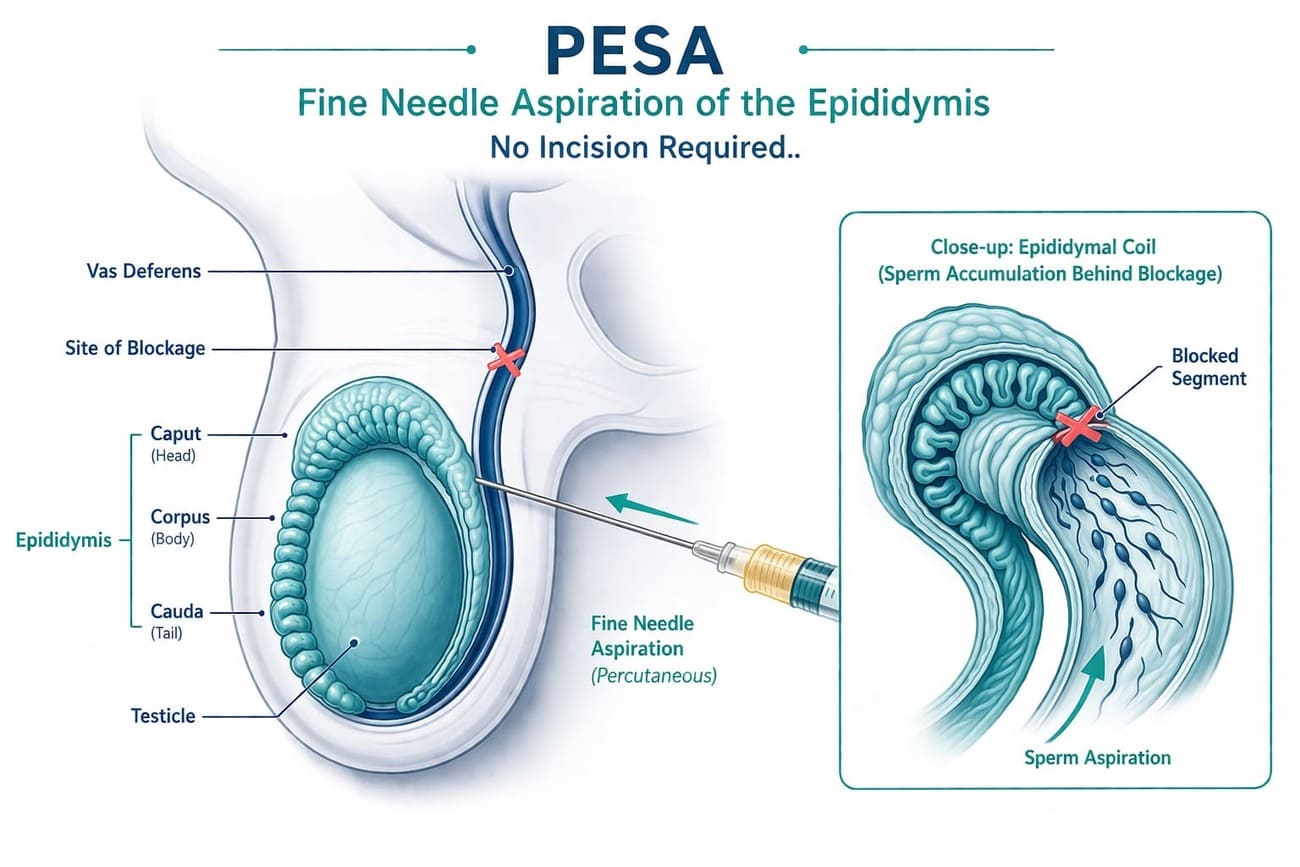
    PESA is the simplest form of surgical sperm retrieval and is the first-line technique for men with Obstructive Azoospermia — particularly those who have had a vasectomy or have epididymal blockage.

    The epididymis — the coiled tube that sits on top of the testicle — is where sperm mature after being produced in the testes. In obstructive azoospermia, sperm builds up behind the blockage and accumulates in the epididymis in large numbers. PESA accesses this reservoir directly.

    PESA Procedure — Step by Step

    • Step 1: Local anaesthesia is administered to the scrotum — numbing the area thoroughly. A short-acting sedative may also be given for patient comfort. General anaesthesia is not required.
    • Step 2: A fine butterfly needle (23–25 gauge) is inserted percutaneously (through the skin, without an incision) directly into the epididymis. The term ‘percutaneous’ is important — there is no surgical cut.
    • Step 3: Gentle aspiration with a syringe draws epididymal fluid containing sperm into the needle. Multiple aspirations from different epididymal locations (caput, corpus, cauda) may be performed to maximise yield.
    • Step 4: The aspirated fluid is immediately handed to our embryology team in the adjacent IVF laboratory. An embryologist examines the sample under the microscope within minutes to confirm sperm presence, count, and viability.
    • Step 5: Once confirmed, the sperm is processed and used for ICSI on the partner’s retrieved eggs. Any excess viable sperm is cryopreserved (vitrified) for potential future cycles.
    • Step 6: The procedure is complete. No sutures are required. A small dressing is applied. The patient rests for 1–2 hours and can typically return home the same day.

    Understanding IUI Treatment

    Learn from our experts and get inspired by real patient journeys

    Fresh vs. Frozen Embryo Transfer: Which Has Higher Success?
    Fresh vs. Frozen Embryo Transfer: Which Has Higher Success?
    Fresh vs. Frozen Embryo Transfer: Which Has Higher Success?
    Fresh vs. Frozen Embryo Transfer: Which Has Higher Success?
    Browse All Videos

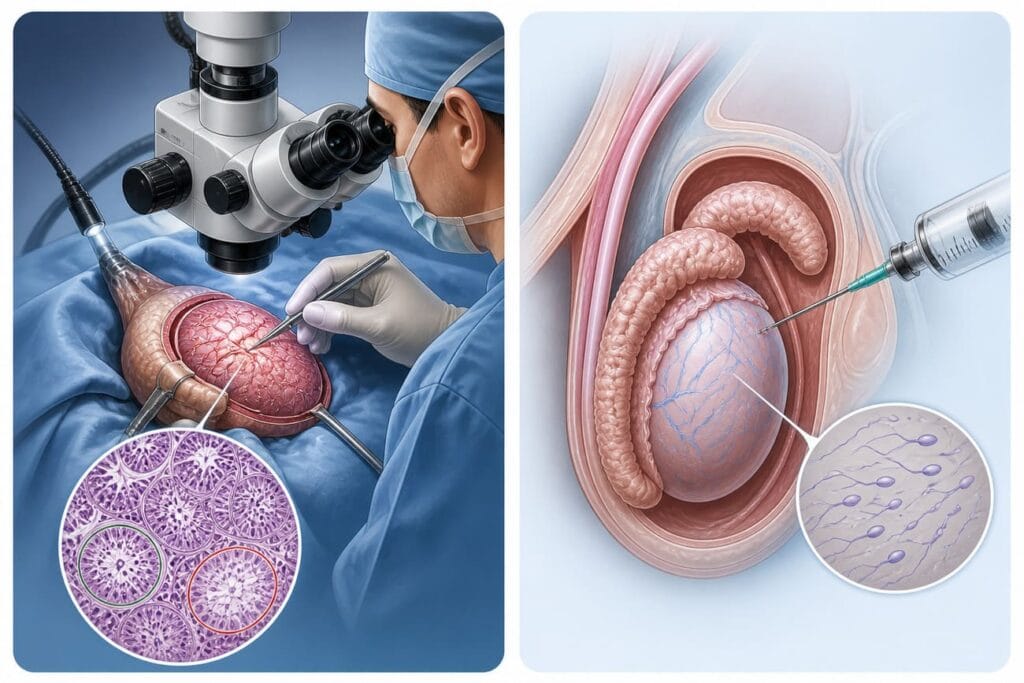
    PESA vs TESE - Understanding Each Technique

    TESE is performed when PESA is insufficient — or when the azoospermia is non-obstructive and sperm must be sought directly within the testicular tissue itself, where very small foci of spermatogenesis may be occurring.

    There are two forms of TESE at Wellspring IVF: Conventional TESE and Micro-TESE — the most advanced surgical approach for Non-Obstructive Azoospermia. The choice between them is made by Dr. Pranay Shah based on your hormonal profile, testicular volume, and genetic findings.

    Micro-TESE

    Conventional TESE – Testicular Biopsy

    Step 1: Spinal or short general anaesthesia is administered. The patient is positioned comfortably on the procedure table.

    Step 2: A small incision (approximately 1–2 cm) is made in the scrotal skin and the testicular covering (tunica albuginea). No major structures are cut.

    Step 3: A small biopsy of testicular tissue (typically 2–3 mm) is excised from one or more areas of the testis. The tissue sample is immediately handed to our embryologist for processing.

    Step 4: The embryologist minces the testicular tissue and examines it under high magnification to identify any sperm cells. In OA cases, sperm is found reliably. In NOA cases, the yield from conventional TESE is less predictable.

    Step 5: The testicular incision is closed with absorbable sutures. Scrotal skin is closed with 1–2 absorbable sutures. A scrotal support is applied.

    Micro-TESE — Microsurgical Retrieval for NOA

    Micro-TESE is the gold-standard technique for Non-Obstructive Azoospermia. It uses an operating microscope at 16–25× magnification to visually identify the rare seminiferous tubules that contain active spermatogenesis within an otherwise non-producing testis.

    In NOA, sperm production is not always absent — it may be severely reduced and geographically isolated to a few small foci. Conventional TESE takes random biopsies and hopes to hit a productive area. Micro-TESE instead targets the most promising tubules while preserving more tissue and blood supply.

    Step 1: General or spinal anaesthesia. A larger testicular incision (approximately 3–4 cm) allows direct visualisation of the tubules.<

    Step 2: Under 16–25× magnification, the surgeon systematically examines the tubules across both poles of the testis.

    Step 3: Larger, opaque tubules indicating active spermatogenesis are selectively excised and processed in real time.

    Step 4: The surgeon may excise additional tissue based on the embryologist’s feedback, then reconstructs and closes the testis carefully.

    Step 5: Recovery is typically 3–5 days, with swelling and mild discomfort expected. Most men return to light work within a week.

    ★★★★★ 4.9/5.0

    What Our Patients Say

    Real stories from real families who trusted us with their fertility journey
    500+ Google Reviews  •  Verified Patient Testimonials

    Join 500+ Satisfied Families

    Read all our verified Google reviews or share your own experience

    PESA vs TESE vs Micro-TESE — Complete Clinical Comparison

    Use this table to understand which technique is most appropriate for your diagnosis. The final decision is always Dr. Shah's, based on your complete clinical and hormonal profile.
    Feature PESA Conventional TESE Micro-TESE
    Full Name Percutaneous Epididymal Sperm Aspiration Testicular Sperm Extraction (Biopsy) Microsurgical Testicular Sperm Extraction
    Incision Required No — needle only, percutaneous Small scrotal incision (1–2 cm) Larger incision (3–4 cm) with full testis exposure
    Microscope Used No — palpation-guided No — random biopsy Yes — operating microscope at 16–25×
    Target Epididymis — where stored sperm accumulates Testicular tissue — random biopsy sites Specific tubules showing active spermatogenesis
    Anaesthesia Local ± sedation Spinal or short general General or spinal — longer procedure
    Procedure Duration 20–30 minutes 30–45 minutes 1.5–3 hours
    Recovery 1–2 days 2–4 days 4–7 days
    Best For Obstructive Azoospermia (OA) — vasectomy, CBAVD, epididymal blockage OA when PESA fails; selected NOA cases Non-Obstructive Azoospermia (NOA) — testicular failure, Klinefelter, idiopathic
    Sperm Retrieval Rate 90–95% in OA 60–80% in OA; lower in NOA 40–60% in NOA; 90%+ in OA when performed
    Sperm Quantity Usually abundant — thousands of sperm Moderate — hundreds to thousands Often very low — few viable sperm, but sufficient for ICSI
    Excess Sperm Storage Cryopreservation of surplus always attempted Cryopreservation if quantity allows Every viable sperm cryopreserved — crucial
    Used With ICSI — always ICSI — always ICSI — always

    Important: TESE and PESA sperm always requires ICSI. Surgically retrieved sperm cannot be used for standard IVF insemination, IUI, or any other fertilisation method because sperm numbers are low, motility may be minimal, and testicular sperm have not completed the full maturation process that occurs in the epididymis.

    Talk to Dr. Shah About TESE & PESA in Ahmedabad

    A structured workup is the first step. Dr. Pranay Shah will diagnose your azoospermia type, determine the best TESE or PESA approach, and coordinate ICSI if sperm retrieval is recommended.
    Complete Cycle Guide

    The Combined TESE + ICSI Protocol — How the Pipeline Works at Wellspring

    The success of surgical sperm retrieval is not just about finding sperm — it is about what happens to that sperm in the 24 hours after retrieval. At Wellspring IVF, the TESE/PESA and IVF laboratory pipelines are designed to run simultaneously, in a single coordinated sequence.

    Week 1–2 Before OPU

    Coordination & Preparation

    Both partners’ treatment cycles are synchronised by Dr. Shah. The female partner completes controlled ovarian stimulation, and sperm retrieval day is scheduled to coincide exactly with egg retrieval (OPU). If cryopreserved sperm from another centre is available, its quality is assessed before planning a repeat retrieval.

    Day 0 Morning

    Surgical Sperm Retrieval

    Mild stimulation medications encourage the growth of 1–3 dominant follicles. Options include oral Clomiphene Citrate or Letrozole (tablet form), or low-dose injectable Gonadotrophins. The goal is controlled development of 1–2 dominant follicles.

    Day 0 Lab

    Sperm Processing

    The embryologist processes the retrieved tissue or fluid immediately — mincing testicular tissue, centrifuging epididymal fluid, and scanning under high magnification. Every viable sperm is identified, graded, and prepared for ICSI.

    Day 0 ICSI

    ICSI Fertilisation

    ICSI is performed on all mature eggs retrieved from the female partner using the processed surgical sperm. Even immotile testicular sperm may be used because a single viable sperm is injected directly into each egg.

    Day 1

    Fertilisation Confirmation

    Sixteen to eighteen hours after ICSI, fertilisation is confirmed by the appearance of two pronuclei (2PN). In OA cases, fertilisation typically runs at 65–75%, comparable to ejaculated sperm.

    Days 1–5

    Blastocyst Culture

    A thin, flexible catheter is gently passed through the cervix — no dilation required in most cases. The washed sperm sample is slowly injected into the uterine cavity. Mild cramping may be felt briefly. You rest for 10–15 minutes post-procedure. No bed rest. No anaesthesia.

    Day 5 / 6

    Embryo Transfer or Freeze-All

    The best quality blastocyst is transferred in a fresh cycle — or all embryos are vitrified for a Frozen Embryo Transfer cycle if a freeze-all strategy is indicated. Any surplus surgical sperm is also cryopreserved for future cycles.

    Cryopreservation of Surplus Surgical Sperm

    Any viable sperm retrieved in excess of what is used for the current ICSI cycle is immediately cryopreserved using vitrification. This can eliminate the need for repeat PESA / TESE in future IVF cycles and ensures a reserve is available whenever possible.

    TESE & PESA Success Rates — Honest, Evidence-Based Expectations

    Success rates for surgical sperm retrieval must be reported in two layers: sperm retrieval success and pregnancy success. Both layers matter, and both depend critically on the type of azoospermia and individual clinical factors.
    Patient Profile Sperm Retrieval Rate ICSI Fertilisation Rate Live Birth Rate (per transfer) Key Factor
    Obstructive Azoospermia (OA) — Post-vasectomy PESA 90–95% 65–75% of eggs fertilised 45–65% (female age < 35) Duration since vasectomy matters — longer interval may reduce epididymal sperm quality
    OA — CBAVD (Congenital Vas Deferens Absence) 90–95% 65–75% 45–65% (female age < 35) Female partner’s CFTR carrier status must be checked before proceeding
    OA — Post-infection Epididymal Blockage 85–95% 60–75% 40–60% (female age dependent) Degree of epididymal damage affects sperm quality
    NOA — Micro-TESE, AZFc deletion 40–60% 50–65% (if sperm found) 30–50% (female age dependent) AZFc deletions may still allow retrieval; AZFa / AZFb deletions have near-zero retrieval prognosis
    NOA — Klinefelter Syndrome (47,XXY) — Micro-TESE 40–55% 50–65% (if sperm found) 30–45% per transfer PGT-A strongly recommended because embryo aneuploidy risk is higher
    NOA — Idiopathic, Cryptorchidism — Micro-TESE 35–55% 50–65% (if sperm found) 30–50% per transfer Testicular volume and FSH level are major prognostic indicators
    NOA — Previous Chemotherapy / Radiation 20–45% 50–65% (if sperm found) Variable Recovery of spermatogenesis is time-dependent; evaluation is often delayed 18–24 months after treatment
    What Happens If No Sperm Is Found (TESE Negative)? In approximately 40–60% of non-obstructive azoospermia cases, even micro-TESE does not retrieve viable sperm. Options discussed honestly at follow-up may include repeat micro-TESE after 12–18 months, hormonal stimulation before repeat TESE, donor sperm IVF through a registered ART Bank, adoption, and genetic counselling for all NOA patients — especially those with Klinefelter syndrome or Y-chromosome microdeletions.

    Preparing for Your PESA or TESE Procedure — What to Expect

    Knowing exactly what to expect before, during, and after the procedure significantly reduces anxiety. Here is a complete preparation guide for both techniques.

    Before the Procedure (1–7 Days Prior)

    • Complete all blood tests: CBC, coagulation profile, blood group, HIV / HBsAg / HCV serology, and hormonal panel.
    • Stop blood-thinning medications such as aspirin, NSAIDs, and warfarin 5–7 days before, after discussing with Dr. Shah.
    • Purchase supportive scrotal underwear for post-procedure use.
    • Fast from midnight if general or spinal anaesthesia is planned.
    • Arrange transport — do not drive yourself home after the procedure if sedation is used.
    • A short prophylactic antibiotic course is often prescribed 1–2 days before the procedure.

    After the Procedure (Recovery)

    • Apply an ice pack wrapped in cloth in 15-minute intervals for the first 24 hours.
    • Wear supportive underwear continuously for 5–7 days.
    • Mild discomfort is usually managed with oral paracetamol. Ibuprofen should be avoided because it can increase bleeding risk.
    • Avoid heavy lifting, vigorous exercise, and sexual activity for 1 week after PESA or 2 weeks after TESE.
    • Keep the area dry for 24–48 hours. Avoid swimming for 10–14 days.
    • Call Wellspring immediately if you develop fever above 38°C, increasing pain after day 2, or significant swelling or bruising.

    Frequently Asked Questions

    Common questions about azoospermia, retrieval success, recovery, and why ICSI is required after TESE or PESA.
    Ask a Question

    Related Insights & Articles

    No Sperm in the Ejaculate Is Not the End of the Story.

    TESE & PESA have made biological fatherhood possible for thousands of men. Dr. Pranay Shah will evaluate your hormonal, genetic, and clinical profile and give you an honest prognosis before any procedure is planned.