15+ Years Experience 6,000+ IVF Successes 70%+ Success Rate Book Free Consultation Today 15+ Years Experience 6,000+ IVF Successes 70%+ Success Rate Book Free Consultation Today
Advanced Male Fertility Treatment

IMSI Treatment in Ahmedabad

Intracytoplasmic Morphologically-Selected Sperm Injection
You have had one ICSI cycle. The eggs fertilised. The embryos looked good on Day 3. The transfer was performed correctly. And yet — it failed. No implantation. No explanation. Or perhaps there was a pregnancy, but it ended in miscarriage. Again.
✓ Medically reviewed by Dr. Pranay Shah, MS (ObGy)

Book an Appointment


    Your information is completely safe and confidential

    This is one of the most emotionally devastating experiences in fertility medicine. And one of the most common explanations — one that standard ICSI cannot detect and therefore cannot correct — lies inside the sperm itself. Not in its shape. Not in its swimming speed. Inside its nucleus. In structures so small they are completely invisible at the magnification levels used by standard ICSI.

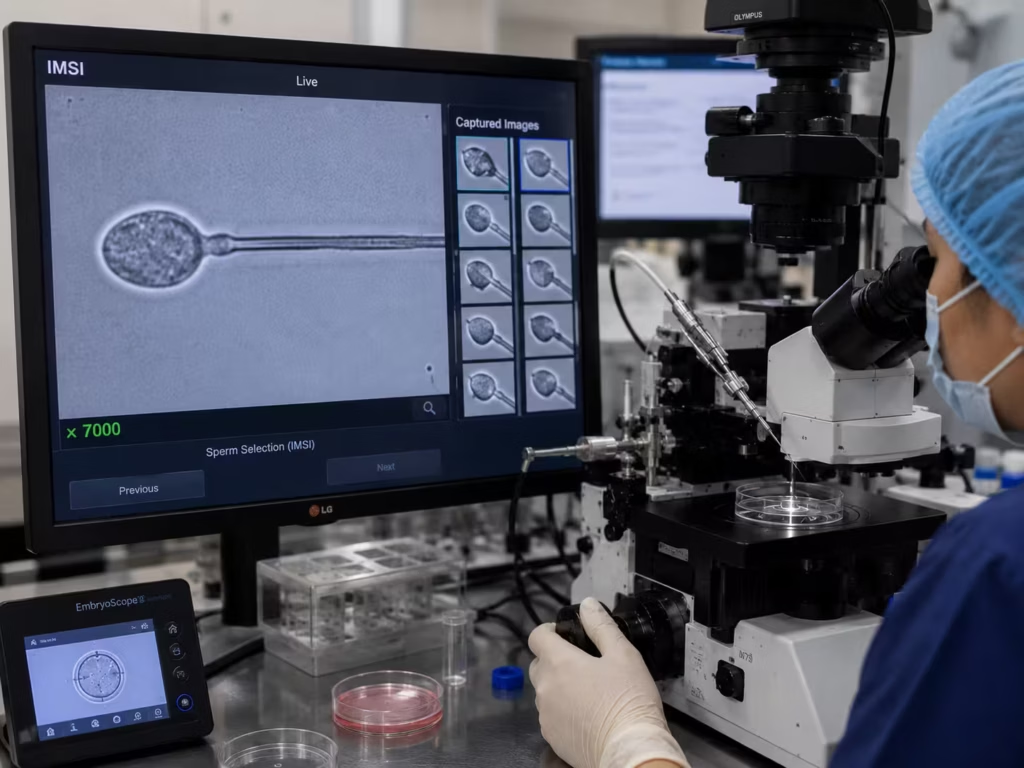
    IMSI — Intracytoplasmic Morphologically-Selected Sperm Injection — is the technology that closes this gap. By examining each sperm at magnifications of 6,000× to 10,000× using a specialised Nomarski Differential Interference Contrast (DIC) microscope, our embryologists at Wellspring IVF can see what standard ICSI cannot: nuclear vacuoles — the hidden craters inside the sperm head that signal DNA damage, chromatin disruption, and chromosomal instability.

    For couples who have suffered unexplained ICSI failure, recurrent miscarriage with apparently normal embryos, or who carry a diagnosis of high Sperm DNA Fragmentation (DFI), IMSI is not an optional upgrade. It is the scientifically justified next step.

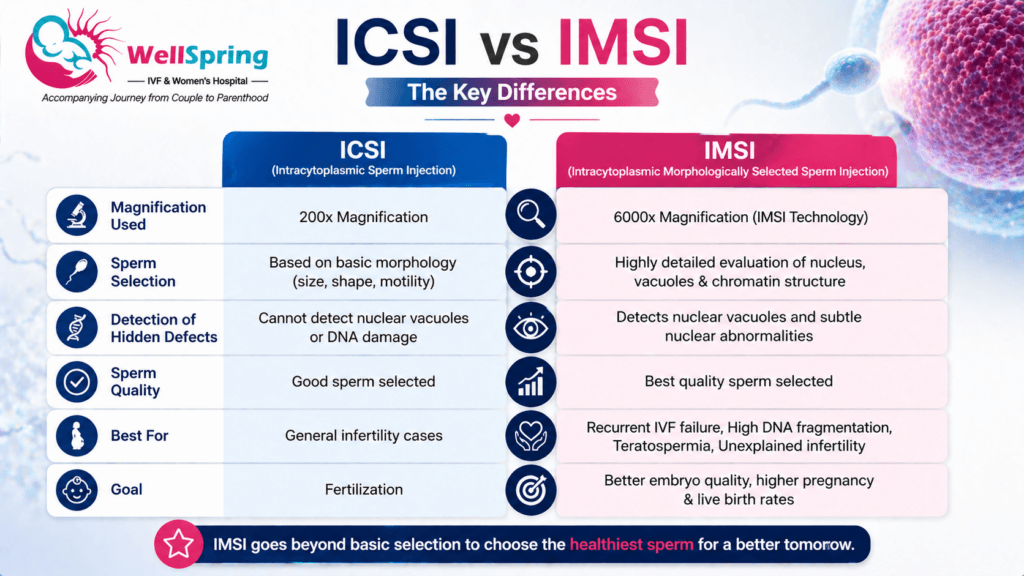
    6,000–10,000×

    IMSI
    Magnification

    200–400×

    Standard ICSI Magnification

    15–25×

    More Powerful
    Than ICSI

    15+ Yrs

    Dr. Shah's Fertility Experience

    15+ Yrs

    IVF Successes at Wellspring

    Nuclear Vacuoles — The Hidden Defect Inside 'Normal-Looking' Sperm

    To understand IMSI, you must first understand what nuclear vacuoles are — and why their presence in a sperm is clinically significant enough to reject that sperm from injection.

    What Are Nuclear Vacuoles?

    Nuclear vacuoles are indentations, cavities, or abnormal inclusions within the sperm nucleus — the compartment of the sperm head that contains the genetic material (chromosomes and DNA). Under standard ICSI magnification (200–400×), the sperm head appears as a smooth, oval shape. At 6,000–10,000× under Nomarski DIC microscopy, the internal architecture of the nucleus becomes visible — and in many sperm that appear perfectly normal externally, dark areas called vacuoles become apparent.

    Book Free Consultation

    What Do Vacuoles Indicate?

    Research from multiple reproductive medicine centres has established a clinically important correlation between nuclear vacuoles — particularly large nuclear vacuoles (LNV) — and sperm DNA integrity. Studies published in peer-reviewed journals including Human Reproduction and Fertility & Sterility have demonstrated:

    • Sperm with large nuclear vacuoles show significantly higher rates of DNA strand breaks, measured by TUNEL assay and Comet assay
    • Vacuolated sperm have higher rates of chromatin condensation failure — meaning the DNA is less tightly packaged and therefore less protected during fertilisation
    • Embryos resulting from vacuolated sperm demonstrate lower blastocyst development rates and higher developmental arrest rates on Day 3–5
    • Couples with high proportions of vacuolated sperm have significantly higher miscarriage rates following ICSI cycles
    • Vacuoles in the post-acrosomal region of the sperm head (the back third) are particularly strongly associated with chromosomal aneuploidy in resulting embryos

    The Key Insight — Why This Is Not Detected by Standard Tests

    Sperm DNA Fragmentation testing (DFI / SCSA / TUNEL) measures the overall percentage of damaged sperm in the ejaculate. A man can have a DFI of 30% — meaning 30% of his sperm carry DNA damage — but his standard semen analysis shows ‘normal’ morphology and motility. Why? Because semen analysis morphology is assessed at 400× — the same level as ICSI selection. Nuclear vacuoles are invisible at this magnification. The damaged sperm looks identical to the healthy sperm when examined at standard resolution.

    The IMSI 'Aha' Moment — Same Sperm, Two Completely Different Pictures

    The single most powerful way to understand why IMSI matters is to look at the same sperm at two different magnification levels. The transformation is remarkable — and the clinical implications are profound.

    ICSI — 400× Magnification

    IMSI — 6,600× Magnification

    The same sperm. Two completely different pictures. IMSI sees what ICSI cannot — and that difference changes the outcome.

    The sperm that would have been injected under ICSI — the sperm that looked perfectly acceptable under a standard micromanipulation microscope — is rejected by our embryologist under IMSI because the vacuoles are now clearly visible. A better sperm, one without vacuoles, is found and selected instead. That one decision — repeated for every egg in your cycle — is what IMSI offers. It is not a guarantee. It is an additional layer of precision that standard ICSI structurally cannot provide.

    Understanding IUI Treatment

    Learn from our experts and get inspired by real patient journeys

    Fresh vs. Frozen Embryo Transfer: Which Has Higher Success?
    Fresh vs. Frozen Embryo Transfer: Which Has Higher Success?
    Fresh vs. Frozen Embryo Transfer: Which Has Higher Success?
    Fresh vs. Frozen Embryo Transfer: Which Has Higher Success?
    Browse All Videos

    The Technology Behind IMSI — Nomarski DIC Microscopy

    IMSI is not simply 'more powerful ICSI.' It requires a fundamentally different optical technology that standard micromanipulation microscopes do not possess: Nomarski Differential Interference Contrast (DIC) microscopy.

    What Is Nomarski DIC Microscopy?

    Differential Interference Contrast microscopy — developed by Polish-born physicist Georges Nomarski in the 1950s — uses polarised light and a birefringent (double-refracting) prism to create interference between two beams of light passing through the specimen at slightly different angles. The result is a pseudo-three-dimensional, high-contrast image of the internal optical density variations within the specimen — without requiring staining or any chemical treatment that would damage the sperm.

    Applied to sperm at 6,000–10,000× digital magnification, Nomarski DIC microscopy reveals the internal nuclear architecture that is entirely invisible under standard brightfield optics. The difference in image quality is not marginal — it is transformational.

    Microscopy Property Standard ICSI (Brightfield)           vs          IMSI (Nomarski DIC)
    Optical principle Standard transmitted light — no interference contrast
    Magnification at selection 200–400× — basic shape and motility assessment only
    Nuclear architecture visible? No — nucleus appears as uniform grey oval
    Vacuole detection Impossible — vacuoles invisible at this resolution
    Requires special equipment? No — standard micromanipulation microscope
    Sperm assessment time 30–60 seconds per egg — rapid selection


    Microscopy Property IMSI (Nomarski DIC)
    Optical principle Polarised light + birefringent prism — interference contrast reveals internal optical density
    Magnification at selection 6,000–10,000× — internal nuclear architecture fully visible
    Nuclear architecture visible? Yes — nucleus, vacuoles, chromatin distribution all assessable
    Vacuole detection Direct visual identification of nuclear vacuoles — Grade 0 to Grade 3
    Requires special equipment? Yes — dedicated Nomarski DIC micromanipulation system
    Sperm assessment time 3–5 minutes per egg — systematic individual sperm evaluation

    Who Should Consider IMSI? — Clinical Indications at Wellspring IVF

    Dr. Pranay Shah recommends IMSI selectively — based on a review of the couple’s complete history, semen analysis, previous cycle data, and DFI results — not as a routine add-on for every cycle. The following are the primary clinical scenarios where IMSI is evidence-supported and strongly considered:

    Recurrent ICSI Failure — Two or More Failed Cycles

    When two or more ICSI cycles have produced good embryos that failed to implant, or when blastocyst development has been consistently poor despite adequate egg numbers and apparently normal semen parameters, sperm nuclear quality is a plausible undetected contributor. IMSI provides the deeper level of sperm evaluation that the previous cycles could not offer.

    Recurrent Miscarriage with 'Normal' Embryos

    When pregnancies have been achieved after ICSI but ended in early miscarriage — particularly recurrent miscarriage where chromosomal analysis of the loss shows embryonic chromosomal abnormality — nuclear vacuoles in the sperm may have been contributing to chromosomal instability in the resulting embryos.

    High Sperm DNA Fragmentation (DFI > 25%)

    DFI testing establishes that a significant proportion of the sperm sample carries DNA damage. IMSI provides the means to identify and avoid the individual sperm carrying that damage — a capability that standard ICSI and standard DFI testing cannot provide individually. The combination of DFI > 25% with previous cycle failure is one of the strongest indications for IMSI.

    Severe Teratozoospermia (Morphology <1% Normal Forms)

    When sperm morphology is severely abnormal — normal forms below 1% on Kruger strict criteria — the proportion of sperm carrying nuclear vacuoles is significantly higher than in men with normal morphology. IMSI provides the additional selection layer to identify the rare structurally sound sperm within a severely compromised sample.

    Poor Embryo Quality in Previous Cycles

    When previous ICSI cycles have produced embryos that consistently show high fragmentation, early developmental arrest, or failure to reach blastocyst stage — despite good egg quality — sperm nuclear integrity is a possible unexplored factor. IMSI addresses this variable directly.

    Advanced Male Partner Age (>40 Years)

    Sperm DNA damage and nuclear vacuole prevalence increase with paternal age. For couples where the male partner is above 40 and the couple has experienced unexplained ICSI outcomes, IMSI provides an additional layer of selection precision that becomes progressively more relevant with advancing paternal age.

    Step-by-Step Laboratory Process

    The IMSI Procedure - Inside Wellspring’s IVF Laboratory

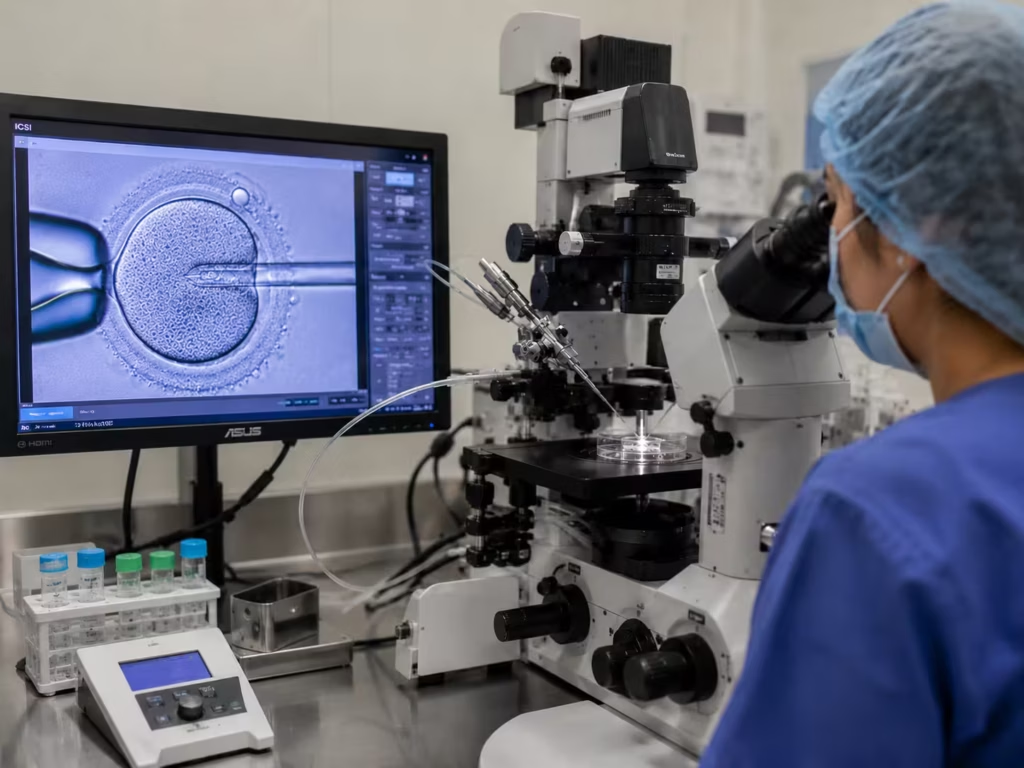
    The IMSI procedure is performed on the morning of egg retrieval (Ovum Pick-Up / OPU), at the same time as standard ICSI would be performed. From the patient’s perspective, the IMSI cycle is identical to a standard ICSI cycle — the difference lies entirely within the embryology laboratory, in the sperm selection step that precedes injection.

    Step 1
    PREPARATION

    Sperm Sample Preparation

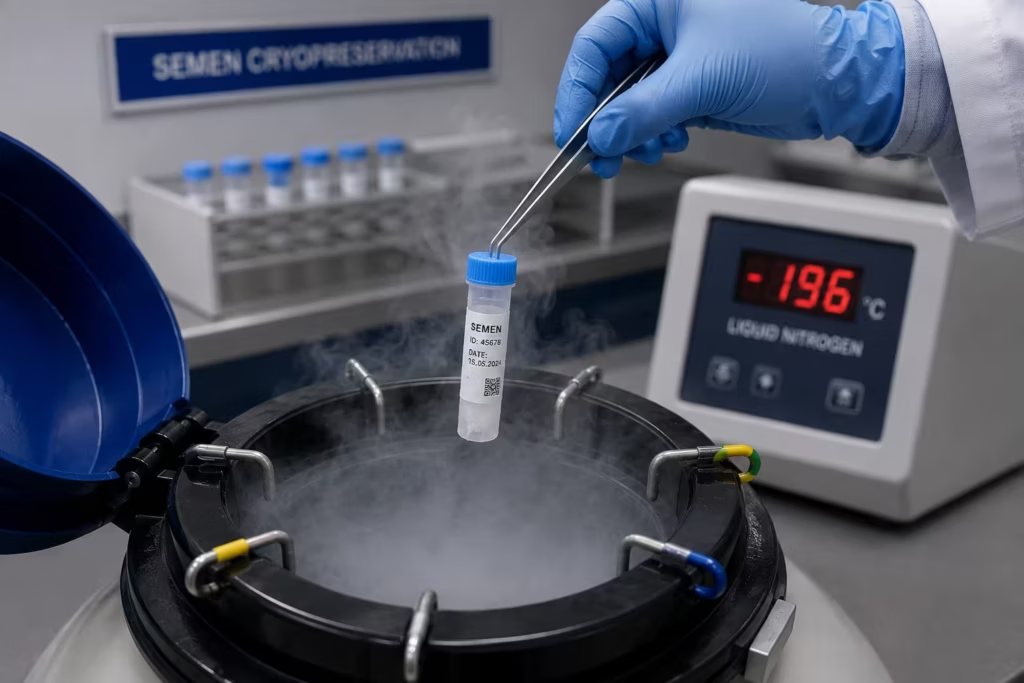
    On the morning of egg retrieval, the male partner provides a semen sample or the pre-frozen/surgically retrieved sample is thawed. The sample undergoes density gradient centrifugation and swim-up processing — identical preparation to standard ICSI.

    Step 2
    EVALUATION

    High-Magnification Sperm Evaluation

    Under 6,000× to 10,000× Nomarski DIC magnification, the embryologist evaluates each sperm for shape, nuclear architecture, vacuole presence, vacuole grade, and vacuole location. This takes significantly longer than standard ICSI selection because the depth of assessment is much greater.

    Step 3
    SELECTION

    Grade 0 / Grade 1 Sperm Selection

    Only Grade 0 sperm with no vacuoles and Grade 1 sperm with minor vacuoles under 4% of nuclear area are selected for injection. Grade 2 and Grade 3 sperm are systematically rejected whenever better sperm are available.

    Step 4
    INJECTION

    ICSI Injection

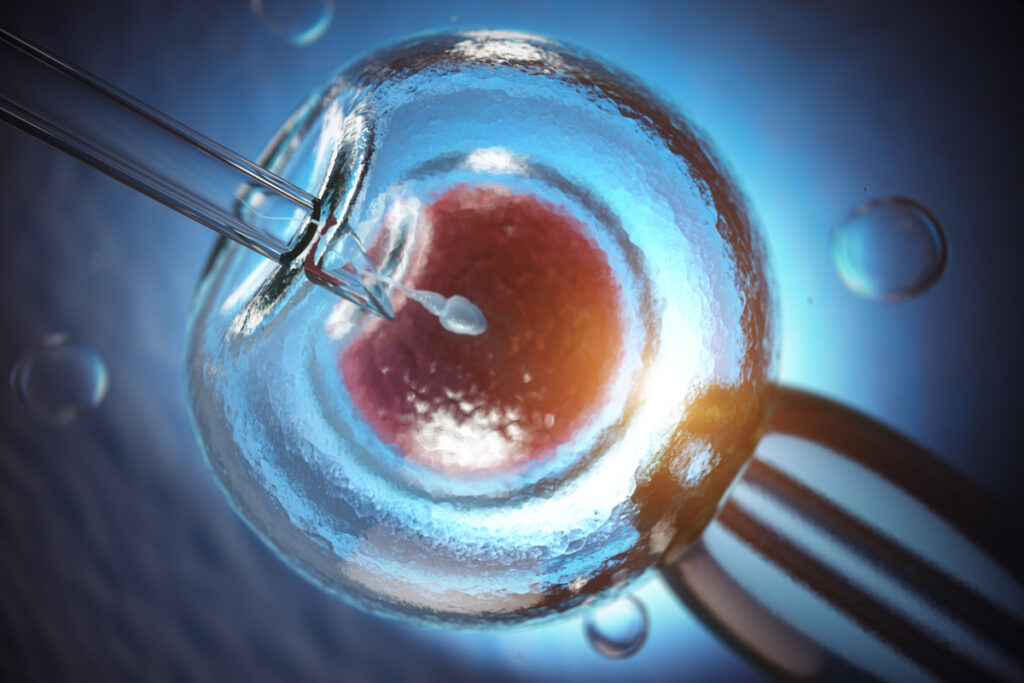
    Once an optimal sperm is selected under IMSI magnification, the injection step proceeds using the identical micropipette technique as standard ICSI. The higher magnification changes sperm selection, not injection mechanics.

    Step 5
    CULTURE

    Embryo Culture and Development

    Post-injection, the fertilised eggs are cultured identically to a standard ICSI cycle. Fertilisation is checked the following morning, and embryo development is monitored through blastocyst stage. IMSI aims to improve blastocyst development and embryo quality by improving the sperm selection step.

    Clinical Indications

    Who Should Consider IMSI?

    Dr. Pranay Shah recommends IMSI selectively based on a review of the couple’s history, semen analysis, previous cycle data, and DFI results — not as a routine add-on for every cycle.

    Unexplained Infertility

    Recurrent ICSI failure after two or more cycles with good embryos but failed implantation or poor blastocyst development is one of the strongest indications for IMSI.

    Mild Male Factor Infertility

    Recurrent miscarriage with apparently normal embryos may point to hidden sperm nuclear defects contributing to chromosomal instability in the resulting embryos.

    PCOS / PCOD with Anovulation

    High sperm DNA fragmentation, especially DFI above 25%, is a major indication because IMSI helps the embryologist avoid visibly vacuolated sperm one by one before injection.

    Single Women & Same-Sex Couples

    Severe teratozoospermia with morphology below 1% normal forms often carries a higher proportion of sperm with nuclear vacuoles, making IMSI a useful additional selection layer.

    Cervical Factor Infertility

    Poor embryo quality in previous cycles, including fragmentation, developmental arrest, or failure to reach blastocyst, may indicate sperm nuclear integrity as an unexplored factor.

    Ejaculatory Dysfunction

    Advanced male partner age above 40 is associated with rising DNA damage and nuclear vacuole prevalence, making IMSI more relevant in unexplained ICSI outcomes.
    ★★★★★ 4.9/5.0

    What Our Patients Say

    Real stories from real families who trusted us with their fertility journey
    500+ Google Reviews  •  Verified Patient Testimonials

    Join 500+ Satisfied Families

    Read all our verified Google reviews or share your own experience

    IMSI vs PICSI - Complementary Technologies, Not Competing Ones

    IMSI and PICSI are frequently discussed together because they both address sperm quality beyond standard ICSI selection. They are not competing technologies — they assess different properties and can be used together in specific clinical scenarios.
     

    IMSI

    PICSI

    Selection basis

    Nuclear morphology — visual vacuole assessment at 6,600×

    Hyaluronan binding — biochemical maturity and receptor surface test

    What it detects

    Internal nuclear defects (vacuoles) visible under DIC optics

    Sperm maturity and DNA integrity via biochemical binding affinity

    Primary use case

    Teratospermia, recurrent failure, poor embryo quality

    High DFI, recurrent implantation failure, advanced paternal age

    Used together?

    Yes — PICSI pre-selects mature sperm, IMSI then visually confirms nuclear quality before injection

    Yes — complementary layers of selection for the most complex cases

    For patients with both severely abnormal morphology AND high DFI, a combined approach using PICSI for pre-selection followed by IMSI for final visual nuclear confirmation may be recommended. Dr. Shah will advise based on your specific laboratory results. For the full PICSI explanation, see the advanced sperm selection section of our ICSI treatment guide.

    Ask Dr. Shah If IMSI Is Right for Your Case

    IMSI is recommended on clinical evidence, not as a routine add-on. Dr. Pranay Shah will review your complete history, semen analysis, DFI result, and previous cycle data before advising whether IMSI is indicated for your specific situation.

    Frequently Asked Questions

    Find answers to common questions about IMSI, nuclear vacuoles, DFI, and how IMSI differs from standard ICSI.
    Ask a Question
    Complete Information Map

    Related Treatments

    Related Insights & Articles

    The Invisible Problem Has a Visible Solution.

    If you have a normal semen analysis and still cannot conceive — or have had miscarriages or failed IVF cycles — Dr. Pranay Shah will test what the previous doctor did not.