
Why IUI Fails: Common Reasons and What to Do Next
Direct Answer
IUI (Intrauterine Insemination) may fail because of factors related to egg quality, sperm quality, ovulation problems, tubal issues, implantation failure, age-related fertility decline, endometriosis, unexplained infertility, or simply because IUI has inherent success limitations. Even when everything appears normal, pregnancy may not occur in a particular cycle because human reproduction is naturally inefficient. A failed IUI does not mean pregnancy is impossible, but it may indicate the need for further evaluation or advanced fertility treatment.
Key Facts Table
| Topic | Information |
|---|---|
| Treatment | IUI |
| Purpose | Improve Natural Fertilization |
| Pregnancy Guaranteed? | No |
| Success Per Cycle | Variable |
| Influenced By Age | Yes |
| Influenced By Sperm Quality | Yes |
| Influenced By Ovulation | Yes |
| Influenced By Tubes | Yes |
| Multiple Cycles Often Needed | Yes |
| IVF May Be Needed After Repeated Failure | Yes |
Introduction
One of the most difficult moments for fertility patients occurs when they receive a negative pregnancy test after IUI.
Most couples immediately ask:
- Why did my IUI fail?
- Did something go wrong?
- Was the procedure unsuccessful?
- Should we repeat IUI?
- Is IVF now necessary?
These concerns are understandable.
Many couples begin fertility treatment with significant hope and optimism.
When pregnancy does not occur, disappointment can be profound.
The important thing to understand is that IUI failure is relatively common.
Even in ideal circumstances, IUI cannot guarantee pregnancy.
At Wellspring IVF & Women’s Hospital, Ahmedabad, helping patients understand why an IUI cycle failed is often the first step toward developing a more effective treatment strategy.
What Is IUI?
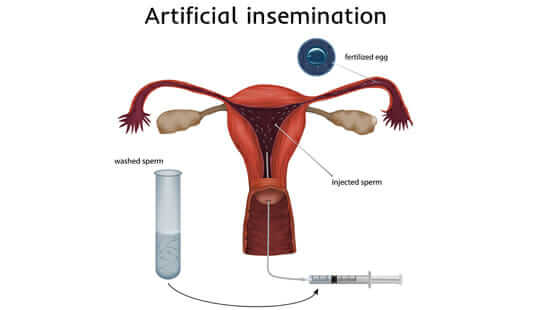
IUI Treatment (Intrauterine Insemination) is a fertility treatment in which specially prepared sperm are placed directly into the uterus around the time of ovulation.
The goal is to:
- Increase sperm concentration near the egg
- Reduce the distance sperm must travel
- Improve chances of fertilization
Unlike IVF, fertilization still occurs naturally inside the body.
Who Is IUI Suitable For?
IUI is commonly recommended for:
Mild Male Infertility
Cases involving mildly reduced sperm count or motility.
Ovulation Disorders
When ovulation can be induced successfully.
Unexplained Infertility
Couples whose investigations appear normal.
Cervical Factor Infertility
Where cervical mucus may interfere with sperm transport.
Donor Sperm Treatment
In selected situations.
However, IUI has limitations and is not appropriate for every fertility diagnosis.
Step-by-Step IUI Process
Understanding the process helps identify where problems may occur.
Step 1: Ovulation Monitoring
The ovaries are monitored to identify follicle development.
Step 2: Trigger Injection
Ovulation may be triggered when follicles mature.
Step 3: Sperm Preparation
A semen sample is processed in the laboratory.
Step 4: Insemination
Prepared sperm are placed directly into the uterus.
Step 5: Fertilization
The sperm must still locate and fertilize the egg naturally.
Step 6: Implantation
The resulting embryo must successfully implant within the uterus.
Failure can occur at any of these stages.
Why IUI Fails: The Most Common Reasons
Poor Egg Quality
One of the most common causes of treatment failure is poor egg quality.
Egg quality naturally declines with age.
Women with Low AMH and Ovarian Reserve may have reduced reproductive potential despite successful ovulation.
Poor Sperm Quality
Even after sperm washing, fertilization may remain difficult if sperm quality is significantly compromised.
Problems may involve:
- Low sperm count
- Poor motility
- Abnormal morphology
- DNA fragmentation
In severe male infertility cases, ICSI Treatment may provide better outcomes.
Ovulation Problems
Successful IUI depends on proper ovulation timing.
If ovulation:
- Does not occur
- Occurs unexpectedly early
- Occurs unexpectedly late
fertilization opportunities may be reduced.
Tubal Problems
At least one functional fallopian tube is generally required for IUI success.
Blocked or damaged tubes reduce pregnancy chances significantly.
Endometriosis
Women with endometriosis may experience:
- Reduced egg quality
- Inflammatory pelvic changes
- Impaired fertilization
- Reduced implantation
Implantation Failure
Even when fertilization occurs successfully, implantation may fail.
This is a major reason why pregnancy sometimes does not occur despite apparently normal treatment.
Advanced Maternal Age
Age remains one of the strongest predictors of IUI success.
Pregnancy rates decline progressively after age 35 and more significantly after age 40.
Unexplained Infertility
Some couples experience infertility despite normal investigations.
In these situations, hidden biological factors may reduce treatment success.
Success Factors Influencing IUI Outcomes
Several variables influence whether pregnancy occurs.
Female Age
Age strongly affects egg quality.
Sperm Quality
Healthy sperm improve fertilization potential.
Ovarian Response
Adequate follicle development is important.
Tubal Function
At least one open fallopian tube is generally required.
Endometrial Health
The uterine lining must be receptive.
Timing Accuracy
Successful coordination between ovulation and insemination is critical.
Advantages of IUI
Despite its limitations, IUI offers several benefits.
Less Invasive
IUI is simpler than IVF.
Lower Cost
Treatment costs are generally lower.
Minimal Recovery Time
Patients can resume normal activities quickly.
Useful First-Line Treatment
For selected patients, IUI remains an appropriate initial treatment option.
Limitations of IUI
Patients should also understand the limitations.
Fertilization Still Occurs Naturally
Unlike IVF, fertilization cannot be directly observed.
Lower Success Rates Compared With IVF
IUI generally offers lower pregnancy rates than IVF.
Limited Benefit in Severe Male Infertility
Severe sperm abnormalities often require advanced treatments.
Tubes Must Usually Be Functional
Tubal damage significantly reduces effectiveness.
When Repeated IUI Failure May Indicate IVF Is Needed
Repeated unsuccessful cycles may suggest the need for more advanced treatment.
Potential indications include:
- Multiple failed IUIs
- Severe male infertility
- Advanced maternal age
- Low ovarian reserve
- Endometriosis
- Tubal disease
In these situations, IVF Treatment may provide higher pregnancy potential.
IUI Success Rates
One of the most common questions patients ask is:
“What are the chances that IUI will work?”
The answer depends on multiple factors including:
- Female age
- Egg quality
- Sperm quality
- Tubal function
- Fertility diagnosis
- Duration of infertility
Generally, pregnancy rates per IUI cycle are lower than IVF because fertilization and early embryo development still occur naturally inside the body.
Success rates tend to be highest in:
- Younger women
- Mild male infertility
- Ovulation disorders
- Unexplained infertility
- Shorter infertility duration
Success rates tend to be lower in:
- Women over 38–40 years
- Severe male infertility
- Endometriosis
- Low ovarian reserve
- Long-standing infertility
How To Improve IUI Success
Optimize Ovulation
Successful ovulation is essential.
Women with PCOS Treatment Options often benefit from individualized ovulation induction protocols.
Improve Sperm Quality
Male fertility optimization may include:
- Smoking cessation
- Weight management
- Treatment of varicocele when appropriate
- Nutritional improvements
- Medical treatment where indicated
Optimize Timing
Proper timing between ovulation and insemination significantly affects outcomes.
Maintain Healthy Weight
Healthy BMI supports:
- Hormonal balance
- Ovulation
- Pregnancy outcomes
Address Underlying Conditions
Treating:
- Thyroid disorders
- Endometriosis
- PCOS
- Metabolic abnormalities
may improve fertility outcomes.
Know When To Move Beyond IUI
Repeated unsuccessful cycles may indicate the need for advanced fertility treatment rather than continuing multiple ineffective IUI attempts.
Clinical Insight From Dr. Pranay Shah
One of the biggest misconceptions patients have is assuming that a failed IUI means something went wrong.
In reality, many IUI cycles are performed perfectly and still do not result in pregnancy.
Human reproduction is surprisingly inefficient.
Even healthy fertile couples do not achieve pregnancy every month.
When I evaluate failed IUI cycles, I focus on identifying whether:
- The diagnosis was correct
- Ovulation timing was appropriate
- Sperm quality was adequate
- Tubal function was normal
- More advanced treatment is now indicated
The most important lesson patients should understand is that a failed IUI is not the end of the fertility journey.
It is simply information that helps us determine the next best step.
In many cases, moving to IVF Treatment significantly improves pregnancy chances because fertilization and embryo development can be managed more effectively.
Patients seeking individualized fertility guidance can learn more about Dr. Pranay Shah and fertility treatment options in Ahmedabad.
Common Myths About IUI Failure
Myth 1: A Failed IUI Means Pregnancy Is Impossible
Reality:
Many couples conceive after additional IUI cycles or IVF.
Myth 2: The Doctor Made a Mistake
Reality:
Most failed IUIs occur because of biological factors rather than procedural errors.
Myth 3: IUI Should Work Immediately
Reality:
Multiple treatment cycles are often required.
Myth 4: Young Age Guarantees Success
Reality:
Age helps, but many other fertility factors remain important.
Myth 5: If Ovulation Occurs, Pregnancy Is Guaranteed
Reality:
Fertilization and implantation must still occur successfully.
Myth 6: IUI and IVF Have Similar Success Rates
Reality:
IVF generally offers higher pregnancy rates because fertilization is directly assisted.
Recent Advances in Fertility Treatment After Failed IUI
Modern reproductive medicine offers several options when IUI is unsuccessful.
Advanced Embryo Culture
Blastocyst Culture of Embryos improves embryo selection.
Advanced Sperm Selection
Techniques such as:
and
may help overcome severe male infertility factors.
Genetic Testing
Selected patients may benefit from:
to improve embryo selection.
Personalized Fertility Medicine
Modern treatment increasingly focuses on individualized protocols rather than one-size-fits-all approaches.
Frequently Asked Questions
Why did my IUI fail even though everything looked normal?
Pregnancy requires successful ovulation, fertilization, embryo development, and implantation. Failure can occur at any stage.
How many IUI cycles should I try?
The answer depends on age, diagnosis, and fertility history. Many specialists reassess treatment strategy after multiple failed cycles.
Can stress cause IUI failure?
Stress alone rarely explains IUI failure, although emotional well-being remains important.
Does age affect IUI success?
Yes. Female age is one of the strongest predictors of treatment outcomes.
Can sperm quality cause IUI failure?
Absolutely. Sperm count, motility, morphology, and DNA quality all influence outcomes.
Does PCOS reduce IUI success?
PCOS may affect ovulation, but many women achieve pregnancy after appropriate treatment.
Does endometriosis affect IUI success?
Yes. Endometriosis may reduce fertility through several mechanisms.
What happens after repeated IUI failures?
Further evaluation and advanced treatment options may be considered.
When should IVF be considered?
IVF is often considered after multiple failed IUIs or when significant fertility factors exist.
Is IVF more successful than IUI?
Generally yes, especially in more complex infertility situations.
Can male infertility be overcome?
Many male infertility cases can be managed using ICSI Treatment or IMSI Treatment.
Can low AMH cause IUI failure?
Reduced ovarian reserve may decrease pregnancy chances.
Does blocked tube cause IUI failure?
Yes. Functional fallopian tubes are usually required for IUI success.
Is one failed IUI cycle a bad sign?
No. A single failed cycle is very common.
Where can I learn more about fertility treatment options?
Visit our Treatment Hub, explore our Fertility Videos, or browse our Blog Centre.
Key Takeaways
- IUI failure is common and does not mean pregnancy is impossible.
- Egg quality, sperm quality, ovulation, implantation, and age all influence outcomes.
- Even perfectly performed IUI cycles may not result in pregnancy.
- Repeated failure should prompt reevaluation of fertility factors.
- Severe male infertility often requires ICSI or IMSI.
- Advanced maternal age may reduce IUI success.
- IVF may provide better outcomes in selected patients.
- Individualized treatment planning is essential.
Conclusion
A failed IUI cycle can be emotionally difficult, but it should not be viewed as the end of the fertility journey. IUI is a valuable treatment option for many couples, yet its success depends on multiple biological factors that extend beyond the insemination procedure itself.
Understanding why IUI fails allows fertility specialists to identify obstacles, refine treatment strategies, and determine whether more advanced approaches such as IVF may provide a better chance of pregnancy. The key is not simply repeating treatment but understanding the reason behind the lack of success.
For additional fertility education, explore our Treatment Hub, learn more about IUI Treatment, review IVF Treatment, visit our Fertility Videos, and browse our Blog Centre.
About Dr. Pranay Shah
Dr. Pranay Shah is the Director and Chief Fertility Consultant at Wellspring IVF & Women’s Hospital, Ahmedabad. With more than 15 years of experience and over 6000 IVF success stories, he specializes in IUI, IVF, ICSI, IMSI, recurrent fertility failure, male infertility, PCOS, low AMH management, and complex infertility treatment.
Medical Disclaimer
This article is intended for educational and informational purposes only and should not be considered medical advice, diagnosis, or treatment. Fertility recommendations vary between individuals. Please consult a qualified fertility specialist for personalized evaluation and treatment guidance.