
Natural Remedies for Blocked Fallopian Tubes: What Works and When Treatment Is Needed
Quick Answer
Natural remedies may support overall reproductive health, reduce inflammation, and improve general wellbeing, but there is currently no strong scientific evidence that herbs, supplements, detox programs, massages, or home remedies can reliably open blocked fallopian tubes. The most appropriate treatment depends on the location and severity of the blockage, the woman’s age, associated fertility conditions, and overall reproductive goals. Proper diagnosis is essential before pursuing any treatment approach.
Key Facts Table
| Topic | Information |
|---|---|
| Condition | Blocked Fallopian Tubes |
| Medical Term | Tubal Factor Infertility |
| Affects | Fertility |
| Common Causes | Infection, Endometriosis, Surgery |
| Diagnosis | HSG, Ultrasound, Laparoscopy |
| Natural Remedies | May support health but rarely remove blockage |
| IVF Bypasses Tubes | Yes |
| Specialist Evaluation Needed | Yes |
| Pregnancy Possible | Depends on severity and location |
| Advanced Treatment | IVF |
Introduction
Fallopian tubes play a critical role in natural conception. These delicate tubes provide the pathway through which the egg travels from the ovary toward the uterus. Fertilization typically occurs within the fallopian tube before the embryo continues its journey to the uterus for implantation.
When one or both fallopian tubes become blocked, this process may be disrupted. As a result, the sperm and egg may never meet, making natural conception difficult or impossible depending on the severity and location of the blockage.
Many women diagnosed with blocked fallopian tubes immediately begin searching online for natural remedies. They often encounter claims that certain herbs, detox treatments, abdominal massages, fertility teas, or supplements can “unblock” the tubes and restore fertility naturally.
While some natural approaches may contribute to overall reproductive health, it is important to separate evidence-based information from misinformation. Understanding the actual cause of the blockage is essential because treatment options differ significantly depending on whether the blockage is partial, complete, proximal, distal, or associated with conditions such as endometriosis or hydrosalpinx.
Women experiencing fertility concerns should undergo a comprehensive evaluation through our Female Infertility Program to determine the most appropriate treatment strategy.
What Are Blocked Fallopian Tubes?
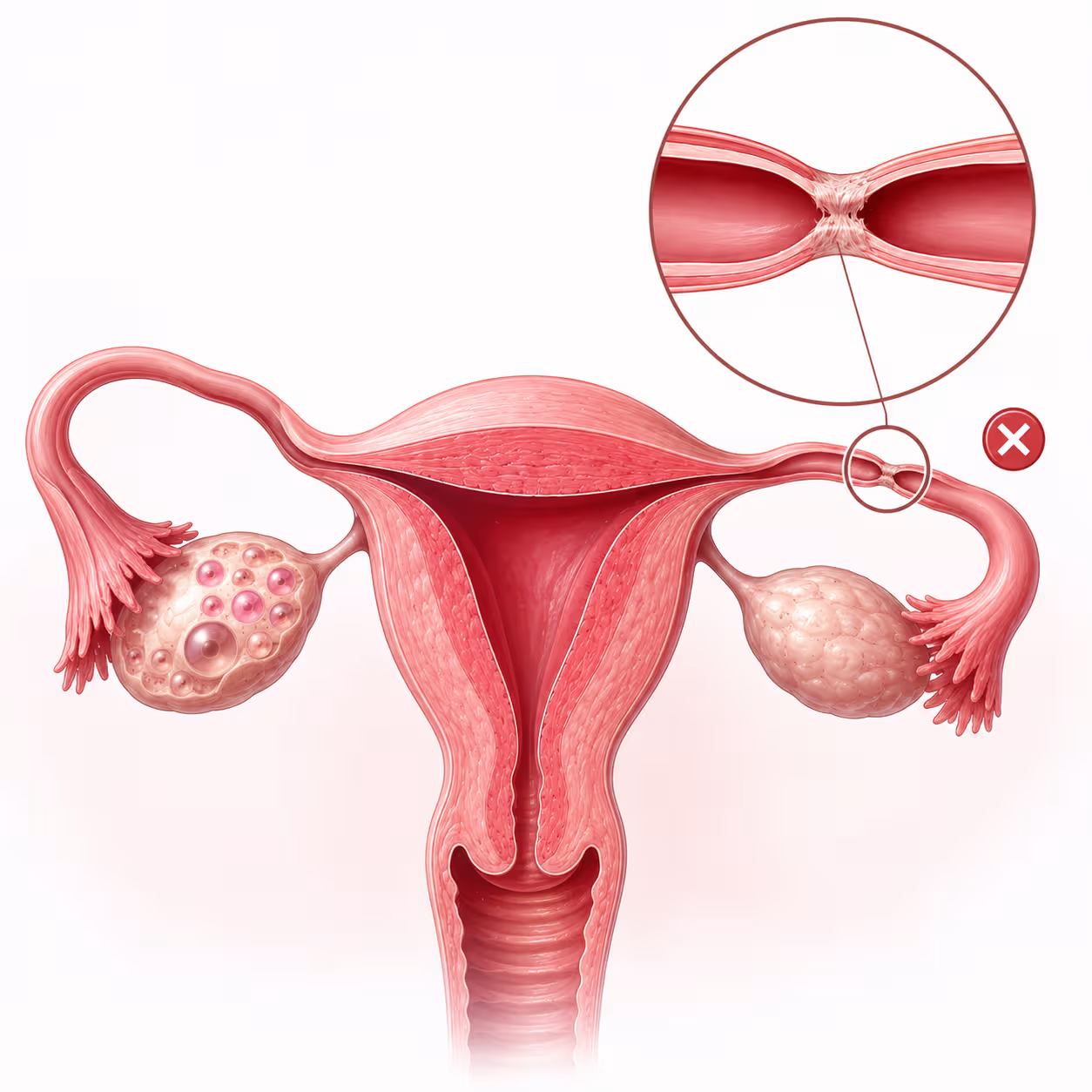
Blocked fallopian tubes occur when one or both tubes become partially or completely obstructed.
The fallopian tubes serve several important functions:
• Transport the egg from the ovary
• Provide the site for fertilization
• Support early embryo development
• Transport the embryo to the uterus
When these tubes become blocked, sperm may not reach the egg, or the fertilized embryo may not successfully reach the uterus.
This condition is commonly referred to as tubal factor infertility.
Why Blocked Fallopian Tubes Affect Fertility
Natural conception depends upon normal tubal function.
For pregnancy to occur:
- The ovary must release an egg.
- The sperm must reach the fallopian tube.
- Fertilization must occur.
- The embryo must travel into the uterus.
- Implantation must occur.
A blockage may interfere with one or more of these steps.
One Blocked Tube
Women with one healthy fallopian tube may still conceive naturally, although fertility potential may be reduced.
Both Tubes Blocked
When both tubes are completely blocked, natural conception becomes extremely difficult because sperm and egg cannot meet.
Hydrosalpinx
Hydrosalpinx occurs when a fallopian tube becomes blocked and filled with fluid.
This condition can significantly reduce fertility and may also negatively affect IVF outcomes if untreated.
Common Causes of Blocked Fallopian Tubes
Several conditions can damage the fallopian tubes.
Pelvic Inflammatory Disease (PID)
One of the most common causes worldwide.
PID may result from untreated reproductive tract infections and can cause scarring inside the tubes.
Endometriosis
Women with Endometriosis may develop scar tissue and adhesions around the reproductive organs that affect tubal function.
Previous Pelvic Surgery
Prior surgeries involving the pelvis may sometimes lead to adhesions and tubal damage.
Tuberculosis
In certain regions, genital tuberculosis remains an important cause of tubal infertility.
Previous Ectopic Pregnancy
Tubal damage resulting from ectopic pregnancy can increase the risk of future fertility problems.
Congenital Abnormalities
Rarely, women may be born with abnormalities affecting the fallopian tubes.
Symptoms of Blocked Fallopian Tubes
Many women experience no symptoms at all.
In fact, infertility may be the first sign that prompts investigation.
Possible symptoms include:
• Difficulty conceiving
• Pelvic pain
• Painful periods
• Chronic pelvic discomfort
• History of pelvic infection
• Pain during intercourse
However, many women with completely blocked tubes feel perfectly healthy.
How Are Blocked Fallopian Tubes Diagnosed?
Accurate diagnosis is critical because treatment decisions depend on the type and location of the blockage.
Hysterosalpingography (HSG)
The most common initial investigation.
A contrast dye is injected into the uterus while X-rays evaluate whether the tubes are open.
Sonosalpingography
Uses ultrasound and fluid to assess tubal patency.
Laparoscopy
Often considered the gold standard for evaluating pelvic anatomy and tubal disease.
Fertility Evaluation
A complete fertility assessment should also evaluate:
• Ovarian reserve
• Male fertility
• Uterine health
• Ovulation
Women may also benefit from reviewing our fertility resources within the Wellspring Blog Hub.
When Should You See a Fertility Specialist?
You should seek evaluation if:
• You have been trying to conceive unsuccessfully.
• You have a history of PID.
• You have endometriosis.
• You have undergone pelvic surgery.
• You have experienced ectopic pregnancy.
• You have abnormal HSG findings.
Women seeking specialized fertility care can learn more about Dr. Pranay Shah and our comprehensive fertility evaluation approach.
Can Natural Remedies Open Blocked Fallopian Tubes?
This is one of the most common fertility questions I hear from patients.
The honest answer is that there is currently no strong scientific evidence proving that herbs, fertility teas, detox programs, abdominal massages, castor oil packs, or supplements can reliably open a physically blocked fallopian tube.
This does not mean natural approaches have no role. Certain lifestyle and wellness measures may support reproductive health, reduce inflammation, improve overall wellbeing, and optimize fertility. However, women should be cautious about claims promising to “cure” tubal blockage naturally.
The effectiveness of any treatment depends on:
- The location of the blockage
- Whether the blockage is partial or complete
- The presence of scar tissue
- Associated conditions such as endometriosis
- Age and ovarian reserve
- Duration of infertility
A complete fertility assessment is essential before deciding on any treatment strategy.
Natural Approaches That May Support Fertility
Anti-Inflammatory Diet
Chronic inflammation may negatively affect reproductive health.
An anti-inflammatory eating pattern may include:
- Fresh fruits
- Vegetables
- Whole grains
- Nuts
- Seeds
- Healthy fats
- Fish rich in omega-3 fatty acids
Although diet cannot physically remove tubal scarring, it may support overall reproductive health.
Maintaining a Healthy Weight
Both obesity and being significantly underweight may affect fertility.
Maintaining a healthy body weight can improve:
- Hormonal balance
- Ovulation
- Metabolic health
- Fertility outcomes
Regular Physical Activity
Moderate exercise may help:
- Improve insulin sensitivity
- Reduce inflammation
- Support hormonal health
- Improve overall wellbeing
Excessive exercise, however, may negatively affect ovulation in some women.
Stress Management
Infertility can be emotionally challenging.
While stress does not directly cause blocked tubes, managing stress may improve overall health and quality of life.
Helpful approaches include:
- Meditation
- Yoga
- Mindfulness
- Walking
- Counseling
- Support groups
Smoking Cessation
Smoking is associated with reduced fertility and increased reproductive damage.
Women trying to conceive should avoid smoking and secondhand smoke exposure whenever possible.
Limiting Alcohol Consumption
Excessive alcohol intake may negatively affect fertility and reproductive health.
Moderation is recommended for women actively trying to conceive.
Natural Remedies That Lack Strong Scientific Evidence
Patients often ask about:
- Castor oil packs
- Fertility massages
- Herbal cleanses
- Detox programs
- Vaginal steaming
- Special fertility teas
- Tube-opening supplements
Currently, there is insufficient scientific evidence demonstrating that these approaches can reliably remove tubal blockages or restore tubal function.
Women should be cautious about spending significant time or money on treatments that lack evidence, especially when age-related fertility decline is a concern.
Medical Treatment Options for Blocked Fallopian Tubes
Treatment depends on the underlying cause and severity of the blockage.
Tubal Cannulation
Some proximal blockages near the uterus may be treatable using specialized procedures designed to reopen the tube.
Laparoscopic Surgery
In selected patients, laparoscopy may help:
- Remove adhesions
- Treat endometriosis
- Improve pelvic anatomy
- Restore tubal function
However, surgery is not appropriate for every patient.
Treatment of Underlying Conditions
Management may include treatment for:
- Endometriosis
- Pelvic infections
- Hydrosalpinx
- Pelvic adhesions
Women diagnosed with endometriosis should review our comprehensive guide on Endometriosis and Fertility.
When IVF Becomes the Best Option
For many women with significant tubal damage, IVF offers the highest probability of achieving pregnancy.
Unlike natural conception, IVF bypasses the fallopian tubes entirely.
The process involves:
- Ovarian stimulation
- Egg retrieval
- Fertilization in the laboratory
- Embryo development
- Embryo transfer into the uterus
Because the tubes are bypassed, pregnancy may still be possible even when both tubes are blocked.
Women considering fertility treatment can learn more about IVF Treatment.
Hydrosalpinx and IVF
Hydrosalpinx deserves special attention because it may reduce IVF success rates.
Fluid from a hydrosalpinx can negatively affect:
- Embryo implantation
- Endometrial receptivity
- Pregnancy rates
In some situations, treatment of hydrosalpinx before IVF may improve outcomes.
Individualized assessment is essential.
Clinical Insight From Dr. Pranay Shah
One of the most common situations I encounter in practice is a woman arriving after spending months or even years trying various online remedies that promised to unblock her fallopian tubes naturally.
While I completely understand the desire to avoid medical procedures, fertility treatment should be guided by accurate diagnosis rather than hope alone.
I have seen patients delay appropriate fertility care because they were repeatedly told that a particular herb, supplement, detox program, or massage would completely reverse tubal blockage. Unfortunately, this delay can sometimes reduce future fertility potential, especially for women over 35.
The most successful outcomes occur when we first determine the exact cause of infertility and then create an individualized treatment plan based on evidence rather than assumptions.
Patients seeking specialized fertility evaluation can learn more about Dr. Pranay Shah and our fertility services in Ahmedabad.
Common Myths About Blocked Fallopian Tubes
Myth 1: Herbs Can Always Open Blocked Tubes
Reality:
There is no strong scientific evidence supporting this claim.
Myth 2: Both Tubes Must Be Open to Conceive
Reality:
Pregnancy may still occur naturally if one healthy tube remains functional.
Myth 3: IVF Cannot Work With Blocked Tubes
Reality:
IVF bypasses the tubes entirely and is often highly effective.
Myth 4: Blocked Tubes Always Cause Symptoms
Reality:
Many women have no symptoms until fertility testing is performed.
Myth 5: Surgery Is Always Necessary
Reality:
Treatment depends on the type and location of the blockage.
Recent Research
Recent fertility research highlights several important findings:
- Tubal disease remains a major cause of female infertility worldwide.
- HSG remains a valuable first-line diagnostic test.
- Hydrosalpinx can significantly reduce IVF success rates.
- IVF often provides better outcomes than tubal surgery in selected patients.
- Early fertility evaluation improves treatment planning.
- Age remains one of the strongest predictors of reproductive outcomes.
Frequently Asked Questions
Can blocked fallopian tubes open naturally?
In rare situations, temporary or minor blockages may resolve, but most structural tubal blockages do not reliably open on their own.
Can I get pregnant with one blocked tube?
Yes. Many women conceive naturally when one healthy tube remains open and functional.
What causes blocked fallopian tubes?
Common causes include pelvic inflammatory disease, endometriosis, pelvic surgery, ectopic pregnancy, and pelvic adhesions.
Can herbal remedies unblock fallopian tubes?
There is currently no strong scientific evidence demonstrating that herbal remedies can reliably remove tubal blockages.
Is surgery always required?
No. Treatment depends on the location and severity of the blockage and the patient’s fertility goals.
What is hydrosalpinx?
Hydrosalpinx is a blocked fallopian tube filled with fluid that may negatively affect fertility and IVF outcomes.
Is HSG painful?
Most women experience mild to moderate discomfort during HSG, although experiences vary.
Can endometriosis cause blocked tubes?
Yes. Endometriosis may lead to scarring and adhesions that affect tubal function.
When should I consider IVF?
IVF may be recommended when both tubes are blocked, severely damaged, or when other fertility factors are present.
Can IVF bypass blocked tubes?
Yes. IVF completely bypasses the fallopian tubes.
How are blocked tubes diagnosed?
Diagnosis commonly involves HSG, ultrasound-based tests, and laparoscopy.
Does age affect treatment decisions?
Yes. Female age is an important factor when selecting fertility treatments.
Can blocked tubes increase ectopic pregnancy risk?
Yes. Tubal abnormalities may increase the risk of ectopic pregnancy.
Is natural conception possible with blocked tubes?
It depends on whether one or both tubes are affected and the severity of the blockage.
When should I see a fertility specialist?
Women who have difficulty conceiving or have known risk factors for tubal disease should seek specialist evaluation.
Key Takeaways
- Blocked fallopian tubes are a common cause of female infertility.
- Many women experience no symptoms.
- HSG is often the first diagnostic test.
- There is limited scientific evidence that natural remedies can open blocked tubes.
- Lifestyle improvements may support reproductive health.
- Treatment depends on the location and severity of the blockage.
- IVF bypasses the fallopian tubes and is often highly effective.
- Early fertility evaluation improves treatment planning.
- Individualized care provides the best outcomes.
Conclusion
Blocked fallopian tubes can make conception more difficult, but they do not necessarily prevent pregnancy. The most important step is obtaining an accurate diagnosis to determine the location, severity, and cause of the blockage. While healthy lifestyle habits may support overall fertility, women should be cautious about claims that natural remedies can reliably remove structural tubal blockages.
Treatment options range from observation and surgical intervention to IVF, depending on individual circumstances. Because every fertility journey is unique, a personalized evaluation remains the best way to determine the most effective path forward.
For additional fertility education, visit our Female Infertility Hub, browse our Fertility Videos, or explore the latest fertility resources in our Blog Center.
About Dr. Pranay Shah
Dr. Pranay Shah is the Director and Chief Fertility Consultant at Wellspring IVF & Women’s Hospital, Ahmedabad. With more than 15 years of experience and over 6000 IVF success stories, he specializes in IVF, recurrent IVF failure, endometriosis, low AMH, fertility preservation, male infertility, and complex infertility management.
Medical Disclaimer
This article is intended for educational and informational purposes only and should not be considered medical advice, diagnosis, or treatment. Fertility recommendations vary between individuals. Please consult a qualified fertility specialist for personalized evaluation and treatment guidance.