
How to Increase Egg Quality Naturally: Evidence-Based Strategies for Better Fertility
Direct Answer
Egg quality can be influenced by age, genetics, lifestyle factors, nutrition, oxidative stress, metabolic health, and underlying fertility conditions. While no treatment can completely reverse ovarian aging, evidence suggests that optimizing nutrition, maintaining a healthy lifestyle, addressing medical conditions, improving mitochondrial function, and using selected supplements under medical supervision may support healthier egg development and improve fertility outcomes. For women trying to conceive naturally or through IVF, improving egg quality is often more important than simply increasing egg quantity.
Key Facts Table
| Topic | Information |
|---|---|
| Focus | Egg Quality |
| Influenced By Age | Yes |
| Influenced By Lifestyle | Yes |
| Important For Fertility | Yes |
| Important For IVF | Yes |
| Can Nutrition Help? | Potentially Yes |
| Can Age Be Reversed? | No |
| Can Egg Quality Be Optimized? | Yes |
| Influences Embryo Quality | Yes |
| Impacts Pregnancy Chances | Yes |
Introduction
One of the most common fertility questions women ask is:
“How can I improve my egg quality?”
Whether a woman is trying to conceive naturally, preparing for IVF, dealing with low AMH, or facing age-related fertility decline, egg quality plays a major role in reproductive success.
Many people focus only on the number of eggs available.
However, in fertility medicine, quality is often more important than quantity.
A single healthy egg can result in a healthy embryo, successful implantation, and pregnancy.
On the other hand, numerous poor-quality eggs may not produce viable embryos.
At Wellspring IVF & Women’s Hospital, Ahmedabad, one of the most important goals during fertility treatment is optimizing factors that influence egg quality before conception occurs.
Women seeking comprehensive fertility guidance can also explore our Fertility Diet and IVF Nutrition Guide.
What Is Egg Quality?
Egg quality refers to the ability of an egg (oocyte) to:
- Fertilize normally
- Develop into a healthy embryo
- Implant successfully
- Result in a healthy pregnancy
High-quality eggs generally contain:
- Healthy chromosomes
- Adequate energy production
- Normal cellular structures
- Good developmental potential
Poor-quality eggs may have:
- Chromosomal abnormalities
- Reduced developmental potential
- Lower fertilization rates
- Higher miscarriage risk
Why Egg Quality Matters for Fertility
Egg quality influences nearly every stage of reproduction.
Ovulation
Healthy eggs are required before fertilization can occur.
Fertilization
Poor-quality eggs may fertilize less efficiently.
Embryo Development
Embryo quality depends heavily on egg quality.
Implantation
Healthy embryos are more likely to implant successfully.
Pregnancy Outcomes
Chromosomally normal embryos reduce miscarriage risk and improve pregnancy outcomes.
This is why egg quality remains one of the strongest predictors of fertility success.
What Determines Egg Quality?
Several factors influence egg quality.
Age
Age is the most important determinant.
As women age:
- Chromosomal abnormalities increase
- Mitochondrial function declines
- Fertility naturally decreases
Genetics
Inherited factors influence ovarian function and reproductive aging.
Oxidative Stress
Excess oxidative stress may damage developing eggs.
Lifestyle Factors
Smoking, poor nutrition, obesity, and sleep deprivation may negatively affect reproductive health.
Medical Conditions
Certain conditions may influence egg quality:
- Endometriosis
- PCOS
- Thyroid disorders
- Autoimmune conditions
- Metabolic disorders
Women with PCOS may benefit from individualized fertility optimization strategies.
Scientific Evidence Behind Egg Quality Improvement
A common misconception is that egg quality cannot be influenced at all.
While ovarian aging cannot be reversed, scientific evidence suggests that several modifiable factors may affect the environment in which eggs mature.
Research has investigated:
- Antioxidants
- CoQ10
- Vitamin D
- Mediterranean-style diets
- Exercise
- Weight management
- Sleep quality
- Smoking cessation
The strongest evidence supports comprehensive fertility optimization rather than reliance on a single supplement.
Nutrition Mechanisms That May Support Egg Health
Developing eggs require substantial energy production.
Mitochondria act as the energy-producing structures within cells.
Healthy mitochondrial function is associated with better reproductive potential.
Nutritional strategies may support:
- Cellular energy production
- Antioxidant protection
- Hormonal balance
- Metabolic health
This is one reason fertility specialists emphasize nutrition before conception.
Best Foods That Support Reproductive Health
Although no specific food guarantees improved fertility, evidence supports a nutrient-rich dietary pattern.
Fruits and Vegetables
Rich in antioxidants that help reduce oxidative stress.
Healthy Fats
Sources include:
- Olive oil
- Nuts
- Seeds
- Avocados
Lean Protein
Supports hormone production and cellular function.
Omega-3 Fatty Acids
May support reproductive health and reduce inflammation.
Whole Grains
Help stabilize blood sugar and support metabolic health.
Adequate Hydration
Hydration supports overall physiological function.
Women interested in fertility nutrition should also review our Fertility Diet and IVF Nutrition Guide.
Supplements Commonly Discussed for Egg Quality
Supplements should always be discussed with a fertility specialist before use.
CoQ10
Coenzyme Q10 is among the most frequently studied fertility supplements.
Potential benefits include:
- Supporting mitochondrial function
- Reducing oxidative stress
- Supporting cellular energy production
Vitamin D
Vitamin D deficiency is common among fertility patients.
Omega-3 Fatty Acids
May support reproductive and metabolic health.
Prenatal Vitamins
Help address nutritional deficiencies before conception.
DHEA
Used selectively in specific diminished ovarian reserve cases under specialist supervision.
Importantly, supplements should complement—not replace—evidence-based fertility care.
Who May Benefit Most From Egg Quality Optimization?
Women who may particularly benefit include:
- Women over 35
- Women with low AMH
- Women preparing for IVF
- Women with recurrent IVF failure
- Women with diminished ovarian reserve
- Women with endometriosis
- Women planning pregnancy later in life
Patients considering treatment can learn more about IVF Treatment and fertility preservation strategies.
Role of Lifestyle in Egg Quality
Lifestyle choices influence reproductive health more than many people realize.
Evidence supports:
Smoking Cessation
Smoking accelerates ovarian aging and negatively affects fertility.
Weight Optimization
Both obesity and being underweight may impair reproductive function.
Exercise
Moderate physical activity supports metabolic health.
Sleep
Poor sleep may affect hormone regulation.
Stress Management
Chronic stress may influence overall reproductive wellbeing.
Who Should Avoid Self-Prescribing Fertility Supplements?
Many fertility supplements are marketed aggressively online.
However, not every supplement is appropriate for every woman.
Women should avoid self-prescribing fertility supplements without medical guidance if they have:
- Thyroid disorders
- Hormonal disorders
- Liver disease
- Autoimmune conditions
- PCOS requiring medical treatment
- History of hormone-sensitive cancers
Supplements such as DHEA should only be used under fertility specialist supervision because inappropriate use may actually worsen hormonal balance.
Practical Recommendations to Support Egg Quality
Women often ask:
“What can I start doing today?”
The following evidence-based strategies are generally recommended.
Prioritize Fertility-Friendly Nutrition
Focus on:
- Vegetables
- Fruits
- Lean protein
- Whole grains
- Healthy fats
Stop Smoking
Smoking remains one of the most damaging lifestyle factors affecting ovarian function.
Maintain Healthy Body Weight
Weight optimization supports:
- Hormonal balance
- Ovulation
- Metabolic health
- Fertility outcomes
Improve Sleep Quality
Aim for:
- 7–8 hours sleep
- Consistent sleep schedule
- Reduced screen exposure before bedtime
Exercise Regularly
Moderate activity is generally beneficial.
Examples include:
- Walking
- Swimming
- Cycling
- Yoga
Address Medical Conditions Early
Women with:
- Low AMH
- PCOS
- Endometriosis
- Thyroid disorders
should undergo fertility evaluation before delaying pregnancy.
Learn more about Low AMH and Fertility and PCOS Treatment Options.
Common Mistakes Women Make When Trying to Improve Egg Quality
Waiting Too Long
Age remains the strongest determinant of egg quality.
Delaying evaluation can reduce available options.
Focusing Only on Supplements
No supplement can compensate for poor overall reproductive health.
Ignoring Male Fertility
Fertility is a couple’s issue.
Male factors contribute significantly to reproductive outcomes.
Following Unproven Internet Advice
Many online fertility claims lack scientific evidence.
Assuming Low AMH Means Pregnancy Is Impossible
Many women with low AMH achieve pregnancy naturally or through fertility treatment.
Research Summary
Current scientific evidence suggests:
Strong Evidence Exists For
- Smoking cessation
- Weight optimization
- Healthy dietary patterns
- Management of metabolic disorders
- Early fertility intervention
Moderate Evidence Exists For
- CoQ10 supplementation
- Vitamin D correction
- Antioxidant support in selected patients
Limited Evidence Exists For
- Extreme fertility diets
- Detox programs
- Miracle supplements
- Unregulated fertility products
The most effective approach combines medical evaluation with evidence-based lifestyle optimization.
Clinical Insight From Dr. Pranay Shah
One of the most common misconceptions I hear is:
“Doctor, tell me the medicine that will improve my egg quality.”
Unfortunately, fertility is rarely that simple.
Egg quality is influenced by multiple factors including age, genetics, ovarian reserve, metabolic health, and lifestyle.
While certain supplements may be useful in selected patients, I encourage women to focus on the factors that have the strongest scientific support:
- Early fertility evaluation
- Healthy lifestyle habits
- Weight optimization
- Nutritional improvement
- Management of medical conditions
- Individualized fertility treatment planning
Many successful pregnancies occur because we optimize the entire reproductive environment rather than focusing on a single supplement or laboratory value.
Patients seeking individualized fertility guidance can learn more about Dr. Pranay Shah and our fertility services in Ahmedabad.
Frequently Asked Questions
Can egg quality improve naturally?
Certain lifestyle and nutritional changes may support reproductive health and optimize egg development, although aging cannot be reversed.
What affects egg quality the most?
Age remains the strongest determinant of egg quality.
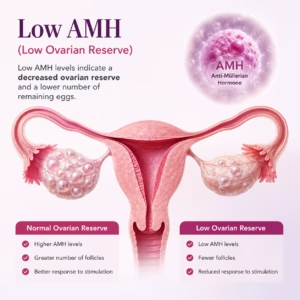
Does low AMH mean poor egg quality?
Not necessarily. AMH primarily reflects egg quantity rather than egg quality.
Can diet improve egg quality?
A nutrient-rich diet may support reproductive health and fertility outcomes.
Is CoQ10 good for egg quality?
CoQ10 is one of the most researched fertility supplements and may support mitochondrial function.
Can IVF improve egg quality?
IVF cannot directly improve egg quality but may help maximize available reproductive potential.
Does stress affect egg quality?
Chronic stress may negatively affect overall reproductive health.
Can exercise improve fertility?
Moderate exercise supports metabolic and hormonal health.
Does smoking affect egg quality?
Yes. Smoking accelerates ovarian aging and negatively affects fertility.
Is DHEA useful for egg quality?
DHEA may benefit selected patients but should only be used under specialist supervision.
Can women over 35 improve egg quality?
While age-related changes cannot be reversed, fertility optimization strategies may support reproductive health.
Where can I learn more about fertility nutrition?
Review our Fertility Diet and IVF Nutrition Guide and browse our Fertility Videos for additional guidance.
Key Takeaways
- Egg quality is often more important than egg quantity.
- Age remains the strongest factor affecting egg quality.
- Nutrition, lifestyle, and metabolic health may influence reproductive outcomes.
- Smoking cessation is one of the most important fertility interventions.
- CoQ10 and selected supplements may be beneficial for some women.
- Weight optimization supports hormonal balance and fertility.
- Low AMH does not automatically mean poor egg quality.
- Early fertility evaluation provides the greatest range of treatment options.
- IVF can help maximize reproductive potential when natural conception becomes difficult.
Conclusion
Egg quality plays a central role in fertility, embryo development, implantation, and pregnancy success. Although no treatment can completely reverse ovarian aging, many evidence-based strategies can help optimize reproductive health and potentially improve fertility outcomes.
A comprehensive approach that includes healthy nutrition, lifestyle optimization, management of underlying medical conditions, and individualized fertility care offers the best opportunity for success. Rather than searching for a single miracle solution, women should focus on creating the healthiest possible reproductive environment.
Women seeking additional fertility support can explore our Female Infertility Hub, learn about IVF Treatment, browse our Fertility Videos, and visit our Blog Centre.
About Dr. Pranay Shah
Dr. Pranay Shah is the Director and Chief Fertility Consultant at Wellspring IVF & Women’s Hospital, Ahmedabad. With more than 15 years of experience and over 6000 IVF success stories, he specializes in reproductive endocrinology, low AMH management, IVF, fertility preservation, recurrent IVF failure, PCOS, and complex infertility treatment.
Medical Disclaimer
This article is intended for educational and informational purposes only and should not be considered medical advice, diagnosis, or treatment. Fertility recommendations vary between individuals. Please consult a qualified fertility specialist for personalized evaluation and treatment guidance.