

Blastocyst Transfer for a Healthier and More Assured Pregnancy
Direct Answer
Blastocyst transfer is an advanced IVF technique in which embryos are cultured in the laboratory for approximately five to six days before being transferred into the uterus. By allowing embryos to reach the blastocyst stage, fertility specialists can better identify embryos with strong developmental potential, often improving embryo selection and increasing the likelihood of successful implantation in appropriately selected patients.
Key Facts Table
| Topic | Information |
|---|---|
| Procedure | Blastocyst Transfer |
| Embryo Age | Day 5–6 |
| IVF Requirement | Yes |
| Implantation Potential | Higher Embryo Selection Accuracy |
| Embryo Development Stage | Advanced |
| Requires Specialized Lab | Yes |
| Commonly Used In Modern IVF | Yes |
| Genetic Testing Compatible | Yes |
| Embryo Freezing Compatible | Yes |
| Helps Embryo Selection | Yes |
Introduction
One of the most significant advances in modern IVF has been the ability to culture embryos to the blastocyst stage before transfer.
Years ago, embryos were often transferred into the uterus on Day 2 or Day 3 after fertilization.
Today, many fertility centers prefer blastocyst transfer because it provides additional information about embryo development and allows embryologists to select embryos with stronger developmental potential.
Patients frequently ask:
- What is a blastocyst?
- Why wait until Day 5?
- Is blastocyst transfer better than Day 3 transfer?
- Does blastocyst transfer improve pregnancy rates?
- Is every patient suitable for blastocyst transfer?
At Wellspring IVF & Women’s Hospital, Ahmedabad, blastocyst transfer has become an important component of many IVF treatment plans because it helps optimize embryo selection and supports personalized fertility care.
What Is a Blastocyst?
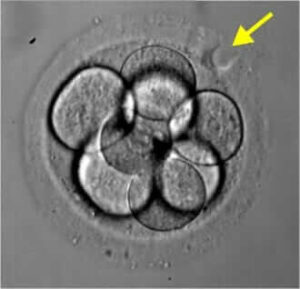
A blastocyst is an embryo that has continued developing for approximately five to six days after fertilization.
During this stage:
- Cell numbers increase significantly
- Embryo organization improves
- Specialized cell groups develop
- Implantation potential becomes easier to assess
The blastocyst contains:
Inner Cell Mass
This portion develops into the baby.
Trophectoderm
This portion contributes to placental development.
Blastocoel Cavity
A fluid-filled cavity characteristic of blastocyst development.
Blastocyst formation represents an important developmental milestone.
Learn more about Blastocyst Culture of Embryos.
Why Is Blastocyst Transfer Used in IVF?
The primary goal is improving embryo selection.
Not every fertilized egg reaches the blastocyst stage.
Embryos that continue developing successfully often demonstrate stronger developmental competence.
This additional period of laboratory observation allows embryologists to identify embryos with greater implantation potential.
Who May Benefit From Blastocyst Transfer?
Blastocyst transfer may be particularly useful for:
Patients Undergoing IVF
Most modern IVF programs consider blastocyst culture whenever appropriate.
Learn more about IVF Treatment.
Patients With Multiple Embryos
Additional embryos provide greater opportunity for blastocyst selection.
Recurrent IVF Failure Patients
Selected patients with previous unsuccessful cycles may benefit from improved embryo selection strategies.
Patients Considering Genetic Testing
Blastocyst-stage embryos are commonly used for PGT-A Testing.
Single Embryo Transfer Candidates
Blastocyst transfer often supports confidence when transferring a single embryo.
Step-by-Step Blastocyst Transfer Process
Step 1: Ovarian Stimulation
Fertility medications stimulate multiple follicles to develop.
Step 2: Egg Retrieval
Mature eggs are collected from the ovaries.
Step 3: Fertilization
Eggs are fertilized using either:
- Conventional IVF
- ICSI Treatment
Step 4: Embryo Culture
Embryos remain in specialized incubators.
Embryologists monitor:
- Cell division
- Growth rate
- Morphology
- Developmental progression
Step 5: Blastocyst Formation
By Day 5 or Day 6, selected embryos reach the blastocyst stage.
Step 6: Embryo Selection
The best embryo is selected for transfer or freezing.
Step 7: Blastocyst Transfer
The embryo is transferred into the uterus using a thin catheter under ultrasound guidance.
Why Day 5 Transfer Mimics Natural Biology
In natural conception:
- Fertilization occurs in the fallopian tube.
- The embryo develops during transit.
- Entry into the uterus generally occurs around the blastocyst stage.
Blastocyst transfer therefore more closely resembles natural embryo timing.
This physiological synchronization may contribute to improved implantation in selected cases.
Success Factors Influencing Blastocyst Transfer Outcomes
Several factors influence success.
Female Age
Age remains one of the strongest predictors of fertility outcomes.
Egg Quality
Healthy eggs contribute to healthy embryos.
Sperm Quality
Male fertility factors remain important.
Embryo Quality
Blastocyst grading helps assess developmental potential.
Uterine Receptivity
A healthy endometrium supports implantation.
Laboratory Quality
Embryology expertise significantly influences embryo development.
Individualized Treatment Planning
Personalized protocols improve outcomes.
Advantages of Blastocyst Transfer
Better Embryo Selection
Extended culture provides more developmental information.
Improved Synchronization
Embryo development aligns more closely with natural uterine timing.
Supports Single Embryo Transfer
High-quality blastocysts often allow safer single embryo transfer strategies.
Compatible With Genetic Testing
Blastocysts are frequently used for PGT-A evaluation.
Supports Embryo Freezing Programs
Modern vitrification works exceptionally well with blastocyst-stage embryos.
Relationship Between Blastocyst Transfer and PGT-A
Many patients undergoing PGT-A Testing first culture embryos to the blastocyst stage.
This allows:
- Embryo biopsy
- Chromosomal evaluation
- Improved embryo selection
Selected patients may particularly benefit from this approach.
Blastocyst Transfer and Advanced Male Infertility
Male fertility factors can influence embryo development.
Advanced techniques such as:
may be incorporated into treatment plans before blastocyst culture.
Risks of Blastocyst Transfer
Blastocyst transfer is generally safe and widely used in modern IVF programs. However, patients should understand potential limitations and risks.
Not All Embryos Reach the Blastocyst Stage
One of the biggest concerns is that some embryos stop developing before Day 5.
This is particularly important for patients with:
- Low ovarian reserve
- Low egg numbers
- Advanced maternal age
- Poor embryo development history
Cycle Cancellation Risk
In selected cases, no embryos may reach the blastocyst stage, resulting in no transfer.
Emotional Stress
Waiting until Day 5 can be emotionally challenging for patients who receive daily embryo development updates.
Multiple Pregnancy Risk
If multiple blastocysts are transferred, twin or higher-order pregnancy risk increases.
Modern fertility medicine increasingly supports single embryo transfer whenever appropriate.
Limitations of Blastocyst Transfer
Although blastocyst transfer offers many advantages, it is not automatically the best option for every patient.
Fewer Embryos Available
Extended culture naturally results in fewer embryos reaching transfer stage.
Not Suitable for Every IVF Cycle
Patients with very limited embryo numbers may sometimes benefit from earlier transfer.
Does Not Guarantee Pregnancy
Even excellent-quality blastocysts cannot guarantee implantation or pregnancy.
Successful outcomes still depend on:
- Uterine receptivity
- Chromosomal normality
- Maternal health
- Embryo quality
Blastocyst Transfer Success Rates
One of the most common questions patients ask is:
“What is the success rate of blastocyst transfer?”
The answer depends on several factors.
Important influences include:
- Female age
- Embryo quality
- Egg quality
- Sperm quality
- Uterine health
- Endometrial thickness
- Embryology laboratory quality
In appropriately selected patients, blastocyst transfer often improves embryo selection compared with earlier-stage transfers.
However, success should always be evaluated individually rather than using generalized percentages.
How to Improve Blastocyst Transfer Outcomes
Optimize Egg Quality
Healthy eggs contribute significantly to embryo development.
Women concerned about ovarian reserve can learn more about Low AMH and Ovarian Reserve.
Address Male Fertility Factors
Sperm quality influences embryo development.
Advanced techniques such as ICSI Treatment and IMSI Treatment may help selected couples.
Maintain Healthy Lifestyle Habits
Important factors include:
- Smoking cessation
- Healthy weight
- Regular exercise
- Adequate sleep
- Stress management
Optimize Endometrial Receptivity
Successful implantation requires proper uterine preparation.
Consider Genetic Testing When Appropriate
Selected patients may benefit from PGT-A Testing to improve embryo selection.
Clinical Insight From Dr. Pranay Shah
One of the biggest misconceptions I encounter is the belief that blastocyst transfer automatically guarantees higher pregnancy rates.
The reality is more nuanced.
Blastocyst transfer is primarily a tool for improved embryo selection.
It helps identify embryos that have demonstrated continued developmental potential in the laboratory.
In my clinical experience, blastocyst transfer can be extremely valuable for patients with multiple embryos because it allows us to select embryos more confidently.
However, successful pregnancy still depends on the interaction between:
- Embryo quality
- Endometrial receptivity
- Maternal health
- Underlying fertility diagnosis
The most successful IVF outcomes occur when every aspect of fertility care is individualized rather than relying on a single laboratory milestone.
Patients seeking personalized fertility guidance can learn more about Dr. Pranay Shah and fertility services in Ahmedabad.
Common Myths About Blastocyst Transfer
Myth 1: Blastocyst Transfer Guarantees Pregnancy
Reality:
No fertility treatment can guarantee pregnancy.
Myth 2: Every Embryo Should Be Cultured to Day 5
Reality:
Treatment decisions must be individualized.
Myth 3: Day 3 Embryos Cannot Produce Healthy Babies
Reality:
Many healthy pregnancies occur following Day 3 embryo transfer.
Myth 4: Blastocyst Transfer Is Only for Younger Women
Reality:
Selected patients across different age groups may benefit.
Myth 5: Blastocyst Grading Predicts Pregnancy With Certainty
Reality:
Grading estimates developmental potential but cannot predict outcomes with complete accuracy.
Recent Advances in Blastocyst Transfer
Modern reproductive medicine continues to improve blastocyst culture and embryo selection.
Important advances include:
- Time-lapse embryo monitoring
- Artificial intelligence embryo assessment
- Improved culture media
- Advanced vitrification techniques
- Personalized embryo transfer timing
- PGT-A integration
- Enhanced laboratory quality control
These innovations continue to improve embryo selection and treatment planning.
Frequently Asked Questions
What is blastocyst transfer?
Blastocyst transfer involves transferring a Day 5 or Day 6 embryo into the uterus.
Why is blastocyst transfer performed?
It helps improve embryo selection and may improve implantation potential in selected patients.
What is a blastocyst?
A blastocyst is a more advanced embryo that develops approximately five to six days after fertilization.
Is blastocyst transfer better than Day 3 transfer?
The answer depends on individual clinical circumstances.
Does every embryo become a blastocyst?
No. Many embryos stop developing before reaching the blastocyst stage.
Is blastocyst transfer painful?
The transfer procedure is generally painless and does not usually require anesthesia.
Can blastocysts be frozen?
Yes. Modern vitrification allows highly successful blastocyst freezing.
Is blastocyst transfer used in IVF?
Yes. It is one of the most commonly used embryo transfer approaches in modern IVF Treatment.
Can blastocysts undergo genetic testing?
Yes. Blastocysts are commonly used for PGT-A Testing.
Does blastocyst transfer improve pregnancy rates?
It may improve embryo selection and implantation potential in appropriately selected patients.
What happens if no embryo reaches the blastocyst stage?
In some cases, no embryo transfer may occur during that cycle.
Is blastocyst transfer safe?
Yes. It is considered a safe and established IVF procedure.
Does embryo grading matter?
Yes. Embryo grading provides information about developmental quality.
Can male infertility affect blastocyst development?
Yes. Sperm quality may influence embryo development.
Where can I learn more about fertility treatments?
Visit our Treatment Hub, explore our Fertility Videos, or browse our Blog Centre.
Key Takeaways
- Blastocyst transfer involves transferring a Day 5 or Day 6 embryo.
- It allows improved embryo selection compared with earlier-stage transfers.
- Blastocysts more closely resemble the embryo stage entering the uterus naturally.
- Not every embryo reaches the blastocyst stage.
- Blastocyst transfer is widely used in modern IVF.
- It supports genetic testing and embryo freezing programs.
- Success depends on multiple factors beyond embryo development alone.
- Individualized treatment planning remains essential.
Conclusion
Blastocyst transfer has become one of the most important advancements in modern IVF because it allows fertility specialists to evaluate embryo development more thoroughly before transfer. By extending embryo culture to Day 5 or Day 6, embryologists gain valuable information that can improve embryo selection and support individualized treatment decisions.
Although blastocyst transfer offers many advantages, it is not a guarantee of pregnancy and should always be considered within the broader context of a patient’s fertility profile. The best outcomes occur when embryo quality, uterine receptivity, laboratory excellence, and personalized treatment planning work together.
For additional fertility education, explore our Treatment Hub, learn about IVF Treatment, visit our Fertility Videos, and browse our Blog Centre.
About Dr. Pranay Shah
Dr. Pranay Shah is the Director and Chief Fertility Consultant at Wellspring IVF & Women’s Hospital, Ahmedabad. With more than 15 years of experience and over 6000 IVF success stories, he specializes in IVF, ICSI, IMSI, blastocyst culture, recurrent IVF failure, fertility preservation, embryo selection, and complex infertility management.
Medical Disclaimer
This article is intended for educational and informational purposes only and should not be considered medical advice, diagnosis, or treatment. Fertility recommendations vary between individuals. Please consult a qualified fertility specialist for personalized evaluation and treatment guidance.