Start: Anand — access NH48 / NE1 heading northbound towards Ahmedabad (National Expressway 1, the Vadodara–Ahmedabad–Mumbai corridor)
IVF Clinic Near Anand, Gujarat
IVF Clinic Near Anand | World-Class Fertility Care 45 Mins via NE1 | Wellspring IVF Ahmedabad
Anand & Charotar couples: Wellspring IVF Ahmedabad is just 75 km via NE1 Expressway. Class 10,000 lab, IMSI & blastocyst culture. Same-day consultation, home by evening.
Advanced IVF & Fertility Care for Anand — Because 45 Minutes on the NE1 Expressway Is All That Separates You from Gujarat's Most Advanced Embryology Lab
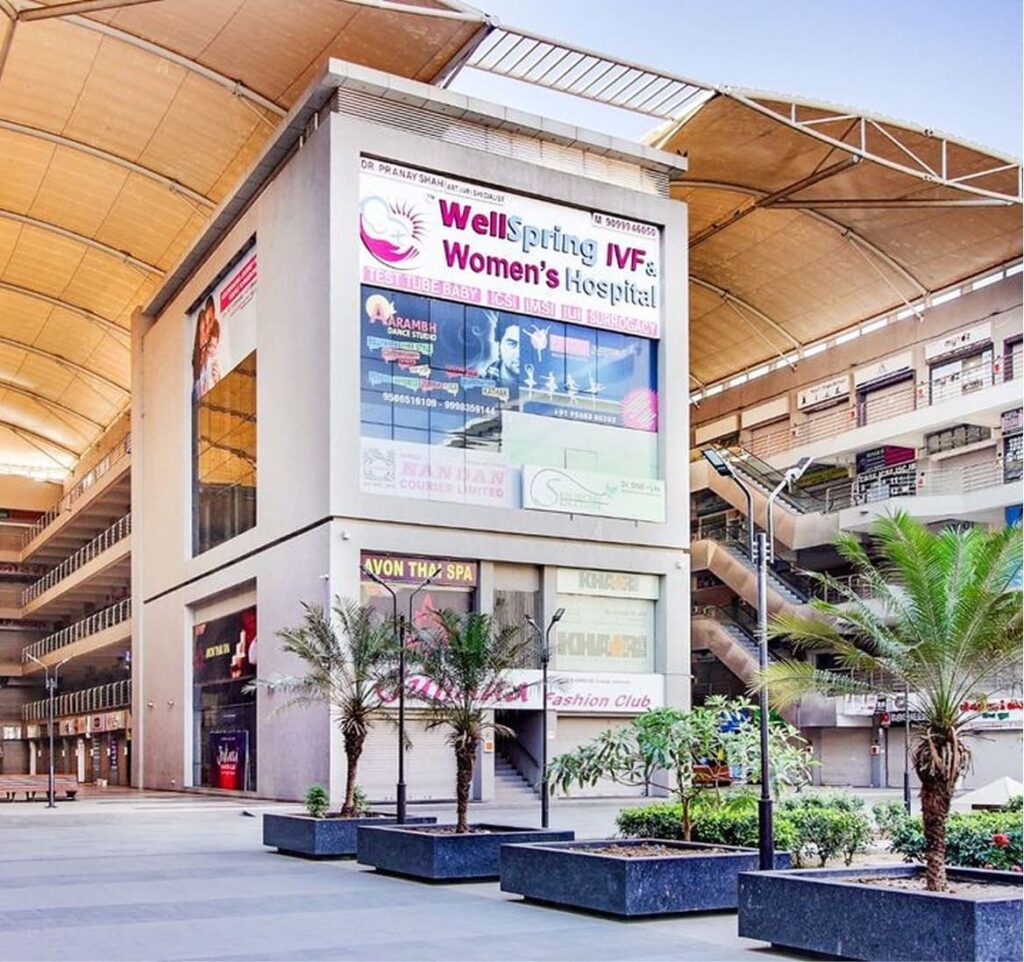
Where we are — stated clearly: Wellspring IVF & Women’s Hospital is located at Titanium City Center, Satellite, Ahmedabad — 75 km from Anand via the NE1 Expressway. That is approximately 45 to 55 minutes by road on one of India’s smoothest, fastest inter-city highway corridors. We have no clinic in Anand. This page explains why Anand and Charotar couples choose to make that short drive — and why, for many of them, the decision to travel to Ahmedabad is not a compromise. It is an upgrade.
Anand is not a city that settles easily. It is the birthplace of the cooperative dairy movement — the city that built the Amul brand, housed NDDB, and produced generations of scientists, engineers, and agricultural professionals who were trained to ask a very specific question about any important decision: what is the best available option?
When that question is applied to fertility treatment, the answer for Anand couples increasingly points north on the NE1 Expressway. Not because local clinics do not exist — they do. But because the gap between what a regional clinic’s embryology laboratory can offer and what a Class 10,000 cleanroom facility with IMSI, blastocyst culture, and PGT-A capability can offer is not a small gap. In the world of IVF, that gap is the difference between a cycle that produces no blastocysts and one that produces three. Between embryos graded good that fail to implant and embryos screened for chromosomal normality that succeed.
And when that facility is 45 minutes away — same-day consultation, home by evening, no overnight stay — the argument for compromising on care quality disappears entirely.
The Proximity Advantage — What 45 Minutes on the NE1 Changes
For patients travelling from Surat (260 km) or Rajkot (215 km), the journey to Wellspring IVF requires planning, overnight stays, and significant time away from work. For Anand patients, the calculation is completely different. Here is what the 75 km NE1 distance actually means in practice:
| Procedure / Visit Type | Other Gujarat Cities (Surat / Rajkot) | Anand — 75 km via NE1 |
|---|---|---|
| Initial Consultation with Dr. Shah | Video consultation first — can’t justify long drive for a first meeting | Drive in, consult in person with Dr. Shah, drive home — back in Anand before lunch. Same-day round trip, 2.5 hours total. |
| Follicular Monitoring Scan during Stimulation | Done at local clinic in home city — remote monitoring by WhatsApp reports to Wellspring team | Couples can choose: local Anand scan centre OR drive to Wellspring IVF directly for scan — both options are practical at 75 km |
| Egg Retrieval (OPU) — Day-Care Procedure | Overnight stay in Ahmedabad required — 3.5–4+ hours from home, travelling post-sedation same day is not recommended | Arrive 9:00 AM, OPU procedure 10–11 AM, recovery and rest at clinic, home in Anand by 4:00–5:00 PM same evening. No overnight stay needed. |
| Embryo Transfer | Overnight stay — post-transfer, travelling 260 km same day is stressful and clinically not ideal | Same-day return completely feasible. Transfer typically takes 15–20 minutes; brief 1-hour rest at clinic recommended; back in Anand by afternoon. |
| Post-Transfer Follow-Up | Done entirely at local clinic in home city | Flexible: either at Wellspring IVF Ahmedabad (quick 45-min drive) or at local Anand pathology lab — both equally viable. |
The Anand Advantage in one sentence: You sleep in your own bed every night of your IVF cycle. Every single procedure — from first consultation to embryo transfer — is a same-day return trip. The travel burden that justifies compromise for patients from distant cities simply does not exist for Anand couples.
What Our Patients Say
Real stories from real families who trusted us with their fertility journey

Ketan B.
2 months ago
I visited many doctors before, but this doctor was the one who correctly identified my issue and provided the right treatment. I finally started seeing real results after consulting them. Very knowledgeable, attentive, and professional. Highly recommended.

vibha R.
2 months ago
Heartfelt thanks to the entire team of Wellspring Hospital. After feeling disappointed and losing hope at many places, coming here was the best decision.
A special thank you to Dr. Pranay Shah for his confidence, guidance, and the way he explained everything so patiently. His positive approach gave me so much strength, and today I am blessed with my baby.
Thank you to each and every member of the hospital for taking such great care of me and supporting me throughout this journey. Forever grateful. 💕
A special thank you to Dr. Pranay Shah for his confidence, guidance, and the way he explained everything so patiently. His positive approach gave me so much strength, and today I am blessed with my baby.
Thank you to each and every member of the hospital for taking such great care of me and supporting me throughout this journey. Forever grateful. 💕

Kanal G.
4 months ago
Some doctors treat symptoms. Rare ones treat the human being sitting in front of them.
He is, without a doubt, the most patient doctor I have ever met. Of course, treatment can be done by many. What truly sets him apart is his maturity, the way he pauses, explains, comforts, and most importantly, seeks your permission before moving forward. You never feel rushed. You never feel unheard. You feel respected.
And the staff deserves equal appreciation. They handle even the most anxious and impatient moments with such calm grace and dignity that you slowly find your own heartbeat settling down. It feels less like a clinic and more like a safe space.
I wholeheartedly recommend him to anyone who overthinks, seeks reassurance, or simply needs a doctor who believes comfort is the first step of healing. With him, care begins long before the treatment does.
He is, without a doubt, the most patient doctor I have ever met. Of course, treatment can be done by many. What truly sets him apart is his maturity, the way he pauses, explains, comforts, and most importantly, seeks your permission before moving forward. You never feel rushed. You never feel unheard. You feel respected.
And the staff deserves equal appreciation. They handle even the most anxious and impatient moments with such calm grace and dignity that you slowly find your own heartbeat settling down. It feels less like a clinic and more like a safe space.
I wholeheartedly recommend him to anyone who overthinks, seeks reassurance, or simply needs a doctor who believes comfort is the first step of healing. With him, care begins long before the treatment does.

Kul C.
6 months ago
Dr Shah is highly knowledgeable, through and dedicated. He explained every step of the process in simple terms, ensuring we were informed and comfortable. The entire team and staff are very kind and caring.
Highly recommend for their expertise, kindness and dedication. "Turned out dream into reality"
Highly recommend for their expertise, kindness and dedication. "Turned out dream into reality"

chandresh T.
6 months ago
We had a great experience with Wellspring. Dr Pranay Shah is a very good person and possess the good knowledge. His guidance and treatment helped us fulfill our wishes. The hospital staff is also very kind and supportive. I strongly recommend Wellspring.

Ruchita S.
8 months ago
I want to express my heartfelt gratitude to Dr. Pranay Shah and the team at Wellspring IVF & Women’s Hospital. This journey is never easy, but Dr. Shah made me feel comfortable, cared for, and fully supported throughout the IVF process. Thank you

Mohamed I.
8 months ago
Our hearts are overflowing with gratitude and joy as we reflect on our incredible journey to parenthood, made possible by the extraordinary care and expertise of your team. The IVF process was, at times, daunting and exhausting, but your unwavering support, compassion, and professionalism helped us remain hopeful through every step. From the very first consultation to the celebratory moment when we learned our treatment was successful, we felt respected, understood, and truly cared for.Thank you for believing in us, never giving up, and guiding us through every challenge with warmth, patience, and encouragement. Your personalized guidance, gentle approach, and positive outlook gave us strength, and your medical skill brought our dream to life. We are forever grateful for your remarkable ability to merge empathy and science, giving hope to couples like us.
Our gratitude also extends to everyone in your clinic who offered a smile, reassurance, technical support, or a listening ear along the way. We feel incredibly blessed to have chosen your practice for our journey, and we will always cherish the precious gift you helped us receive.
Thank you, from the bottom of our hearts, for making our dream a reality.
Our gratitude also extends to everyone in your clinic who offered a smile, reassurance, technical support, or a listening ear along the way. We feel incredibly blessed to have chosen your practice for our journey, and we will always cherish the precious gift you helped us receive.
Thank you, from the bottom of our hearts, for making our dream a reality.
Join 750+ Satisfied Families
Read all our verified Google reviews or share your own experience
The Embryology Lab — The Scientific Case for the 75 km Drive
Anand has a culture of scientific rigour. This section is written for couples who understand research, who read published data, and who want to know specifically — not generally — what they are getting for the 75 km drive.
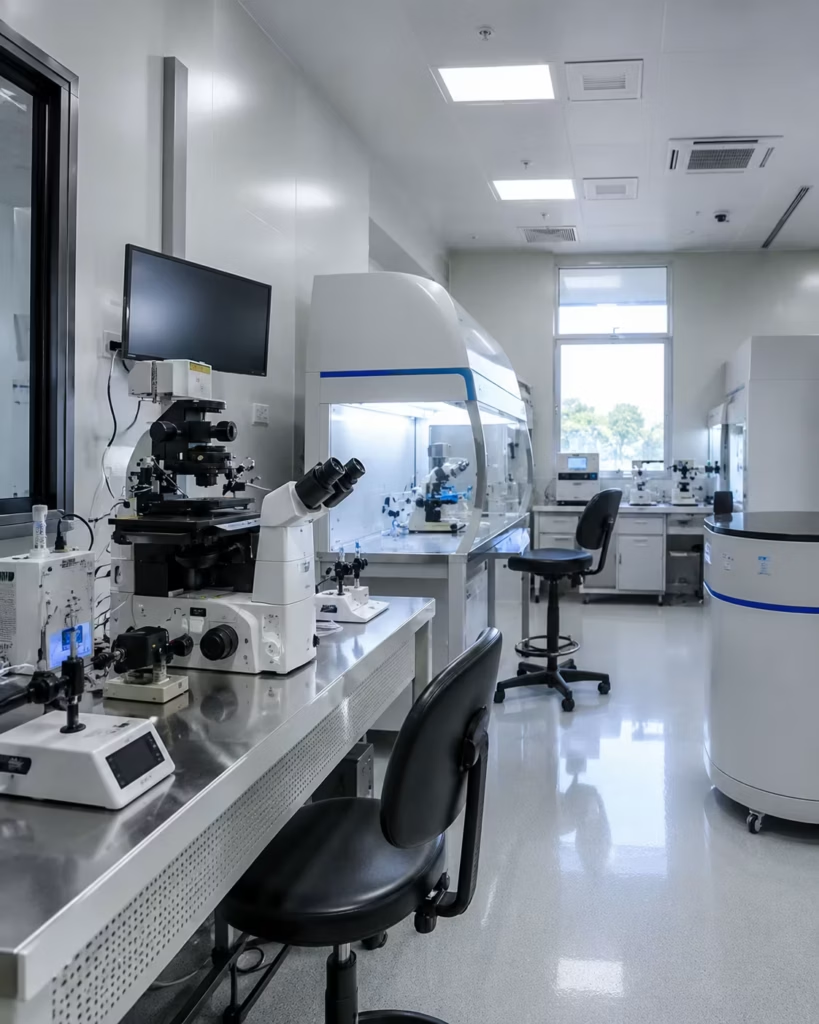
The single most important factor in IVF success — after the biological variables of the patient — is the embryology laboratory environment. This is not a marketing claim. It is a position consistently supported in reproductive medicine literature. Embryo development to blastocyst stage (Day 5), IMSI sperm selection quality, and fertilisation rates are all directly affected by laboratory air quality, culture media handling, incubator performance, and embryologist expertise. These are capital-intensive, infrastructure-dependent variables that take years to build and calibrate.
| Technology / Lab Feature | What It Means in Practice | Why It Matters for Anand Patients |
|---|---|---|
| Class 10,000 (ISO Class 7) Cleanroom | HEPA + Activated Carbon VOC filtration maintains air purity at medical-grade standards within the IVF laboratory. Volatile organic compound (VOC) contamination — present in substandard labs — measurably reduces blastocyst formation rate and embryo viability. | For a first-time IVF patient in Anand, starting in a Class 10,000 lab means your embryos are developing in the optimal environment from day one — not a suboptimal one that may explain a poorer outcome after the fact. |
| IMSI — 6,600× Sperm Magnification | Standard ICSI selects sperm at 400× magnification — sufficient for count and basic motility. IMSI at 6,600× identifies nuclear vacuoles, head abnormalities, and structural defects that directly impair fertilisation and early embryo development. Only structurally optimal sperm are selected. | For Anand couples with normal semen analysis who have had prior IVF failure or poor embryo quality — IMSI frequently reveals sperm factor issues invisible to standard analysis. Also valuable as a first-cycle precision upgrade. |
| Day 5 Blastocyst Culture | Extended embryo culture to Day 5 in a cleanroom incubator. Only embryos with genuine developmental competence reach blastocyst stage — the process is a natural quality filter. Blastocyst transfers have consistently higher implantation rates per transfer than Day 3 cleavage embryo transfers. | In a cleanroom lab, blastocyst formation rates are significantly higher than in a standard lab environment. An Anand patient’s eggs — the same eggs — may produce very different blastocyst numbers depending solely on the lab environment where they are cultured. |
| PGT-A Genetic Screening | Chromosomal screening of blastocysts before transfer — identifies euploid (chromosomally normal) embryos, eliminates aneuploid embryos that cause implantation failure or miscarriage. Morphology grading alone cannot detect chromosomal status. | For Anand patients aged 35+ or with a history of early pregnancy loss — PGT-A is a precision tool that significantly increases the probability of a successful single embryo transfer and reduces the risk of repeated failed cycles. |
| Laser Assisted Hatching | A precise laser creates a controlled opening in the zona pellucida (embryo outer shell), facilitating implantation — particularly beneficial for frozen embryo transfers and cases with thickened zona pellucida identified on embryo grading. | For Anand patients doing a Frozen Embryo Transfer (FET) cycle — laser assisted hatching is an additional precision step that complements Day 5 blastocyst transfer and may improve implantation in specific clinical scenarios. |
| Egg Freezing (Oocyte Vitrification) | Vitrification (ultra-rapid freezing) of mature eggs for future use — for women who want to preserve fertility while delaying pregnancy. Survival and fertilisation rates with vitrified eggs are now comparable to fresh eggs when performed in a high-quality lab. | For working Anand professionals — particularly those in careers where family planning is being actively deferred — the 45-minute drive to a Class 10,000 vitrification lab is a highly practical option for quality egg freezing. |
The Decision Framework — Applying Anand's Scientific Culture to Choosing a Fertility Lab
Anand’s professional community evaluates decisions with data. Here is the data-driven framework for understanding why the 75 km drive to Wellspring IVF makes scientific sense:
Does laboratory environment affect IVF outcomes?
Yes — measurably. Studies published in journals including Human Reproduction and Fertility and Sterility have documented that VOC contamination in IVF laboratory air is directly associated with reduced blastocyst formation rates and lower ongoing pregnancy rates. The Class 10,000 standard is not a luxury specification; it is the minimum infrastructure required for optimal embryo culture.
Does sperm selection method affect embryo quality?
Yes — particularly in cases with male factor. IMSI at 6,600× magnification selects sperm based on fine nuclear structure that is simply not visible at the 400× magnification used in standard ICSI. The resulting embryos, made from structurally sound sperm, show improved development rates in published studies — with the strongest evidence in couples with prior unexplained poor embryo quality.
Is the 75 km drive to Wellspring IVF more disruptive than local IVF with inferior outcomes?
No — by a significant margin. A failed IVF cycle followed by a repeat cycle costs the patient financially, physically, and emotionally. The 75 km expressway drive, made 3–4 times over a full IVF cycle, is measurably less disruptive than managing the emotional and financial cost of a second failed cycle in a suboptimal facility.
Who Travels from Anand to Wellspring IVF — Common Patient Profiles
Anand’s patient profile is distinct from other Gujarat cities. A brief sketch of the most common presentations we see from the Charotar region:
Patient Profile | Situation | Why They Choose Wellspring IVF, Ahmedabad |
|---|---|---|
First-Time IVF Couple — Want to Get It Right | Diagnosed with PCOS, low AMH, or moderate male factor. No prior IVF. Want to start in the best possible environment rather than compromise from cycle one. | Class 10,000 lab + blastocyst culture from their very first cycle — no ‘upgrade path’ after a failed local attempt. The 75 km drive is a proactive decision, not a reactive one. |
PCOS Patient with Prior IUI Failure | Multiple failed IUI cycles locally. Moving to IVF. Wants a specialist who understands PCOS stimulation protocols — balancing response without OHSS risk. |
|
Low AMH — Concerned About Egg Quality | AMH result of 0.8–1.2 ng/mL or AFC below 8. Has been told fertility window is limited. Wants maximum extraction from the stimulation cycle. |
|
Working Professional Couple — Minimal Disruption | Both partners employed — one or both in demanding careers (education, healthcare, corporate). Cannot afford weeks away from work for fertility treatment. | Day-care model: initial consultation same-day return, monitoring scans locally or in Ahmedabad (45 min each way), OPU and transfer as same-day round trips. Treatment cycle integrates into work calendar with minimal disruption. |
Egg Freezing — Career / Lifestyle Planning | Woman aged 28–36, not yet ready to start a family but concerned about age-related egg quality decline. Wants to freeze eggs at optimal quality now. | Class 10,000 lab vitrification ensures maximum egg survival on thaw. The 75 km drive to a quality vitrification facility is the rational choice for preserving eggs that represent years of future reproductive potential. |
How Your IVF Cycle Works from Anand — Same-Day Everything
Unlike patients from Surat or Rajkot who require careful multi-day trip planning, Anand patients have a different relationship with the treatment cycle. Because 45 minutes is a short commute for a working couple, many of the constraints that shape the Online First model for distant cities are simply absent here.
Stage | What Happens | Where — Anand Flexibility | Overnight Stay? |
|---|---|---|---|
1 | Initial consultation with Dr. Pranay Shah — review of reports, diagnosis discussion, protocol planning, cost transparency | Ahmedabad clinic — in person, same-day return. OR video consultation if preferred. Either option works at 75 km. | No |
2 | Stimulation injections — self-administered at home for 10–12 days with written protocol and WhatsApp guidance | Anand — home injections | No |
3 | Follicular monitoring scans (TVS × 3–4 over stimulation window) | FLEXIBLE: Local Anand sonography centre (reports shared by WhatsApp) OR drive to Wellspring IVF Ahmedabad directly for scan — at 75 km, both are practical | No |
4 | Trigger injection — timed precisely by Dr. Shah’s team based on final scan. Administered at home in Anand. | Anand — home | No |
5 | Egg Retrieval (OPU) — 15–20 min day-care procedure under sedation, 4–5 hrs total at clinic including pre/post-procedure care | Ahmedabad clinic — arrive 9:00 AM, drive home by 4:00–5:00 PM. Partner drives home; wife rests in passenger seat. | No — home same day |
6 | Lab updates: fertilisation report (Day 1), embryo development (Day 3, Day 5) — communicated to patient by WhatsApp / phone from embryology team | Anand — phone / WhatsApp updates from home | No |
7 | Embryo Transfer (Day 3 or Day 5 fresh) OR embryo vitrification + FET cycle scheduled separately | Ahmedabad clinic — same-day return. Post-transfer, 1-hour rest at clinic; drive home to Anand. 45 min is not a medically contraindicated journey after transfer. | No — home same day |
8 | Post-transfer: beta hCG blood test (Day 14), early pregnancy scan — either at local Anand lab or at Wellspring IVF Ahmedabad | FLEXIBLE: Anand local lab OR Ahmedabad clinic — both practical at 75 km | No |
Total overnight stays from Anand for a complete IVF cycle: Zero. Every stage of the treatment cycle — from first consultation to post-transfer follow-up — is a same-day return trip from Anand. This is the Expressway Corridor advantage.
The 75 km Route — Anand to Wellspring IVF via NE1
NE1 Route — Anand to Satellite, Ahmedabad (45–55 min)
Practical tips for Anand patients:
Your Fertility Consultant
Our fertility specialists are committed to providing personalized, compassionate care with
the latest reproductive medicine techniques.
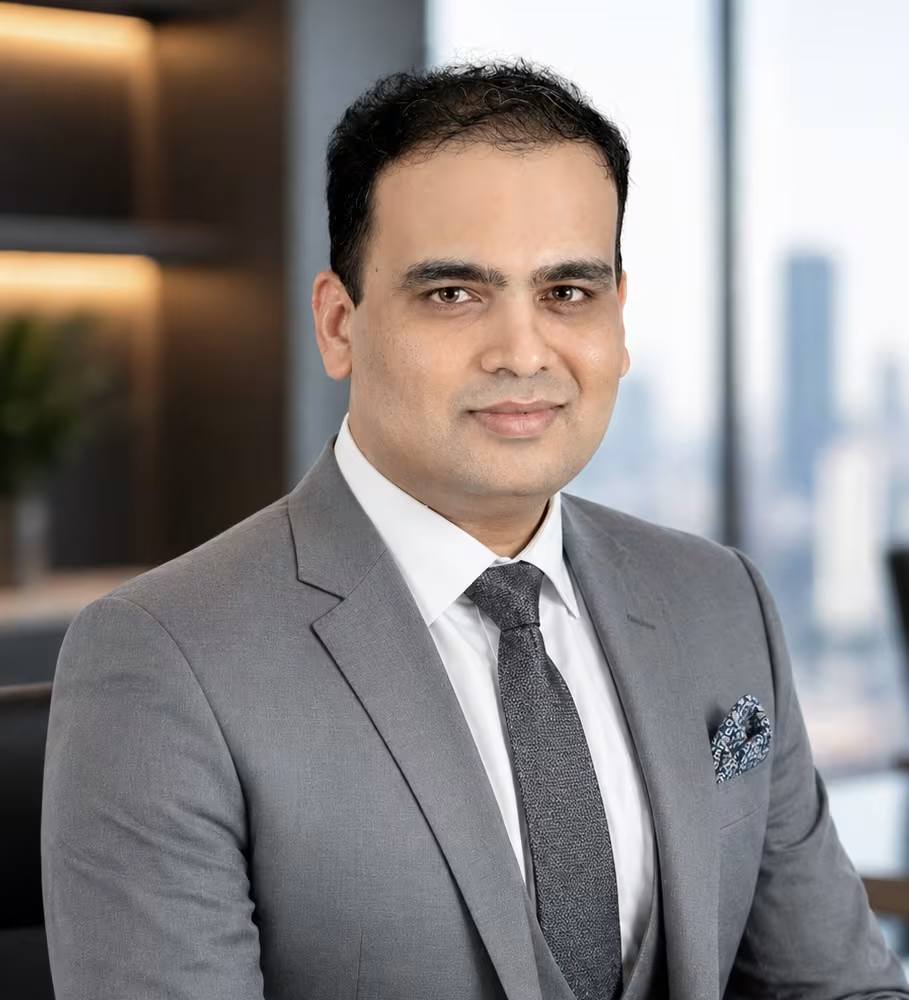
Dr. Pranay Shah
Director & Chief Fertility Consultant
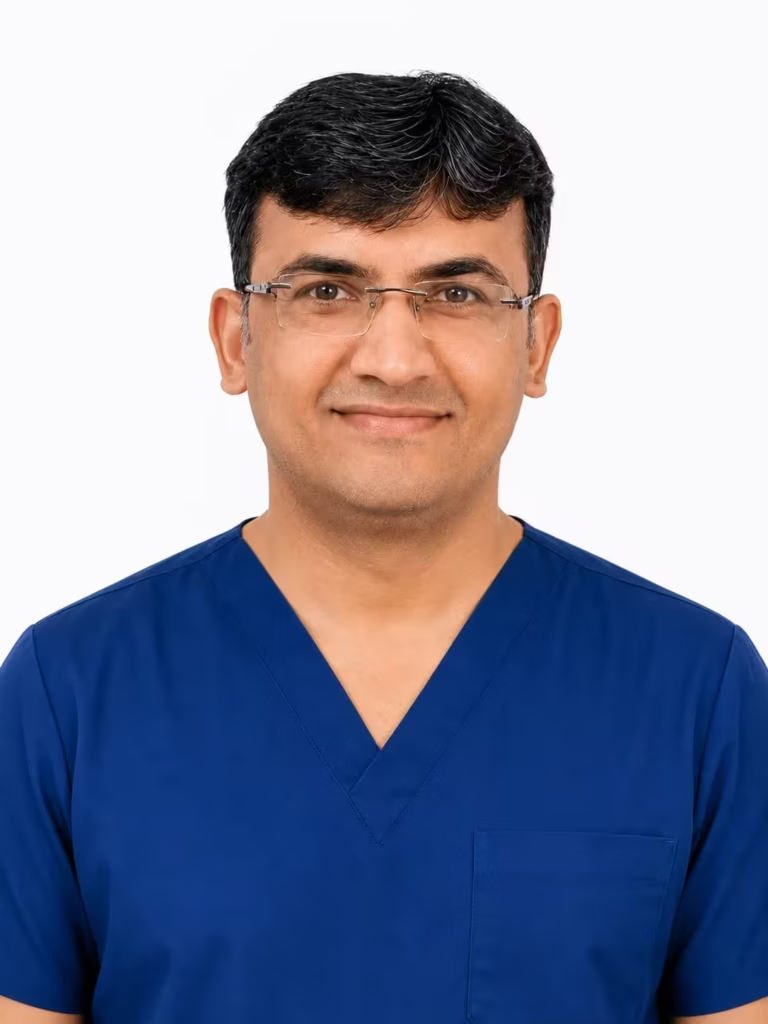
Divyesh Bhalodia
Senior Embryologist
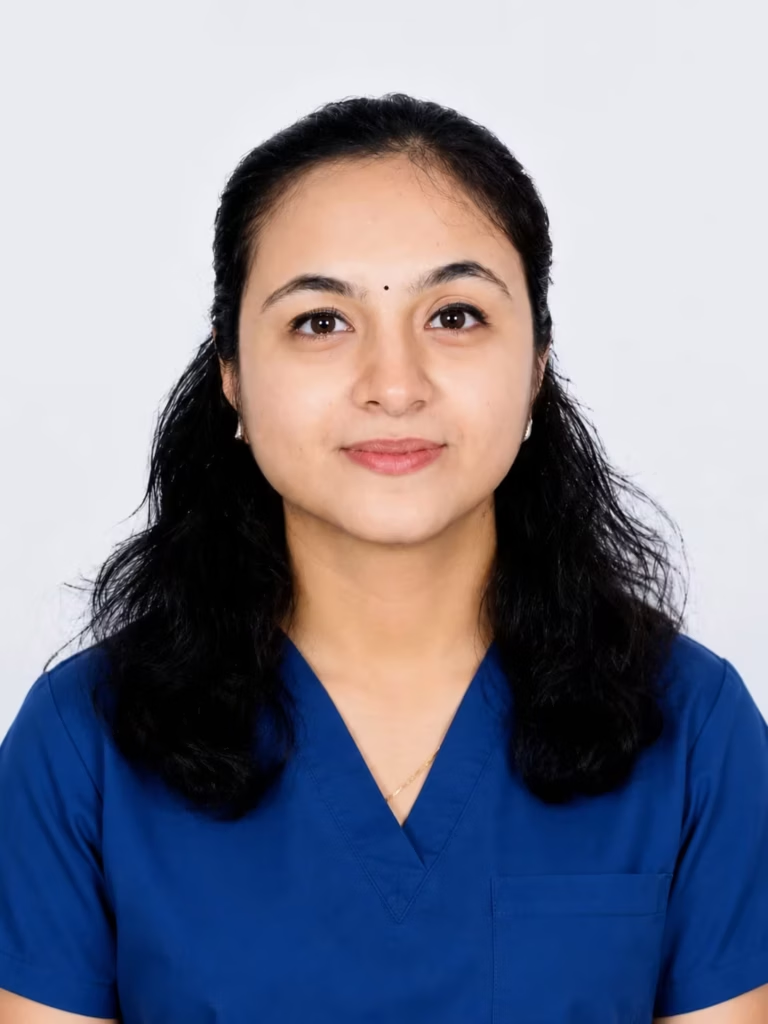
Urmi Chauhan
Clinical Embryologist
Serving the Charotar Region — Anand, Nadiad & the NE1 Corridor
Wellspring IVF’s Ahmedabad clinic serves the entire Charotar and Expressway Corridor region — the densely connected district that includes Anand, Vallabh Vidyanagar (VV Nagar), Karamsad, Anklav, and the communities along the NE1 corridor extending south towards Nadiad and Kheda. For all of these populations, the 75 km NE1 journey represents the same value proposition: advanced embryology, same-day return, no overnight requirement.
Patients from Nadiad — 60 km from Ahmedabad on the same NE1 corridor — are served by a dedicated city guide. See our Nadiad IVF Patient Guide → for Nadiad-specific information. Our Gujarat Patient Hub → covers the complete regional overview for patients across Gujarat.
City / Area | Distance to Wellspring IVF | Guide / Notes |
|---|---|---|
Anand (V.V. Nagar, Karamsad, Anklav) | ~75 km via NE1 | 45–55 min | This page |
Nadiad / Kheda | ~60 km via NE1 / NH48 | 40–50 min | |
Vadodara | ~110 km south on NE1 | 1.5 hrs |
A Message from Dr. Pranay Shah to Anand & Charotar Patients
“
Anand has produced some of the most scientifically literate patients I work with. They come to a consultation having read the published literature on IVF success rates. They ask about stimulation protocols by name. They want to understand what their AMH number means in the context of ovarian stimulation — not just hear a reassurance.
I respect this deeply. Fertility treatment is one of the most consequential medical decisions a couple makes. It deserves the same analytical rigour that Anand’s professional community applies to everything else.
What I want Anand couples to understand is this: the 75 km on the NE1 is not a burden unique to you. It is simply the distance between a good standard of care and a great one. The NE1 has made that distance practically irrelevant — 45 minutes on a smooth expressway. For something as important as the technology environment in which your embryos develop, this is not a difficult decision when you look at it clearly.
— Dr. Pranay Shah, Director & Chief Fertility Consultant, Wellspring IVF & Women’s Hospital, Ahmedabad
Frequently Asked Questions
Common questions about hysteroscopy, implantation failure, polyps, fibroids, septa, recovery, and how cavity optimisation supports IVF planning.
Ask a QuestionAnand has fertility clinics locally. Why make the 75 km drive to Ahmedabad?
Anand’s local fertility clinics are capable of managing straightforward IVF cases. The clinical argument for the 75 km drive rests on a specific question: what is the embryology laboratory environment where your embryos will develop? A Class 10,000 cleanroom with VOC filtration, IMSI at 6,600× magnification, and fully equipped blastocyst culture infrastructure is capital-intensive to build and calibrate. For couples where the difference between 2 blastocysts and 4, or between a chromosomally normal embryo and an aneuploid one, determines the outcome of the cycle — the lab environment is not a secondary consideration. The 45-minute expressway drive to a facility that can provide this infrastructure is the rational choice. For very straightforward cases — young couple, good ovarian reserve, no male factor — a local option may produce equivalent outcomes. Dr. Shah’s initial consultation will tell you honestly which category you fall into.
Can we really come for egg retrieval and go home the same day from Anand?
Yes — and this is one of the most significant practical advantages of the Anand location. Egg retrieval (OPU) is a day-care procedure performed under sedation. It takes 15–20 minutes, after which you rest at the clinic for 2–4 hours while sedation clears. Most patients are alert, comfortable, and ready to leave by 2:00–3:00 PM if the procedure was at 10:00 AM. The 45-minute NE1 drive home from Ahmedabad to Anand — with your partner driving — is not medically contraindicated after OPU. We recommend you are driven rather than driving yourself on OPU day. By 4:00–5:00 PM you are home in Anand, eating a light meal, and resting in your own bed.
What is IMSI and is it worth choosing Wellspring IVF specifically for it?
IMSI (Intracytoplasmic Morphologically-Selected Sperm Injection) uses a digital high-magnification system to observe and select sperm at 6,600× magnification — compared to the 400× used in standard ICSI. At this magnification, the embryologist can identify nuclear vacuoles within the sperm head and fine structural abnormalities that directly impair fertilisation efficiency and embryo quality. Research has shown that IMSI produces statistically significant improvement in embryo quality and ongoing pregnancy rates compared to standard ICSI in specific patient groups — particularly those with unexplained poor embryo quality in prior cycles, high sperm DNA fragmentation, or poor morphology. For Anand couples starting their first cycle who want the highest-precision sperm selection available, IMSI is worth discussing during the initial consultation.
My AMH is low (below 1.0 ng/mL). Does it make more sense to go to a specialist in Ahmedabad?
For low AMH patients, every egg in a stimulation cycle has heightened significance. The quality of the laboratory environment where those eggs are fertilised and cultured to blastocyst stage directly affects how many usable embryos emerge from each retrieval. In a Class 10,000 cleanroom with an experienced embryology team, the blastocyst formation rate from a limited number of eggs is typically higher than in a standard laboratory environment. Additionally, the stimulation protocol for low AMH requires careful, individualised calibration — too aggressive and you risk over-suppression; too conservative and you retrieve fewer eggs than the ovaries could have produced. These are the kinds of protocol decisions that benefit from a specialist with specific expertise in poor ovarian reserve. The 75 km drive to Wellspring IVF from Anand is particularly well-justified when AMH is below 1.0 ng/mL.
Do we need to use WhatsApp for monitoring or can we come in person for scans?
Both options are available to Anand patients — and this is one of the specific advantages of being 75 km away rather than 260 km. For follicular monitoring scans during stimulation, you can either: (1) attend a local sonography centre in Anand and send digital scan images via WhatsApp to Dr. Shah’s team for remote review and medication adjustment instructions; or (2) drive to Wellspring IVF Ahmedabad for the scan directly — 45 minutes each way, and many Anand patients prefer the reassurance of being scanned by our own team and discussing the result in person. Either approach works. Your preference and work schedule are the deciding factors, not the distance.
We are based in Vallabh Vidyanagar (VV Nagar), not Anand itself. Does this change the logistics?
No — VV Nagar, Karamsad, Anand, and the surrounding Charotar urban agglomeration are effectively a single connected area for the purpose of NE1 access. All access roads in the Anand–VV Nagar–Karamsad zone connect directly to the NH48 / NE1 northbound corridor within a few minutes of driving. The total journey time to Wellspring IVF from VV Nagar is essentially the same as from Anand: 45–55 minutes under normal traffic. The entire Charotar region shares the same proximity advantage.
Book Your Same-Day Consultation — Just 45 Minutes via NE1.
Drive to Ahmedabad. Consult with Dr. Pranay Shah in person. Drive home to Anand — before lunch. No overnight stay. No long-distance planning. Just 75 km on the NE1 between you and Gujarat's most advanced IVF embryology lab