Fertility Treatments in Ahmedabad
Request a Free Callback


Fertility Treatments at Wellspring — At a Glance
| Field | Detail |
|---|---|
| What this covers | Every assisted-reproduction and fertility treatment offered at Wellspring IVF, from the simplest (ovulation induction, IUI) to the most advanced (IVF-ICSI, PGT-A, donor-oocyte cycles, fertility-enhancing surgery) |
| Guiding principle | Diagnosis first, then the least-invasive effective treatment. IVF is never the automatic first offer. |
| First-line options | Ovulation induction, timed intercourse, IUI — for the right candidates |
| Core IVF treatments | IVF, ICSI, IMSI, PGT-A/PGS/PGD, Blastocyst culture, Laser-assisted hatching |
| Surgery | Laparoscopy & Hysteroscopy for infertility — to correct the cause before IVF |
| Fertility preservation | Egg freezing, Embryo freezing, Semen freezing |
| Male-factor procedures | TESE / PESA surgical sperm retrieval |
| Donor Egg IVF | Donor-oocyte IVF |
| Cost spectrum | First-line IUI from a few thousand rupees per cycle; IVF ₹99,999–₹2,50,000 per cycle. Every cost explained before treatment begins |
| Who decides | Dr. Pranay Shah, after a full diagnostic workup of both partners |
| Consultation | 📞 9099946050 │ Mon–Sat, 10 AM – 4 PM │ WhatsApp enquiries welcome |
What Are Fertility Treatments? — The Full Spectrum Explained
Fertility treatments are medical interventions that help a couple conceive when natural conception has not succeeded. They range from simple — helping the body ovulate at the right time — to highly advanced — fertilising an egg with a single selected sperm in a laboratory and screening the resulting embryo for chromosomal health. The correct treatment is the least invasive option that gives a realistic chance of success for your specific diagnosis.
There is no single “best” fertility treatment. The best treatment for a 29-year-old with mild irregular ovulation is very different from the best treatment for a 41-year-old with low ovarian reserve, or for a couple where the male partner has severe oligospermia. Choosing well requires an accurate diagnosis of both partners — because in roughly 40–50% of couples a male factor is involved, and in many couples the cause is shared.
At Wellspring, treatments are organised along a clinical ladder. We start at the step your diagnosis justifies — not always the bottom, and never automatically the top.
| Step | Treatment Category | Typical Candidate | Read More |
|---|---|---|---|
| Step 1Medical / first-line | Ovulation induction + timed intercourse | Anovulation (e.g., PCOS) with otherwise normal workup | PCOS management → |
| Step 2Minimally assisted | IUI (Intrauterine Insemination) | Mild male factor, unexplained infertility, patent tubes, younger couples | IUI guide → |
| Step 3Corrective surgery | Laparoscopy / Hysteroscopy | Endometriosis, fibroids, polyps, blocked tubes, uterine septum | Surgery hub → |
| Step 4Core IVF | IVF ± ICSI | Tubal factor, severe male factor, failed IUI, age, endometriosis | IVF hub → |
| Step 5Advanced lab add-ons | PGT-A, IMSI, Blastocyst culture, LAH | Recurrent loss, repeated implantation failure, advanced age, high DFI | Per indication |
| Step 6Third-party / donor | Donor-oocyte IVF, Altruistic Surrogacy | Premature ovarian failure, very low reserve, absent/non-functional uterus, repeated implantation failure | ART & Surrogacy Acts 2021 |
The Wellspring Ethic: We Do Not Start at the Top
IVF is the most effective fertility treatment ever developed — and also one of the most demanding, emotionally and financially. That is precisely why Dr. Shah does not recommend it unless the clinical picture supports it. If a simpler treatment gives you a genuine chance, you will be offered that first. If your diagnosis means IVF is the right and fastest route to a baby, you will be told that honestly — because delaying effective treatment is its own kind of harm. The goal is never “more treatment.” The goal is the right treatment, in the right order.
Choose Your Guide
Each treatment below has a complete, dedicated guide. This hub gives you the overview and the decision context; the child pages give you the day-by-day protocol detail.
Core IVF & Embryology
IVF — In Vitro Fertilisation
is the flagship treatment: eggs are retrieved, fertilised in our embryology lab, and the resulting embryo is transferred to the uterus. The IVF Hub covers the full process, transparent costs (₹99,999–₹2,50,000), realistic success rates, and the fresh-vs-frozen decision.
ICSI — Intracytoplasmic Sperm Injection
is a fertilisation technique within IVF where a single best-quality sperm is injected directly into each egg. It is recommended whenever a male factor is present and achieves fertilisation rates of 70–85%.
IMSI — High-Magnification Sperm Selection
selects sperm at up to 6,000× magnification to identify the healthiest sperm for injection — used in severe male factor and prior fertilisation failure.
PGT-A / PGS / PGD — Embryo Genetic Testing
screens embryos for chromosomal normality before transfer — the most effective tool for recurrent miscarriage of chromosomal origin and for advanced maternal age.
Blastocyst Culture
grows embryos to Day 5, allowing the strongest embryo to be selected for transfer and improving implantation rates.
Laser-Assisted Hatching
thins the embryo’s outer shell to aid implantation in selected cases — particularly frozen and older-patient embryos.
First-Line & Minimally Invasive
IUI — Intrauterine Insemination
places prepared sperm directly into the uterus around ovulation. It is a reasonable, lower-cost first-line option for mild male factor and unexplained infertility in younger couples with open tubes — before escalating to IVF.
Fertility-Enhancing Surgery
Laparoscopy & Hysteroscopy
are minimally invasive, day-care surgeries that correct the cause of infertility — endometriosis, fibroids, polyps, adhesions, blocked tubes, uterine septum — often dramatically improving the chance of natural conception or IVF success. Dr. Shah has performed 350+ hysteroscopic procedures.
Fertility Preservation
Egg Freezing, Embryo Freezing, and Semen Freezing preserve fertility for the future — for career or personal timing, before cancer treatment (oncofertility), or as part of an IVF cycle. All use vitrification, the modern flash-freezing method with high survival rates.
Male-Factor Procedures
TESE / PESA — Surgical Sperm Retrieval retrieves sperm directly from the testis or epididymis for men with azoospermia (no sperm in the ejaculate), making biological fatherhood possible in most cases of obstructive azoospermia.
Donor Program (ART Acts 2021)
Donor-Oocyte IVF
is offered for premature ovarian failure, very low reserve, or specific medical indications, in full compliance with the ART Act 2021 — donation is voluntary and uncompensated, sourced through a licensed ART Bank.
What Our Patients Say


A special thank you to Dr. Pranay Shah for his confidence, guidance, and the way he explained everything so patiently. His positive approach gave me so much strength, and today I am blessed with my baby.
Thank you to each and every member of the hospital for taking such great care of me and supporting me throughout this journey. Forever grateful. 💕

He is, without a doubt, the most patient doctor I have ever met. Of course, treatment can be done by many. What truly sets him apart is his maturity, the way he pauses, explains, comforts, and most importantly, seeks your permission before moving forward. You never feel rushed. You never feel unheard. You feel respected.
And the staff deserves equal appreciation. They handle even the most anxious and impatient moments with such calm grace and dignity that you slowly find your own heartbeat settling down. It feels less like a clinic and more like a safe space.
I wholeheartedly recommend him to anyone who overthinks, seeks reassurance, or simply needs a doctor who believes comfort is the first step of healing. With him, care begins long before the treatment does.

Highly recommend for their expertise, kindness and dedication. "Turned out dream into reality"



Our gratitude also extends to everyone in your clinic who offered a smile, reassurance, technical support, or a listening ear along the way. We feel incredibly blessed to have chosen your practice for our journey, and we will always cherish the precious gift you helped us receive.
Thank you, from the bottom of our hearts, for making our dream a reality.
Join 750+ Satisfied Families
IVF vs IUI vs ICSI — What Is the Difference?
This is the single most common point of confusion. In plain terms: IUI assists conception inside the body; IVF moves fertilisation outside the body into the lab; ICSI is a precise fertilisation technique used within IVF. They are not competing brands — they are different rungs on the same ladder, chosen by diagnosis.
| Factor | IUI | IVF | ICSI (within IVF) |
|---|---|---|---|
| What happens | Prepared sperm placed in the uterus near ovulation | Eggs retrieved, fertilised in lab, embryo transferred | A single sperm injected into each egg in the lab |
| Where fertilisation occurs | Inside the body (fallopian tube) | Outside the body (embryology lab) | Outside the body, under a microscope |
| Best for | Mild male factor, unexplained infertility, open tubes, younger couples | Tubal block, failed IUI, endometriosis, age, moderate male factor | Severe male factor, low count/motility, prior fertilisation failure |
| Invasiveness | Low — no sedation | Moderate — sedation for egg retrieval | Same as IVF (it is a lab step within IVF) |
| Typical success per cycle | 10–20% (highly age-dependent) | 50–75% under 35; declines with age | Fertilisation 70–85%; pregnancy as per IVF |
| Relative cost | Lowest | Higher | IVF + ICSI component |
| Wellspring approach | First-line for the right candidates only | Recommended when indicated, never by default | Included whenever any male factor is present |
Your Fertility Consultant
Our fertility specialists are committed to providing personalized, compassionate care with
the latest reproductive medicine techniques.
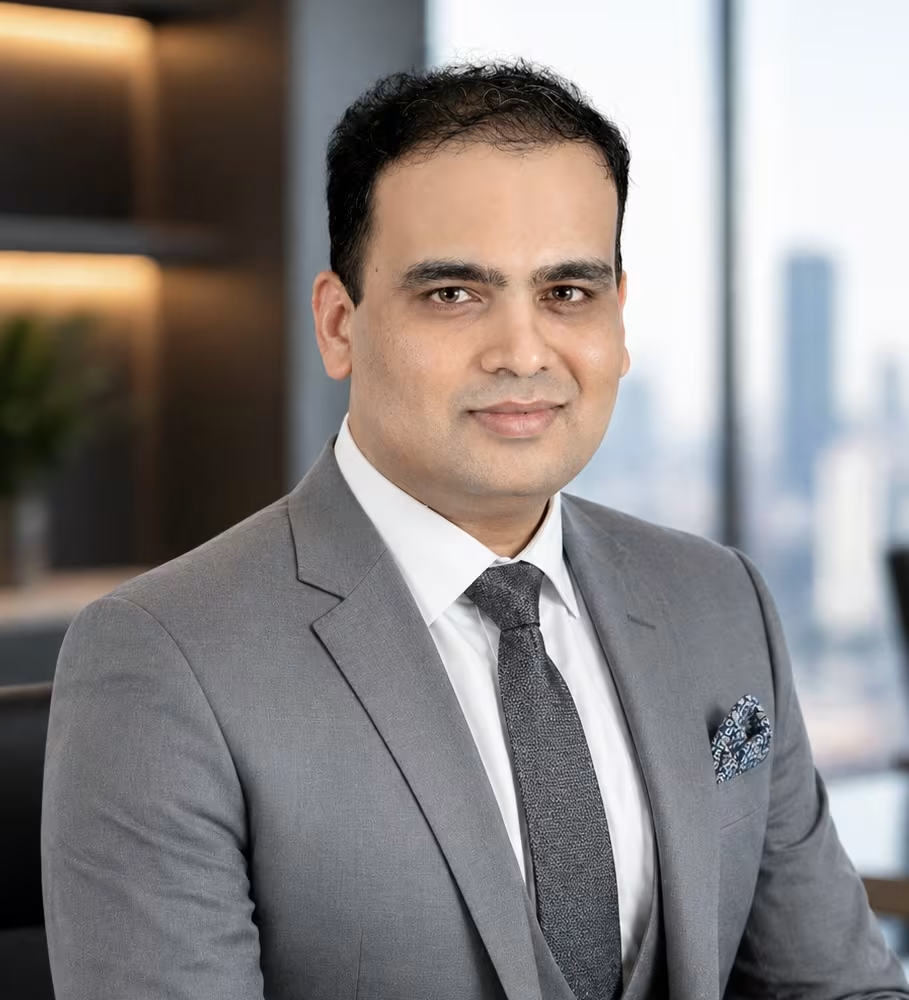
Dr. Pranay Shah
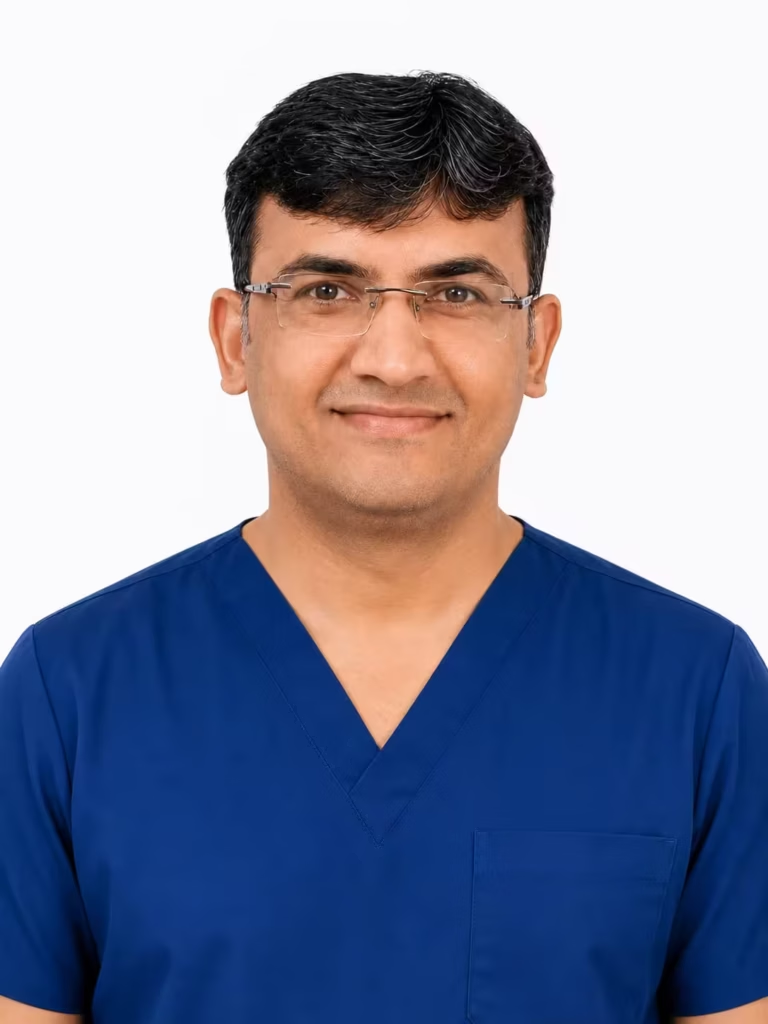
Divyesh Bhalodia
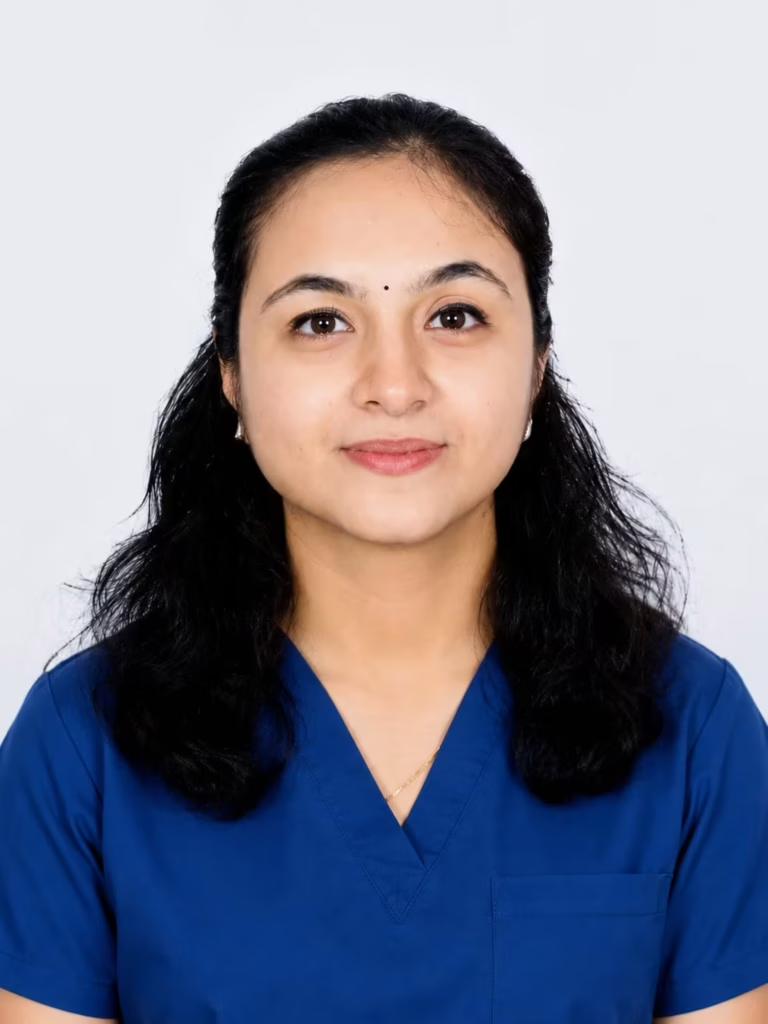
Urmi Chauhan
How Dr. Shah Decides Which Treatment Is Right for You
There is no algorithm that replaces a proper diagnosis. At Wellspring, treatment selection follows a clear, honest framework:
Diagnose both partners.
A semen analysis (and DNA fragmentation test where indicated) for the male partner; ovarian reserve (AMH, antral follicle count), tubal patency, and uterine cavity assessment for the female partner; hormonal and ovulation evaluation.
Identify the limiting factor.
Is the problem ovulation? Sperm? A blocked tube? A uterine abnormality? Egg quantity or quality? Age and time pressure? Often it is more than one.
Match treatment to the cause.
Anovulatory PCOS may need only ovulation induction. Mild male factor with open tubes may justify a trial of IUI. A blocked tube or severe male factor points directly to IVF/ICSI.
Set a realistic plan and timeline.
You will be told your individual probability — not a clinic average, and not what you want to hear — along with a clear cost breakdown before you commit to anything.
The Cost of the Wrong Order
Two errors do equal harm. Over-treating — pushing a young couple with a simple ovulation problem straight to IVF — is expensive and unnecessary. Under-treating — running six IUI cycles on a 39-year-old with low reserve and blocked tubes — wastes the one resource that cannot be recovered: time. Dr. Shah’s framework exists to avoid both. The right treatment in the wrong order is still the wrong plan.
Ready to Find Out Which Treatment You Actually Need? At your first consultation, Dr. Shah reviews your complete history and investigations, identifies the limiting factor, explains your realistic options, and gives you a full cost breakdown — before you commit to anything.
The Treatment-Level Difference
One consultant, the full spectrum.
Many clinics offer only what they are set up to perform and route everything toward it. Wellspring offers the complete ladder — medical, surgical, and laboratory — so the recommendation is driven by your diagnosis, not by the clinic’s limitations.
Dr. Shah performs the procedures personally.
Egg retrieval, embryo transfer, and all fertility surgery are performed by Dr. Pranay Shah himself — not delegated to a rotating junior team. Consistency of hands is a clinical variable.
In-house embryology team.
Fertilisation, culture, ICSI, and vitrification happen in our own lab, with the embryologist and Dr. Shah communicating in real time — not through a report sent between facilities.
Diagnosis-first, no-unnecessary-procedures policy.
Add-on technologies (PGT-A, IMSI, PICSI, assisted hatching) are recommended only when the evidence supports them for your case — never as revenue defaults. Ask why each is recommended; there will always be a clinical answer.
Transparent costs across every treatment.
From a single IUI cycle to advanced IVF with PGT-A, the cost is explained in full before treatment begins. The breakdown at consultation matches the final bill.
ART Act 2021 compliant, licensed facility.
Registered with the National ART Registry; all donor gamete procurement follows ART Bank protocols — voluntary, uncompensated, fully legal.
“Patients sometimes arrive convinced they need the most advanced, most expensive treatment — and are surprised when I recommend something simpler. Others arrive hoping a simple fix will do, and I have to be honest that their situation calls for IVF without delay. My job is not to sell a treatment. It is to read your specific picture accurately and tell you the truth about what will actually give you the best chance. Sometimes that costs less than you feared. Sometimes it means moving faster than you hoped. Either way, you deserve to know.”
–Dr. Pranay Shah, MS (ObGy), Director & Chief Fertility Consultant, Wellspring IVF & Women’s Hospital, Ahmedabad
Frequently Asked Questions
Which fertility treatment do I need?
The right fertility treatment depends entirely on your diagnosis — the cause of the difficulty conceiving, in both partners. After a workup (semen analysis, ovarian reserve testing, tubal and uterine assessment, hormonal evaluation), Dr. Pranay Shah matches the treatment to the cause at the least-invasive effective level. That may be ovulation induction, IUI, corrective surgery, or IVF with or without ICSI. There is no single answer that applies to everyone — which is why an accurate diagnosis always comes before any treatment recommendation at Wellspring.
Is IVF the only option, or are there alternatives?
IVF is not the only fertility treatment, and at Wellspring it is not the automatic first offer. Depending on your diagnosis, simpler options may give you a genuine chance first: ovulation induction with timed intercourse for anovulation, or IUI for mild male factor and unexplained infertility with open tubes. Corrective surgery (laparoscopy or hysteroscopy) sometimes restores natural fertility without IVF at all. IVF is recommended when the clinical picture clearly supports it — for example, blocked tubes, severe male factor, failed IUI, or age-related decline.
What is the difference between IUI, IVF, and ICSI?
IUI (Intrauterine Insemination) places prepared sperm into the uterus near ovulation — fertilisation still happens inside the body. IVF (In Vitro Fertilisation) retrieves eggs and fertilises them in the laboratory, then transfers the embryo to the uterus. ICSI (Intracytoplasmic Sperm Injection) is a fertilisation technique used within IVF, where a single sperm is injected directly into each egg. So they are not competing alternatives — they are different levels of assistance, chosen by diagnosis. IUI is least invasive; IVF is more involved; ICSI is a precise lab step within IVF used when a male factor is present.
Do I need surgery before IVF?
Some patients do. If you have a uterine abnormality — a polyp, fibroid distorting the cavity, a septum, or adhesions — correcting it by hysteroscopy before embryo transfer significantly improves implantation. Endometriosis, blocked tubes, or ovarian cysts may be addressed by laparoscopy. Not everyone needs surgery; it is recommended only when a specific, correctable cause is found on assessment. Dr. Shah explains exactly why a procedure is indicated for your case. Full detail: our fertility surgery hub.
What fertility treatments are available at Wellspring IVF, Ahmedabad?
Wellspring offers the full spectrum: ovulation induction and IUI; IVF with ICSI and IMSI; PGT-A/PGS/PGD embryo genetic testing; blastocyst culture and laser-assisted hatching; fertility-enhancing surgery (laparoscopy and hysteroscopy); fertility preservation (egg, embryo, and semen freezing); surgical sperm retrieval (TESE/PESA) for azoospermia; and donor-oocyte IVF under the ART Act 2021. All are delivered by Dr. Pranay Shah with an in-house embryology team. Each treatment has a dedicated guide linked from this page.
How much do fertility treatments cost in Ahmedabad?
Costs span a wide range because the treatments do. First-line options like ovulation induction and IUI cost a few thousand rupees per cycle. A complete IVF cycle at Wellspring ranges from ₹99,999 to ₹2,50,000 depending on protocol complexity, medications, and any add-ons indicated for your case, with stimulation medications billed separately. Surgery and fertility-preservation costs vary by procedure. Whatever the treatment, the full cost is explained before it begins — the breakdown at consultation matches the final bill, with no charges added afterwards.
How do I know I’m not being over-treated or sold something I don’t need?
This is a fair and important concern. At Wellspring the safeguard is a diagnosis-first, no-unnecessary-procedures policy: every recommendation — including add-ons like PGT-A, IMSI, or PICSI — is made only when the clinical evidence supports it for your specific case, and Dr. Shah will always give you the clinical reason when asked. Simpler, lower-cost treatments are offered first whenever they give a realistic chance. The cost breakdown is provided transparently before you commit to anything.
Related Insights & Articles
 Blocked fallopian tubes can make it hard for a woman to get pregnant. But there are ways to treat this…June 11, 2026
- Are you feeling worried about low AMH and IVF? You are not alone. Many women have to face the same…June 11, 2026
- Can You Increase AMH Levels Naturally? What Science Says About Low AMH and Fertility Quick Answer In most cases, AMH…June 11, 2026